This article was first published April 24, 2021 in The DC Line here.
Washington, DC, may bring home an Oscar this Sunday.
Mike Capbarat, currently a producer for the DC-based storytelling studio Duke & Duck, is nominated for an Academy Award for Best Animated Short Film as a producer of “Burrow” from Disney’s Pixar Animation Studios. Capbarat worked with director Maddie Sharafian from 2018 until the film’s release in 2020, when it premiered Dec. 25 in conjunction with Pixar’s feature film “Soul.”
“In making a short film, especially an animated short film, the big win is just finishing,” Capbarat said. “It was just a story with the message to warm people’s hearts and families. … You never expect to be nominated for anything.”
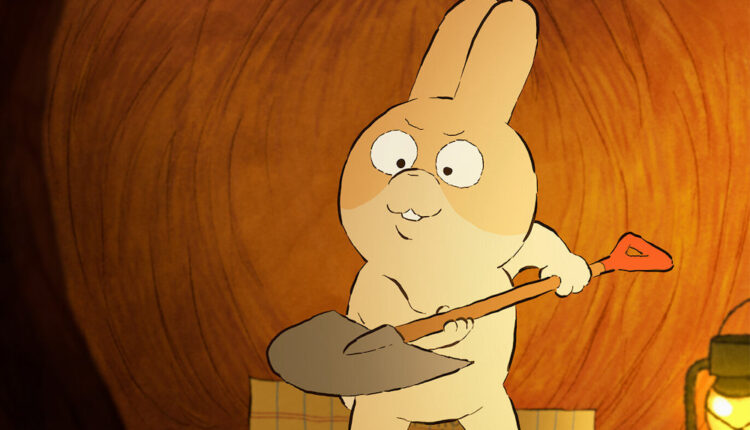
“Burrow” follows an independent, even stubborn, rabbit attempting to dig her perfect home, away from her neighbors who offer their assistance and friendship. After struggling to realize her dream on her own, the rabbit finally learns the simple lesson that it’s OK to ask for help.
Pixar Animation Studios
“Burrow” was part of Pixar’s SparkShorts program, which Capbarat described as an “incubator system” that allows new storytellers to get assistance from small teams of animators and artists throughout the studio. As participants in the SparkShorts program, Sharafian and Capbarat knew they could ask for help from their teammates.
“It feels like we experienced the lesson of the movie while making the movie with our team,” Capbarat said. He recalled times when he and Sharafian didn’t know exactly how to execute their vision for the story, so they turned to other Pixar teammates for support. “We kind of learned the lesson of the movie ourselves. … Everyone at Pixar was gung-ho to have your back especially if you have that vulnerability.”
“Burrow” was Capbarat’s last project at Pixar, where he spent 12 years working on films like “Coco” and “Toy Story 4.”
Capbarat moved to the District in early 2020, making his new home official last year when he got his DC driver’s license on Feb. 18. He now lives about two blocks north of the Lincoln Memorial with his wife, who is doing her medical residency at George Washington University Hospital. It was Capbarat’s wife who insisted they both watch the announcement of the Academy Award nominations. Capbarat said he jumped over his chair when “Burrow” was the first film called.
Caparat is relishing in his work with Duke & Duck, especially on a project for the American Red Cross writing short-form stories about emergency preparedness for kids.
“Everybody has a story to tell, and we want to tell that story. It doesn’t matter what the project is, big or small,” Capbarat said. “Getting to work on a project that means something, that’s the most exciting thing for me.”
Capbarat has rented a tuxedo for his night of stars on Sunday, when for the first time ever the Academy Awards will be hosted outside at Union Station in downtown Los Angeles. Capbarat and his wife will be attending alongside other nominees like Frances McDormand and Aaron Sorkin, both of whom Capbarat said he’d love to meet.
“I grew up staying up to watch this stuff on TV,” Capbarat said about the Oscars. “It always feels so far away, like a dream. Does that really happen? Do movie stars really get together to celebrate movies, the thing that I love? It’s almost like meeting your hero.”
Capbarat has prepared a brief speech should he and Sharafian win for Best Animated Short Film: “A little bit of me wants to call out to our younger selves and say, ‘You can do this. Making movies is in reach for many, more than you think.’ I would want to tell my younger self that.”
This lyrical debut speaks to the universality — and complexity — of love in its many forms.
By Nyah Hardmon
This book review was first published April 16, 2021 in Washington Independent Review of Books here.
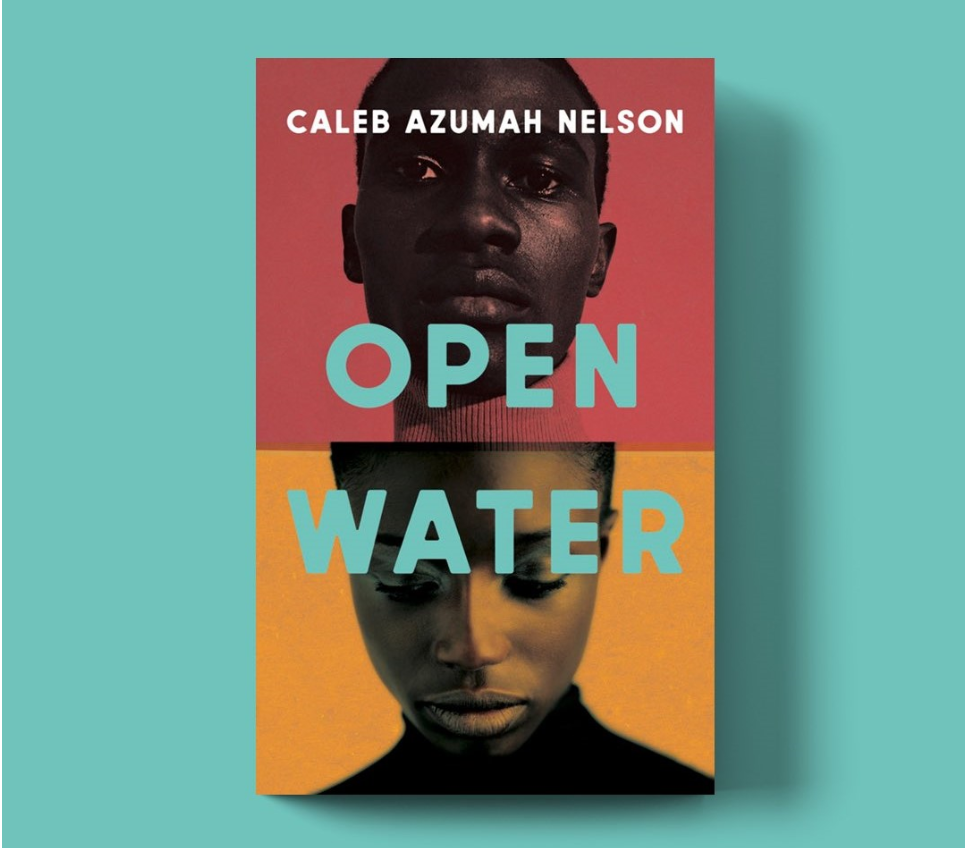
A refreshingly poetic ode to Black love, Caleb Azumah Nelson’s debut novel, Open Water, follows the relationship of two young British artists who meet by happenstance, or perhaps fate, and traces their intricate journey as they navigate what it means to find the right person at the wrong time.
Nelson’s bold writing style — which includes leaving his main characters unnamed and using intimate, second-person narration — allows the reader to step directly into the story, embracing the familiarity of love rather than hiding from it. Although the plot is composed of a series of specific events, from not catching someone’s name at a party to taking late-night strolls to Shake Shack, the tale is universal. A love story is a love story, and Nelson deliberately plays into this strange phenomenon we call human connection:
“Last time we met, you said you were a photographer,” she says.
“No, someone told you I was a photographer, and I squirmed at the idea,” you say.
“Why?”
“You did the same when your dancing was brought up?”
“You didn’t answer my question.”
“I dunno,” you say. “But yeah. I take photographs.” On the other side of the window, Piccadilly bustles. A man swells his bagpipes, the sound drifting up towards you. Friday evening and the city is bordering on frenzy, unsure of what to do with itself.
From its opening lines, the novel’s casual construction is apparent. It reads like a story being told by an old friend, so much so that by its closing paragraphs, you can’t help but feel emotionally drained, as if you’ve experienced love and loss alongside the characters.
Still, this book isn’t perfect. But neither is love. Neither is life. While its lyrical nature is one of its most appealing aspects, the narrative sometimes becomes too reliant on obscurity at the expense of clarity and brevity. In moments as tender as the physical joining of two bodies, the intimacy should speak for itself; flowery metaphors only cloud the beauty. Yet even with the author’s word choice booming like a yell when I, at least at times, would’ve appreciated a whisper, I understand. Love is exciting. It makes me want to yell, too.
And then there’s the music, which courses through the novel from page one. The author does this not simply by including song lyrics — that would be too obvious — but by connecting the beauty of love with the beauty of music, an artform as universal as love itself. The seamless but consistent integration of music is so foundational here that it’s necessary to mention the soundtrack.
Nelson’s musical choices ring authentic. He doesn’t rely on the same overused love songs. In fact, he barely relies on songs explicitly about love at all. Instead, he lets the music speak for itself, such as by opening the novel with a quote from Earl Sweatshirt and, later, having his protagonists sing their hearts out to Isaiah Rashad. (Even those not hip to the underground hip-hop scene will be able to follow the author’s references — an impressive feat.)
Open Water isn’t merely the story of two young Londoners. It’s everyone’s story. Yes, physical attraction plays a part, but it’s about so much more than that. “You came here to speak of what it means to love your best friend. Ask: if flexing is being able to say the most in the fewest number of words, is there a greater flex than love? Nowhere to hide, nowhere to go. A direct gaze.”
This may not look like the love stories of my grandmother’s time, but it’s just as relatable. It’s about familial love. Friendly love. The kind of love that feels good and the kind that hurts. Caleb Azumah Nelson has taken many risks in this promising first project, and most of them pay off.
In a residence at Kennedy Center, the group takes a unique approach to centering and empowering marginalized artists.
By Jordan Ealey
This article was first published April 17, 2021 in DC Metro Theater Arts here.
The convergence of the COVID-19 pandemic and the political uprisings resulting from the anti-Black violence that killed George Floyd, Breonna Taylor, and Tony McDade last year (as well as the historical violence and oppression experienced by Black people in this country) have sparked an unprecedented opportunity to re-examine multiple institutions. “Re” seems to be an important prefix for the multiple reckonings occurring at this time (with Woolly Mammoth Theatre Company’s project Reset and Roundabout Theatre Company and Black Theatre United’s Refocus Project).
The Reclamation Project, a homegrown DMV collective, was one of those initiatives in response to the racial reckonings that began last summer. Dreamed up by DC actor Christopher Richardson, The Reclamation Project describes itself as aiming “to address past harm in theatrical institutions, give space for healing in this moment, and imagine a path forward by centering the voices and needs of Black artists, Indigenous artists, artists of color, LGBTQIA+ artists, and disabled artists.” Inspired by #WeSeeYouWAT, the Black DC theater roundtable, and the Gender Diverse Black Theatre Leadership roundtable, The Reclamation Project seeks to center marginalized artists and instill power back into them and their communities.
Tẹmídayọ Amay and Sam Sherman performing excerpts from an exercise about honoring the work of service. Photo courtesy of The Reclamation Project.
The project facilitates this goal through residencies at local theaters in the DC area. Thus far, they have had residencies at Olney Theatre Center, Source Theatre, Round House Theatre, and, most recently, The Kennedy Center. At the heart of their goals for healing is space: physical, textual, and corporeal space in theater institutions.
During their residency at Olney from August 19 through August 23, 2020, for example, Richardson and Reclamation Project artist and local dramaturg Dylan Arredondo took part in an exercise to explore space and harm. Richardson paced the Tallulah Bankhead House on Olney’s property while Arrendondo read the titles of what had been produced at Olney, stopping only when a play by a person of color was named. In this process, Richardson and the other artists noticed that among the “hundreds and hundreds of plays” that had been produced there, a very small percentage were by nonwhite artists. Of particular notice to Richardson that many of the same titles were repeated, perhaps suggesting that there were plays and playwrights that were tokenized in programming.
Billie Krishawn stands in front of the group presenting her project proposal. Kara-Tamieka Watkins in the foreground. Photo courtesy of The Reclamation Project.
Another transformative experience during The Reclamation Project residency at Source Theatre was when a stage manager marked areas in the theater where they had experienced harm, whether a spot in the theater not accessible to plus-size people or disabled folks, an uncomfortable chair they were forced to sit in to call a show, or an area where the stage could not be seen when trying to do their job. These moments of healing and transformation are “based on the artists’ success and what they need,” Richardson said, because the program is most successful when artists are involved in the creation of the project.
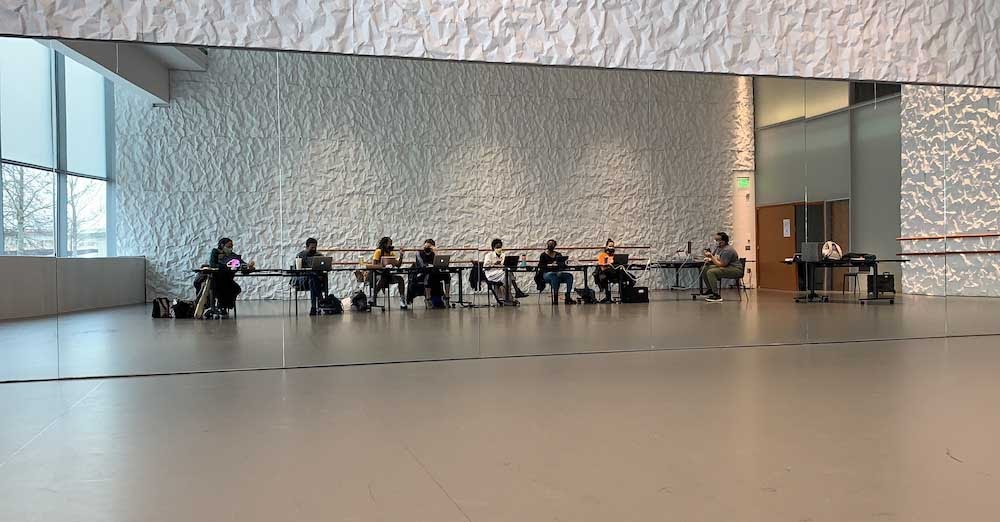
At the top of each day, the full company sits together, taking time to land in the space, discuss discoveries from the day before, and do research for the days ahead. Kara-Tameika Watkins, Larry Lewis, Billie Krishawn, Sam Sherman, Temidayo Amay, Renea Brown, P. Vanessa Losada, and Christopher Michael Richardson. Photo courtesy of The Reclamation Project.
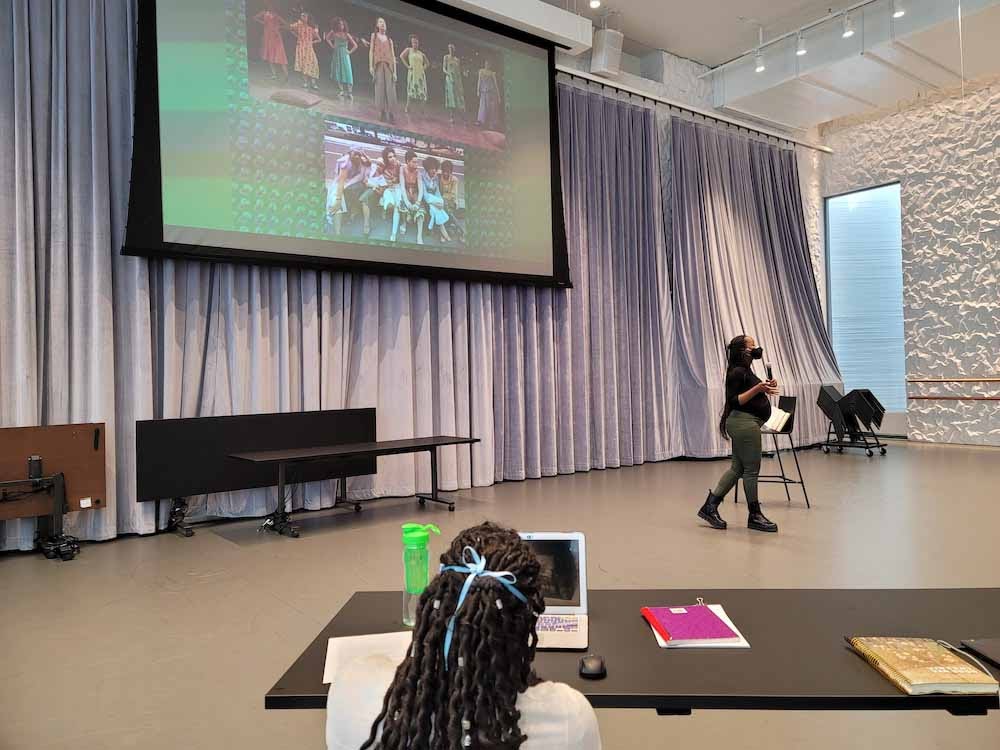
At the forefront of the Reclamation Project’s residency at The Kennedy Center, Richardson wanted a process centered on the needs, desires, and wants of the artists involved: Tẹmídayọ Amay, Dylan Arrendondo, Renea Brown, Billie Krishawn, Larry Lewis, P. Vanessa Losada, Sam Sherman, Kara-Tameika Watkins, and Richardson. Each of the nine was tasked to present works and ideas they wanted to explore and challenge.
Richardson recalls saying to them, “You are all artists in your own right and I want you to figure out what is an ouchie for you.”
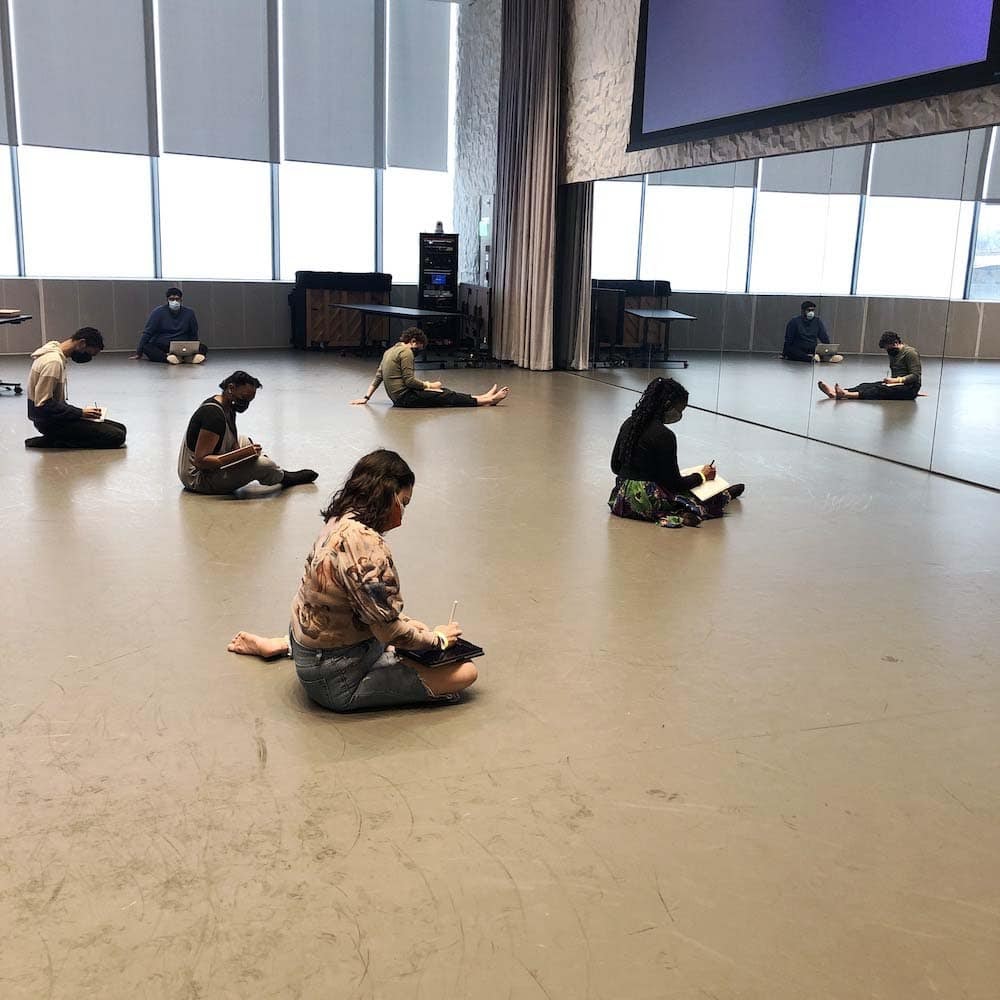
They spent the five-day residency, in Studio at The Reach March 22 to 26, responding to the works presented by each artist, ranging from an intense interrogation of the musical canon to challenging Our Town. There was a personal resonance that came with each piece. The goal was to give artists the time and resources they need to tap into their best creative selves, untethered to the capitalist demands of creating a product at the week’s end.
Part of Richardson’s own reclamation project was an exploration of the role of the servant in canonized American plays. This interest was sparked by Richardson’s personal experience playing a servant role in a production and—despite his discomfort with what the role demanded of him—being praised by white leaders in the theater. “It created an odd fissure in my being as an artist,” Richardson noted, “because I was like, ‘Well I know that I’m more than this, but there’s so much praise in this, and I don’t equate that to what I’m actually worth.” One of those works was Tennessee Williams’s Cat on a Hot Tin Roof. Through performance Richardson critiqued the play’s treatment of the servants, especially in the scene where one of their cakes is destroyed. This was prompted by a dramaturgical question by Arrendondo: What would it be like to actually bake the cake?
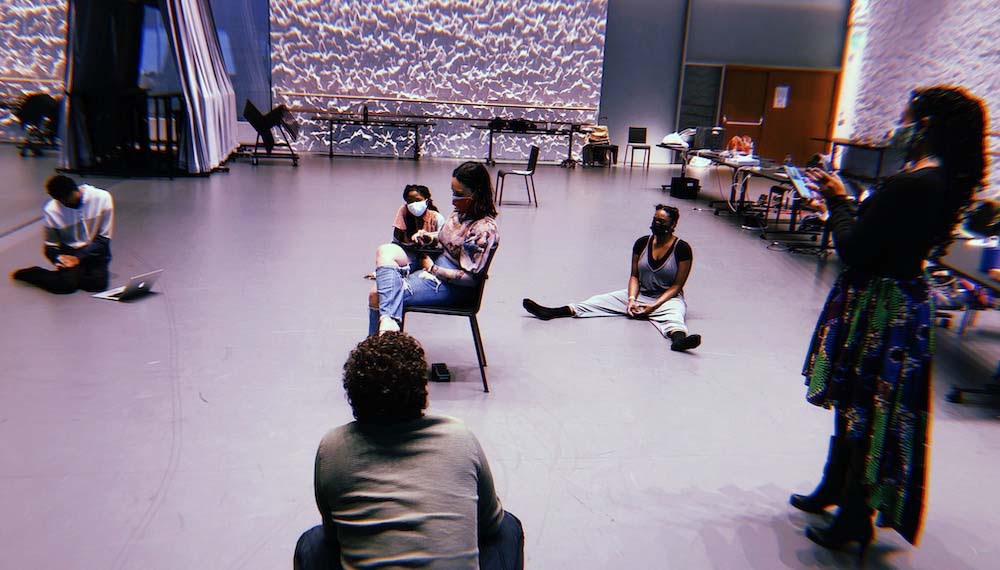
Participants circle up to participate in a devising exercise. Clockwise from left to right: Larry Lewis, Florence Babatunde, P. Vanessa Losada, Renea Brown, Kara-Tameika Watkins, and Sam Sherman. Photo courtesy of The Reclamation Project.
“My goal is context,” Richardson remarked, noting that the dramaturgical program note or lobby display is not enough; the context needs to be on the stage during the performance itself. It comes down, according to Richardson, to “the level of excavation” required of staging (and restaging) these classic and canonized works. (This especially excited me as a dramaturg, as this excavation work makes one question the dramaturgical, directorial, and design choices that go into this intense critical engagement.)
Alongside the internal work done with the artists as part of the process, The Reclamation Project also held two public Zooms at the beginning and end of the residencies. I attended both of those conversations, which opened up some very fascinating points of conversation from among the participants and the public. During the first public conversation, a ton of topics emerged as a way to begin the engagement that would inevitably shape the rest of the week. One came up in a discussion of audience versus community, with the difference being that one watches (audience) and another engages (community). This prompted the question “Is your audience your community?”
Another particularly evocative question asked was “What is the hierarchy of harm?” The artists then explored their different relationships to trauma and harm in the theater, as Arredondo brought up a piece written by Amissa Miller, a dramaturg and professor, that interrogates Jackie Sibblies Drury Pulitzer Prize-winning play Fairview, its relationship to Black precarity, and the problem of spectatorship. A lively discussion of the exclusionary process of canon-making engendered an insight by Renea Brown, who specializes in Shakespearean works, to really challenge her fellow artists to question exactly why certain plays need to be gotten rid of.
Friday’s conversation was mainly in response to all that the artists had experienced throughout the week. It seemed that a lot of the same topics were being explored, in addition to communal questioning and input about what might make American theater, especially in the DC area, better. Tẹmídayọ Amay explained that during the residency, the artists were “being transparent about their needs [and] diving into truth-telling exercises,” while Kara-Tameika Watkins noted that it was “a judgment-free zone” where they were free to explore safely and comfortably. In valuing process over product, it seemed to me, their presence in the space fostered community that resulted in transformative artistry.
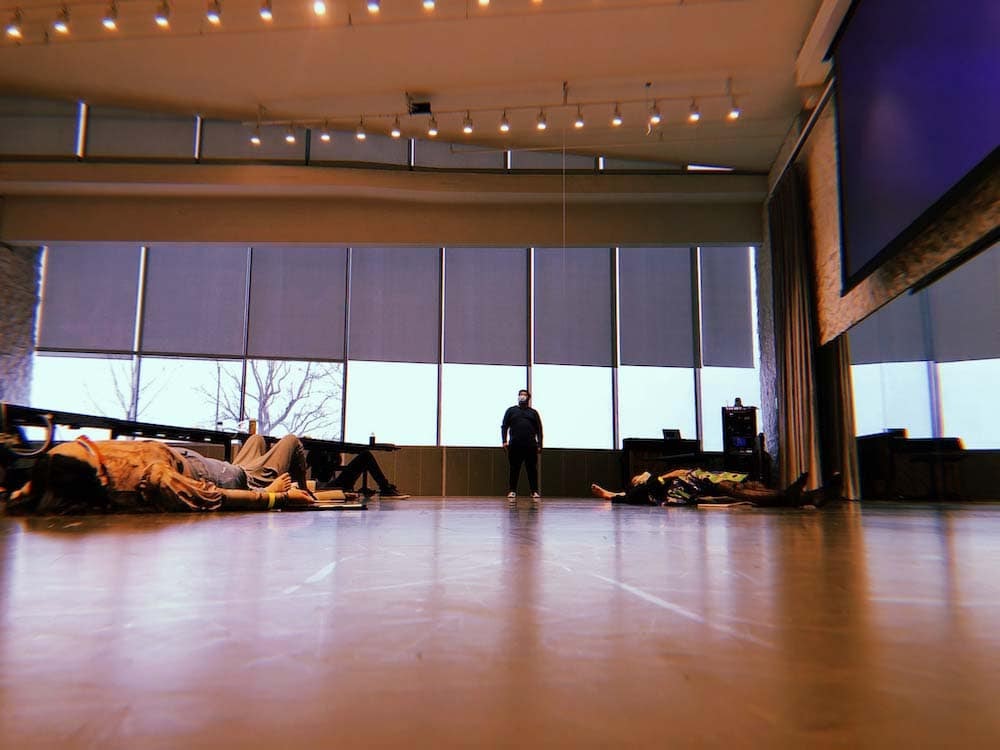
Participants lie on the floor as Dylan Arredondo (center) leads them through a devising exercise. Photo courtesy of The Reclamation Project.
Of special importance, especially to Richardson, is centering community and care in theater spaces. Many of the folks (both in the room and in the Zoom chat) named specific instances of harm that came to them by way of working in regional theaters. There were discussions of producers not attending to their specific needs, directors who had no idea how to work with performers in ways that did not harm them, and particular works that needed to be left behind. All of the instances were directly tied to issues of inequity involving racism, sexism, ableism, homophobia, transphobia, and classism. The participants in the residency were focused on uplifting artists as autonomous collaborators and it showed in this conversation.
It seems important to note that the artists of The Reclamation Project are not interested in a total rejection of the theater. (I asked a question about the abolition of the role of the director, which initially engendered a lot of visceral physical responses.) Richardson, instead, pointed out that it is about “transfiguration of the role” and de-centering the cisgender, white, able-bodied, and male people who have come to define what the canon is and how theater has traditionally been done. This seems to be a goal of the collective in general: an investment in transforming and empowering marginalized artists and facilitating processes that are invested in the same. It is about redirecting resources rather than ridding it altogether. Billie Krishawn responded that producers should choose artists who are interested in collaboration, not only their own visions.
These responses challenged my own view of what anti-racist, anti-oppression work can look like in American theater. They showed me—a self-described “Black feminist killjoy—that community and care, rather than wholesale rejection, can be the true antidote to harm. Committing oneself to true change is actually much harder to do. I appreciate The Reclamation Project artists for their willingness to engage in that work.
Participants circle up to participate in a devising exercise. Clockwise from left to right: Larry Lewis, Florence Babatunde, P. Vanessa Losada, Renea Brown, Kara-Tameika Watkins, and Sam Sherman. Photo courtesy of The Reclamation Project.
In her book Worldmaking: Race, Performance, and the Work of Creativity, cultural theorist and dramaturg Dorinne Kondo explores what she refers to as “reparative creativity,” which she describes as “the ways artists make, unmake, remake race in their creative processes, in acts of always partial integration and repair.” I see The Reclamation Project actively practicing artistic practice as a work of repair and healing and harnessing the transgressive possibilities of theater-making and creative collaboration. This also involves rethinking who is a part of the new possibilities of equity and justice.
Richardson pointed out, in our conversation, that when institutions think about racial equity and justice, they often leave out the janitorial and cleaning support staff. “Because they also work for you, they also should be a part of the conversation on equity and diversity. […] They are a part of your organization.” It’s these kinds of thought-provoking inquiries and observations that make The Reclamation Project’s approach to working toward and struggling for justice for underserved and marginalized communities in the theater industry a truly unique one. When I asked Richardson what he would like to see happen with The Reclamation Project long-term, he envisions full productions of the works created during the residency, long-term devising workshops, and even facilitations for theaters.
But their big goal for the project? To facilitate partnerships with community organizations for social justice advocacy. Richardson, in particular, dreams of a brick-and-mortar place that provides a safety net for impacted people. “I’m really interested in a space where folks can come and that is really neutral ground that can provide a lot of resources to the community.”
As a Black theater artist, I have been a part of (and even led) many discussions in the last year about “the future of American theater.” We are in an extraordinary moment where in-person performances and productions are at a halt and many people have referred to it as theater being shut down. But what The Reclamation Project demonstrates is that there are many people, especially from marginalized communities, who are doing meaningful creative work right now. Broadway and other large institutions may be closed, but theatrical work is still continuing. Even when I look at my own engagement in theater over the last year, I have worked more than I ever have. Theater work has become more accessible than ever and collectives like The Reclamation Project are not simply challenging the existing industry but actively (re)working the practice of theater itself.
This article was first published April 5, 2021 in Tagg Magazine here.
Candice Taylor got her start as an artist drawing on walls as a child. When her father was tired of cleaning walls, he helped her channel that energy into coloring comic strips and painting doll houses he built.
Taylor is the co-founder of CreativeJunkFood, a multimedia creative studio founded in 2010 that explores areas of public art, experiential art, and installations. The studio also hosts workshops and works regularly with museums and schools.
Taylor considers herself an artist-activist. “Art with function” is what drives her work. Recently, CreativeJunkFood partnered with the Civil Rights Corps to create graphics for criminal injustice initiatives and events honoring the leadership of Black women. They also animated a video for Stonegate Filmworks called “Turn it Blue,” a schoolhouse rock-style video advocating for voting blue in Georgia during the 2020 election season.
“It’s one thing to be an artist and make beautiful images, but it’s another thing to create art that also functions, and that also goes to better people’s lives and empower movement [and] social commentary,” says Taylor.
Much of Taylor’s work is community-focused. As a Washington, D.C.-based organization, CreativeJunkFood regularly designs community art, like a #LoveShaw animation and Ward 7 Speaks murals, and is working on the branding and launch for an upcoming refurbished Metro railcar coming to the District this spring.
One aspect of community art Taylor particularly enjoys is connecting with younger kids and artists as an educator. In the future, she says she hopes to expand workshops to make the “wealth of information more available.”
“That’s what empowers me when I’m thinking about that social justice…being able to help this younger generation,” she says. “I feel like those voices are the voices we need to be listening to, so I’m doing whatever I can do to amplify that.”
According to Taylor, coming from a marginalized community and now being an artist has positioned her uniquely to understand the impact and value of art in daily life. Taylor says she is determined to use her art to create an environment that she wished she had as a kid—she was encouraged to pursue her dreams but didn’t necessarily have the resources to accompany them.
In her own words, Taylor has a “tenacity for breaking barriers,” which she says means simply not seeing them at all.
“It’s just a constant climb, it’s this constant ‘What’s next?’ and it’s constantly challenging of yourself, it’s challenging the norms,” Taylor explains. “That’s why I have all these colors in my hair—that’s why I show up to my business meetings in the same outfit that I wear when I’m painting a mural.”
She views being a lesbian in the same vein—it’s not something she ever tries to hide, but also not something that she feels she has to flaunt.
“It’s a package, and I approach it as such,” Taylor says. “It’s about being really unapologetic about it.”
This article was first published March 29, 2021 in Tagg Magazine here.
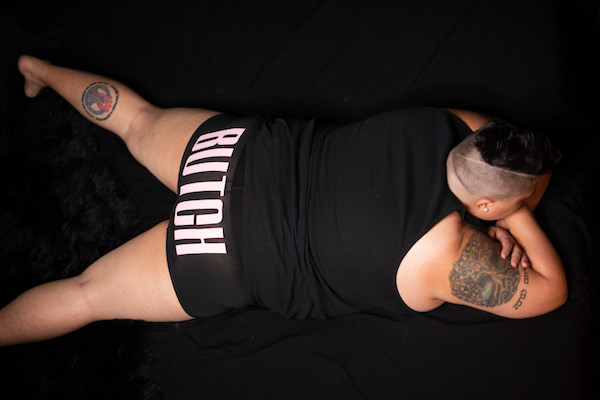
Though Gabby Horner has been “out” for over 20 years, she didn’t truly find herself until about five years ago. In the time since she’s been more comfortable identifying as butch, she’s made waves with the Butch Boudoir Project, a movement to empower butch and masculine people across gender identities.
The Butch Boudoir Project began two years ago as a photoshoot with photographer Graciela Valdes to expand the traditionally feminine concept of boudoir photos modeled by Horner herself. The revelation came when she was looking for inspiration on Pinterest and found virtually nothing.
“I can’t find butch women doing anything other than completely fully dressed, or they look like MMA fighters,” says Horner. She adds, “If I couldn’t really find anything on Google, it’s not enough.”
It was then that Horner and Valdes realized this was much bigger than just one photoshoot. The “impressive” reaction made her realize that butch visibility needed a bigger platform. Her next endeavor was an Instagram account for the project.
“The only thing I had access to was myself, [so] the only thing I could do was continue to showcase myself,” she explains. “So I started pushing myself and my boundaries to take more photos of my daily life.”
But from the moment the project became more than just one photography session, Horner knew it had to be bigger than just herself. She gathered a group of friends, known affectionately as the #ButchCrew, for another photoshoot set in a barber shop. In between haircuts and a candidly-shot game of pool, Horner says the “butch siblinghood” was powerful.
“That’s insanely underrepresented. I think it tears down toxic masculinity that is sadly common that a lot of butch people feel intimidated by other butch people,” says Horner. She adds, “Those types of toxic concepts are totally shattered if you can get a group of us together, hanging out, being friends.”
Now with over 3,000 followers on Instagram, the Butch Boudoir Project has become a hub for virtual discussions and questions. The questions have ranged from a humorous “Are you single?” to inquiries about how to best support butch people in your life.
“I thought about butch visibility, I thought about being able to see people like me,” she explains. “But I did not think about people who are attracted to butch people having questions and needing to see that representation as well.”
By nature, this is a particularly personal project for Horner, who is a graphic designer by trade and the co-founder and vice chair of Ignite Community Services.
Horner identified as a “tomboy” at a young age but struggled with how her discomfort with femininity fit in with her gender identity.
“I thought you couldn’t be a girl and also want those things,” Horner says. “I firmly identify with being a woman, and that’s not a question for me, but I don’t identify with being feminine.”
That changed when she found other people who celebrate masculinity within their womanhood and individuals who prefer gender-neutral terms. Now, at 35, Horner says it’s an indescribable feeling when someone tells her she’s handsome.
Next year, she is looking forward to creating a calendar featuring the growing #ButchCrew. The Butch Boudoir Project will likely expand to more in-person conversations when the coronavirus pandemic ends. However, the virtual community they have online is something she never wants to abandon.
“Those conversations are also a big deal, they’re important,” says Horner.
Last year, the festival was canceled just as it was slated to begin because of the worsening coronavirus pandemic and ensuing public health restrictions. Organizers then scrambled and put many of its films online. This year, however, DCEFF programmed a completely virtual festival that still connects with audiences and spreads its message of environmental awareness through film.
Brad Forder, the festival’s director of programming, said the event will promote hope, positivity and movement forward under President Joe Biden’s new administration.
“We find hope through individuals and their hard work, and a lot of our filmmakers show that,” Forder said. “We have hope from seeing these environmental heroes.”
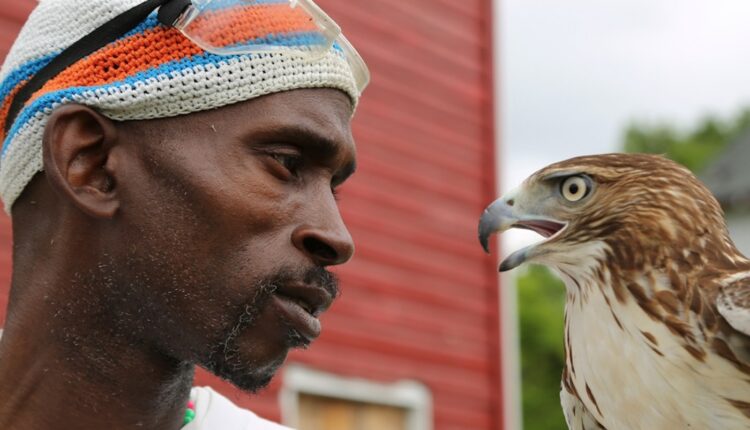
One featured filmmaker is DC native Annie Kaempfer, who grew up in various Northwest neighborhoods. Her film, The Falconer, follows the story of Rodney Stotts, an African American Washingtonian whose life revolves around birding and falconry. Stotts is one of very few Black falconers in the nation, and he has used his expert knowledge to teach DC youth about nature, environmentalism and conservation. Kaempfer said Stotts brings birds with him when he teaches, and that physical connection has an amazing impact.
This is Kaempfer’s first feature-length film, and its initial DCEFF screening today at noon will be its East Coast premiere. The film will be available for streaming throughout the rest of the 11-day festival.
“Rodney’s story is universal, but there’s something about the film being homegrown and shown [locally]. … I’m so excited to bring a portrait of a DC native to the public to remind them we’re real people, it’s not just Capitol Hill,” Kaempfer said. “One person has a lot of power to make a difference. … I hope Rodney and this film can be an inspiration to people, that doing one little thing can make a big difference.”
Kaempfer met Stotts in 2013 and began making this film in 2014. She delayed premiering her film last year because she worried how a virtual premiere would impact sales and distribution. She decided to premiere her film in October when she realized that virtual screenings were not negatively impacting film sales.
After winning multiple prizes, like the first-place Storytellers Award at Destiny City Film Festival in Washington state, The Falconer was picked up by PBS to be part of its programming this summer.
Forder said that DCEFF — now in its 29th year — has always looked for local creatives to include in the festival, and organizers have always partnered with local groups to premiere films throughout the District. The screening of The Falconer is co-presented by Town Hall Education Arts Recreation Campus (THEARC), located in Ward 8.
Accessible films and diverse content and audiences have been a consistent part of the festival’s mission, Forder said.
“We want to replicate that in-person, theater experience as much as possible,” Forder said of this year’s online offerings.
With an all-virtual festival, Forder noted that DCEFF’s programming can now include more international filmmakers and special guests who no longer need to travel to participate. DCEFF has scheduled multiple live events like filmmaker Q&As and post-screening panels that will allow audiences to participate through Zoom or Facebook Live.
“DCEFF has always been better than, I think, every other festival in terms of inclusivity and accessibility,” Kaempfer said. “Virtual screenings have increased that access even more.”
This article was first published March 17, 2021 in Tagg Magazine here.
Jen Rainin had no directing experience before taking on Ahead of the Curve, but she knew it was a story she had to tell.
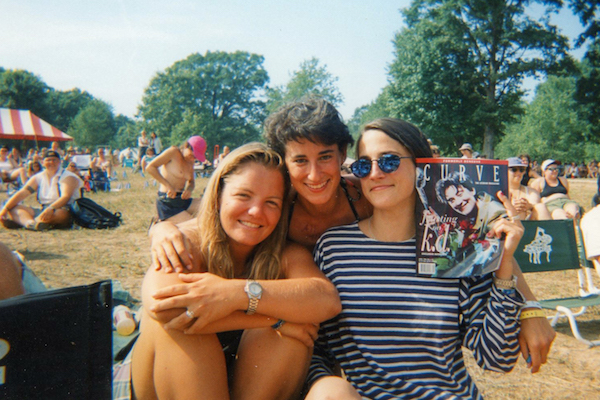
Her wife, Frances “Franco” Stevens, the founder of Curve Magazine, told stories over the years — taking out a dozen credit cards and betting on horses to come up with money for the magazine. She won three times and used her winnings to launch Curve Magazine (formerly Deneuve) in 1991.
Armed with these stories and a garage full of archives from Stevens’ life, Rainin spent the next three years making the documentary, which is set for its worldwide premiere on Apple TV and Amazon Prime on June 1.
“As I was researching for it, I realized how little our history as queer women has been documented,” she explains. “I realized I actually think I owe it to the community to tell this story first as a nonfiction film.”
Rainin says the best part of creating Ahead of the Curve was learning about her wife through the eyes of those who knew her decades before the two met.
“She has such trust in me. She knew that I was going to tell a balanced and fair and honest story,” Rainin says. “She’s a badass, but she’s a flawed human, like everybody, and she wanted people to see that.”
The filming and post-production process had its own plot twists, however. During filming, Stevens received an email from the current owner of Curve Magazine saying that the magazine might not be able to survive another year. Stevens sold the magazine in 2010 after a disabling injury.
The coronavirus pandemic also modified the film’s festival circuit. The crew was set for a grand debut at The Castro Theatre in San Francisco for Frameline44, but when in- person events closed, co-director and producer Rivkah Beth Medow suggested changing the event to a drive-in screening. The event was held on the day originally slated for Dyke March, and the audience rolled up decked out in pride and protest gear.
“We’re focused on making sure that our historical stories and our present-day stories are told and shouted from the rooftops,” Rainin says.