Washington Ballet pianists enhance the artistry of dance performance

By Ilena Peng

This article was first published February 19, 2020 in The DC Line here.

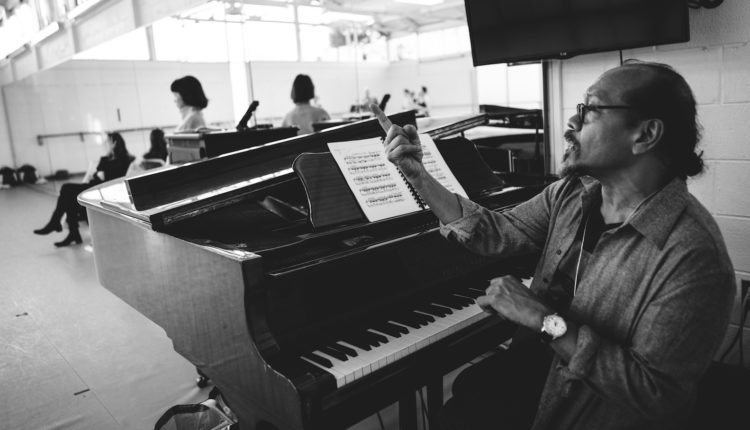
Pianist Glenn Sales is experienced enough — and French composer Jules Massenet’s music is simple enough — that Sales can sneak bites of his sandwich as he plays for The Washington Ballet’s rehearsal of British choreographer Frederick Ashton’s pas de deux Méditation for Thaïs.

Sales, a veteran musician who debuted with the National Symphony Orchestra at age 14 and has played at the White House, is the music supervisor of The Washington Ballet (TWB). He plays live music for the dance company’s performances — and for classes and rehearsals at its Wisconsin Avenue NW school, filling a role that in smaller educational programs has been replaced with CDs and phones. Sales concedes that the presence of more ballet schools means more students learn the art, but he explains that widespread use of recordings favors consistency and predictability over nuanced shifts in a song’s mood or speed.

“This is why we have live everything. It never becomes routine,” Sales said. “I think that’s the death of things, when it becomes routine, an arid routine. Because then your performances can become that — just an arid routine — and I think the No. 1 sin is to bore the audience, and I think that’s what would happen.”

Sales grew up in Silver Spring, Maryland, enrolling at The Juilliard School in New York at the age of 17 on a full scholarship. After the Kirov Academy of Ballet in Northeast DC opened in 1990, Sales played at the school for a decade. More recently, he and cellist Yo-Yo Ma held music workshops in 2012 with DC elementary school students. Sales later performed at the White House in collaboration with Juilliard president and former New York City Ballet principal dancer Damian Woetzel.

The crossroads of ballet and piano isn’t well-known as a career path, with only a few programs tailored to providing pianists with the specific training needed to accompany dancers. Like many of his colleagues, Sales stumbled into the field. At Juilliard, dance teacher Hector Zaraspe knocked on Sales’ practice room door, telling him that dancers could use someone who played piano with “so much color and so much verve.” Soon after, Sales began learning more about dance and spending more time with Juilliard’s dance students. 

TWB has 22 accompanists in all, and several have similar stories. Michael Parker got his start accompanying opera singers, and Kelly Lenahan flourished as a graduate student in London under the mentorship of a ballet accompanist for England’s famed Royal Opera House and the English National Ballet.

Lenahan, who joined TWB last July, says she had “no idea” until four years ago that being a ballet accompanist was a potential career path. The career had never been mentioned in her undergraduate or graduate piano studies, but then she met Nicki Williamson, a pianist who has worked with most of London’s major ballet schools. After attending Williamson’s weeklong workshop, Lenahan returned to the United States and began playing for ballet classes at a high school in Boston and for Harvard University’s student-run ballet company. 

Lenahan studied and performed Irish dance for many years, and she says her background has helped her recognize just how much her musical approach and energy at the piano can affect the dancers. Lenahan recalls enthusiastic performances of live fiddle or accordion music boosting her confidence as a dancer. She describes playing for dance as a “beautiful collaborative process” easily distinguishable from the more passive dancing likely to occur when listening to a recording.

“Sometimes the dancers to me are almost like a mirror into what I’m playing,” she said. “I see the ways that they interpret things, or I see in their movements responses to the music that I didn’t necessarily hear or anticipate. So there’s always this kind of inspiration in that for me.”

For his part, Parker — who has played at TWB for 13 years — says accompaniment demands more than just the virtuosity required of a solo concert pianist. He carries a trove of music with him to classes, labeled and organized so he can work with the teacher to select and rearrange appropriate pieces.

“It’s not about the pianist capturing the spotlight,” Parker said. “It’s about the pianist in some serious way melding with the dancers or the singers.”

Parker says he sets his personal musical preferences aside and aims to play pieces he knows a teacher or dancer will like. 

“The happy dancer is probably a better dancer than an unhappy dancer,” he said.

The most gratifying part of the job, Parker says, are the moments when he feels that he has contributed to the dancers’ “artistic experiments” — particularly the ballet school’s teenage students as they mature and develop their artistry. Moments like these, Parker said, bring tears to his eyes.

“The ideal is that [the music] helps the dancers do what they have been instructed to do and, in a certain sense, leads them — and, in another way, follows them,” he said.

Based on his years of experience, Parker says that dancers and singers use their bodies to express emotion in the same way musicians use their instruments to do so.

Other similarities arise as well. Just as dancers learn to pace themselves to avoid injury, Sales knows to avoid playing with his fingers splayed out whenever possible, keeping his fingers together to preserve his muscles during long six- to seven-hour workdays. The music for Méditation for Thaïs, for instance, is “relaxed” — without the “gazillions of notes” in pieces like Peter Ilyich Tchaikovsky’s Piano Concerto No. 3, which is used in choreographer and New York City Ballet founder George Balanchine’s Allegro Brillante. With pieces like Piano Concerto No. 3, Sales says he omits certain notes that make little noticeable difference to conserve energy in rehearsal. Sales played both pieces for weeks as the company rehearsed for Balanchine + Ashton, which opens Wednesday and continues with seven performances over five days.

Over the years, Sales has watched from the piano as young dancers matured, seeing some join other companies, retire or become teachers. Sales first joined TWB as a pianist in 1987, where he stayed until 1990 when he joined the newly founded Kirov Academy. After a decade at Kirov and then 15 years at Maryland’s American Dance Institute, he returned to TWB as the company’s music supervisor in 2016.

The structure of a ballet class remains the same, almost always starting with the slow warmup pliés. But the atmosphere is new each day, and Sales says the job stays fresh as he pursues a higher level of artistry.

“I’ve been blessed in that what I do does not feel like a job at all,” Sales said. “It doesn’t … feel like work for me because it’s all in pursuit of something — something much, much higher.

“I know it’s elusive,” he said. “There’s a certain truth, a certain beauty that I’m always trying to reach higher and higher to get to — but never quite getting it.” 
Local author Jason Reynolds earns nationwide ambassador role from Library of Congress

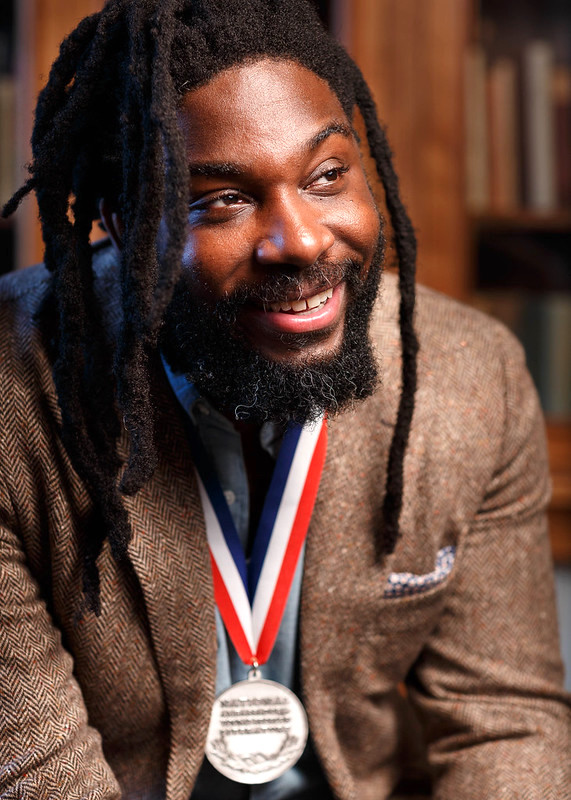
A photo of Jason Reynolds smiling with his medal.

By Julian Oquendo

This article was first published January 27, 2020 in The DC Line here.

When Jason Reynolds was introduced earlier this month onstage at Coolidge Auditorium at the Library of Congress, a packed audience of middle and high school students from DC erupted into a standing ovation. Reynolds, in turn, assured them that their voices have the power “to knock the world off its axis.”

DC native Reynolds is the author of 13 books for young people, including his two most recent — Look Both Ways: A Tale Told in Ten Blocks and Miles Morales: Spider-Man (A Marvel YA Novel). On Jan. 16, Reynolds began a two-year term as the seventh National Ambassador for Young People’s Literature.

The position — co-sponsored by the Library of Congress, the Children’s Book Council and Every Child a Reader — “raises national awareness of the importance of young people’s literature as it relates to lifelong literacy, education and the development and betterment of the lives of young people,” according to the Library of Congress website.

Reynolds, who started writing poetry at age 9, has also received a Newbery Honor, a Printz Honor, an NAACP Image Award, and multiple Coretta Scott King Book Award honors. In 2016, he was a National Book Award finalist for the book Ghost

Reynolds graduated from Bishop McNamara High School in Prince George’s County, which honored the writer during the Library of Congress ceremony with a backpack gift delivered by student representatives.

The national ambassador is selected for his or her contributions to young people’s literature, the ability to relate to kids and teens, and dedication to fostering children’s literacy in all forms, according to a press release from the Library of Congress. The selection, made by the Librarian of Congress, is based on recommendations from an independent committee comprising educators, librarians, booksellers and children’s literature experts.

As National Ambassador for Young People’s Literature for 2020-21, Reynolds will visit small towns and cities across America to engage young people in meaningful discussions in groups large and small. He regularly talks about his own journey from reluctant reader to award-winning author, and he plans to redirect the position’s traditional focus by listening to students and empowering them to share their own thoughts and experiences. Reynolds calls his project “GRAB THE MIC: Tell Your Story.”

At the Jan. 16 event, Reynolds shared his experience of moving to and growing up in Oxon Hill, Maryland, after being born in DC. He recounted writing his first poem at age 9, reading his first novel from cover to cover at age 17, and his relationship with his mother, who attended the ceremony.

“The first thing she taught me to say was: ‘I can do anything.’ I had to say it every night before I went to bed. She drilled that into my head early in life,” Reynolds shared.

“This isn’t an award; this is a role, it’s a responsibility,” he said after receiving the medal. “And I’m going to make sure I do my very best to uphold it and make something of it.” 

Reynolds intends to focus on outreach to rural areas and marginalized communities, recognizing their relative lack of access to library resources and opportunity.

In his speech to DC students, Reynolds relayed a tender story of a student who had once asked him to rap for the audience. Instead, he invited the young girl to come onstage. 

“‘If you want me to put on a song and dance for you, come up here and see what’s like,’” Reynolds recalled saying. In the story, he gave the girl the microphone and said, “Here’s your chance.” 

Reynolds described watching the girl as she heard her own voice reverberate around the room. “In that moment, you could see her begin to swell,” he recalled. “Just to hear her voice loudly, and bouncing off her friends and the walls of the room, to hear her voice loudly was changing her in front of everybody. 

“Maybe it’s that young people don’t know yet what it feels like that their voices have power. That their voices can move and change a room, and shift the temperature and climate of a country and can literally knock the world off its axis. And maybe that’s because we as adults are not letting them know.”

His introductory speech as an ambassador was followed by an onstage interview with Librarian of Congress Carla Hayden. She asked about the idea that young boys typically “hated reading,” to which Reynolds described a world that limits the “idea of what a boy can be.” 

“Young boys oftentimes aren’t allowed to be whole humans. Young girls are never treated like whole humans, but they get to actualize the feeling of being a human,” Reynolds said. “Young boys are treated like whole humans but can never actually live in the world like one. They can’t cry, or be afraid or anxious and insecure.”

When asked about his interest in working in rural areas across America, Reynolds reminded audience members who live in Washington of their proximity to institutions such as the Library of Congress and the largest museum system in the country. “I see young people who can’t come to the Library of Congress. I’ve been in one-stoplight towns where the closest hospital is an hour away.” 

Reynolds is taking over from previous ambassador Jacqueline Woodson, best known for her young adult novel Miracle Boys and the Newbery Honor-winning titles Brown Girl Dreaming, Feathers, Show Way, and After Tupac and D Foster. Introducing Reynolds, she said the role of the ambassador is to connect with young people. 

“[Our] role is to see people, and let you know how much you matter to us. We love you all so much, young people. You are going to save us. I’m sorry you have to save us,” Woodson said to a round of applause and laughter.

Woodson’s work will continue on at the Kennedy Center’s newly opened The REACH campus as a former ambassador of the readership program, which began in 2008. Authors who have held the position in the past have included Walter Dean Myers, Katerine Paterson and Gene Luen Yang. 

DUPONT CIRCLE GALLERY showcases Abstract works + recycled materials

A gallery hallway featuring mixed media paintings and sculptures.

By Athena Naylor

This article was first published January 23, 2020 in The DC Line here.

Two exhibits on display this month at Dupont Circle’s Studio Gallery respond imaginatively to environmental themes, but the featured artists do so through wildly different approaches to aesthetic and ecological concerns.

The Jan. 3 receptions for Lois Kampinsky’s solo show On the Nature of Things and the group exhibition ReClaimed ReUsed RePurposed: Sustainable Art for the Planet were part of the new year’s inaugural First Friday Dupont event, a self-guided art walk around greater Dupont Circle that features stops at several galleries in the neighborhood. A closing reception is set for Saturday afternoon.

Titled after the only known work of the Roman poet Lucretius, On the Nature of Things posits that the natural world has been well-documented already but that, as Kampinsky says in her artist statement, “maybe it’s time to take a playful look, while [the natural world is] still here.” This sense of fun (though seemingly in the face of distress) manifests itself in the vibrant patterns in her paintings from the past few years, which comprise the majority of the exhibit.

Kampinsky’s strengths as an artist shine most in her abstract work. In her “Winglike” series of six 24-inch-by-19-inch gouache paintings, Kampinsky creates compositions that, though inspired by wings, ultimately read as non-representational. Interwoven streaks of color along with triangular shapes could just as easily remind viewers of plants, fish or geological forms. The natural world appears as a stepping-off point for Kampinsky’s more conspicuous artistic preoccupation, the visual relationships between shape and color.

Perhaps this is why her more literal portraits of animals do not feel quite as alive as her abstract paintings. In the large painting “Rabbit,” the flat profile of the titular animal is presented with little personality. The white and faint pale blues of the rabbit’s fur against the painting’s orange, twig-like background do not appeal as much as a color study as Kampinsky’s busier compositions. It is telling that the most visually interesting aspect of another large representational painting, “Bird on Nest,” is, in fact, the nest painted in abstract, tangled streaks of yellows, purples and greens. 

Representational subjects function best in Kampinsky’s paintings when animals are presented in large groups, like in her “Jungle Birds” series, where clusters of colorful birds fill up canvases and create a visual pattern. A similar effect occurs in the large canvas “Purple Flowers,” in which a cluster of flowers crowds the composition and appears almost alien nestled in an indistinct dark, moody atmosphere. Kampinsky’s large painting “Bugs” circles back to her self-proclaimed penchant for playfulness with a composition that situates the viewer at ground level among a tangle of vegetation rendered in neon colors and angular shapes. The titular animals peek out from the shadows, rendered in a nearly cartoonish way that leaves their classification uncertain — truly they can only be specified as “bugs.”

Kampinsky’s paintings display the artist’s love of nature in a traditional manner, with the natural world providing a springboard for aesthetic exploration in the familiar medium of painting. This is not the case in the lower level of Studio Gallery, where the production process of pieces included in ReClaimed ReUsed RePurposed more directly engages environmental concerns of sustainability.

As indicated by the title, the artworks in ReClaimed ReUsed RePurposed all explore, to varying degrees, the idea of recycling materials. While Kampinsky introduces playfulness in her paintings through color and shape, the artworks downstairs spark delight in both their aesthetic appeal and their use of unpredictable materials. 

One of the first pieces viewers encounter in the basement gallery is Gloria Chapa’s sculpture “CASCARAS (One of 5 Baptismal Fonts)” from 2019. Perched on a twisted base of vines, a large basin seems to shine orange under the gallery lights. With a closer look, one realizes what is contributing to the piece’s translucent glow: The basin is made entirely of onion skins held together by resin. As an inventive reimagination of a commonly overlooked material, Chapa’s installation excels.

Other striking pieces include Erwin Timmers’ contribution “Site Map 2.0,” constructed in 2019 from recycled glass along with reclaimed wood and steel. Timmers casts common detritus like bottle caps, soda cans and foam peanuts into gridded patterns within square glass molds. These glass panels protrude from the wall on steel rods connected to a black, backlit circular mount whose rim illustrates the jagged edge of a continuous skyline. The resulting aesthetic is sleek and urban. Through his artwork, Timmers examines how society consumes and discards resources, prompting the viewer to consider not only the end product of the artwork but its origin and process.

Other artists repurpose industrial materials as well. Sculptor Liz Lescault’s small steel pieces use recycled metal to create intuitive, biomorphic forms. Pat Goslee — who, like Kampinsky, primarily paints — creates her compositions on found objects, mainly discarded tabletops. The results are circular artworks — tondo paintings, to be specific — made of threads of color that feel like anxious vortexes. These entropic compositions reflect the artist’s view of her work as a chance to portray emotion, particularly of worry surrounding environmental distress and disaster. 

The pieces of Julia Bloom bring the exhibit back to the realm of natural materials with stick towers inspired by the architecture of nests and thickets and scaffolding. While these free-standing sculptures reference nature through their materials, they are ultimately transformed into something new through the addition of bright primary colors.

Paper artist Jessica Beels, acknowledging that art itself can generate waste, creates collages from the leftover scraps of her past projects. In her compositions, she repurposes paper fragments and creates new handmade paper using discarded denim and other found materials like junk mail, invasive plants and even plastic bags, again calling attention to consumption and the potential of what’s often overlooked or discarded.

If there is one outlier in ReUsed ReClaimed RePurposed, it would be Robin Bell, whose pieces fill the back room of the basement gallery. A video artist known for his site-specific projections installed around DC, Bell takes a more conceptual approach to the question of reuse. (You may remember that Bell was in the news last March when his collaborator was arrested while setting up an installation at the Rayburn House Office Building.)

In effect, Bell recycles his old work. His pieces at Studio Gallery either incorporate elements from earlier installations or are previously created works presented exactly as they were when first made in order to examine how differing temporal and spatial contexts may affect an artwork’s reception and meaning. 

Bell’s contribution to the exhibit stands out because it relies on video components whereas the works by other artists are more concerned with tangible materials. His installations also noticeably push environmental and political anxiety to the forefront.

The year 2020 has already witnessed increasing levels of environmental catastrophe — from the ongoing Australian wildfires to the recent earthquake in Puerto Rico — and the world will continue to face the dangers of rising global temperatures and augmented natural disasters. The fanciful paintings of Kampinsky and the inventive installations in ReClaimed ReUsed RePurposed touch on these concerns, but often relegate the sense of dread surrounding environmental issues to the periphery in works that initially present as aesthetically appealing and fun. In contrast, a work like Bell’s “Death comes from the top, resistance comes from the bottom,” dated 2019/2020, forces viewers to confront current circumstances and, literally, themselves. 

In “Death comes from the top,” the viewer stands in front of a full-length mirror over which hangs a small TV screen. The monitor plays a looped video in which the camera zooms out to reveal a kitschy metallic skull wearing a red cap with the phrase “THIS IS NOT NORMAL” stitched to the front. The politically charged message paired with the skull comprises a contemporary memento mori easily applicable to current environmental circumstances. The inclusion of a mirror that makes viewers face themselves then provokes the question of what we can and should do in these atypical times. The question can expand to encompass the entire gallery: During alarming times, in what ways may artists react or resist?

Review: Joe Calarco’s A Measure of Cruelty from 4615 Theatre Company

By Julian Oquendo 

This article was first published January 20, 2020 in DC Theatre Scene here

There is something very refreshing about being an audience to theatre outside of a theater. 4615 Theatre Company is  proving, as did the bar hopping runaway hit The Smuggler late last year, that theatre works perfectly well when set in a bar or restaurant, park, library, or town square.

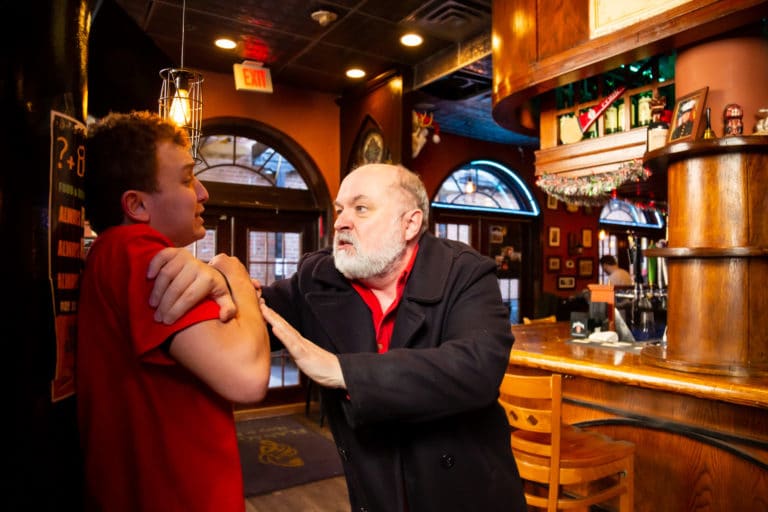
In this case, Measure takes over the historic Flanagan’s Harp and Fiddle in Bethesda, and the bar couldn’t be better prepared for this production. The efficiency of arriving a few moments earlier, grabbing a drink and a bite before the start of the show, and knowing that you’ve still only spent a fraction of what a night out to the theatre in DC would cost, makes me wonder why more restaurants and theater companies aren’t capitalizing on this practice.

Measure, written and directed by Joe Calarco, is a surprise addition to 4615’s third season. Calarco told DCTS that he wrote the play in the years following a harrowing South Florida case where three teenagers doused Matthew Brewer in alcohol and set him on fire. Brewer survived, but the case made national headlines and became a national talking point on how, as a nation, we handle bullies and abuse. While it helps to go into this play knowing about the case, the play isn’t about Brewer. It’s about the bully who lit the match.

Specifically, it’s about one of the bullies, Derek (Ethan Miller) and the recently discharged, traumatized soldier Buddy (Scott Ward Abernethy) who hides Derek in his father’s bar in the days after the crime.

Miller performs the role of Derek with a frenetic energy, moving and weaving through the bar and audience like a trapped, but ultimately terrified tiger. He’s living in fear of Buddy, his shelter and, technically, his captor. Miller shows us Derek as Calarco wrote him: gross, maybe drug-fueled and desperate, a kid hoping to run away from his consequences.

Abernethy is outstanding as Buddy. His embodiment of physical and emotional PTSD are reflected in a limp to his right leg, in how his shoulders slump or grow at the call to violence. You see in his body a weight getting lifted when he sees a solution that violence might resolve, and you see that weight falling back when he weighs the consequences of his actions. This is his drive, and, to avoid spoilers, I will only say that Abernethy wonderfully portrays the desire to keep that weight off other people. 

Miller and Abernethy’s performances, when they’re staged together, within a foot of audiences, drive home the proximity to violence we are witnessing. When Derek holds a bat over Miller’s head, when you can feel the venue rock as one actor is shoved against the bar, we, the audience, feel a little closer to their tensions and fears.

Nick Torres (Teddy) also shines as Buddy’s father, and aging bar owner, struggling with signs of early dementia. There is a heart-wrenching moment in the play when Buddy needs to remind him which son Teddy is remembering. There are other moments that feel off, and are maybe just clues to the emerging sickness: he quietly struggles to remember where he keeps the beer glasses, he thinks the bar is out of scotch when there’s a bottle present on the bar’s rail (accident or no? I wasn’t sure).  Although Torres’ performance is exceptional, his character does seem to operate only as back story to drive Buddy’s emotional landscape.

Measure feels like a narrative from another era, when we could still pretend that bullies and abusers don’t win in the end. (Ha!) That empathy and a hug were the solutions needed to put a bow tie on our darkest emotions. It’s just hard to empathize when, in today’s era, you almost suspect Derek and Buddy’s actions would be forgiven with a pardon.

This play isn’t for you if you’re squeamish to violence. Calarco, in his writing and direction, effectively portrays the traumas and broken natures of these characters, and delivers back story via audio from the news coverage of Miller lighting his victim on fire. There’s a particularly jarring scene where we hear audio from Buddy’s time in the military.

The setting is perfect, and, saying that, I apologize to set designers everywhere. Harp and Fiddle serves as a great backdrop to immerse yourself in this world Calarco has built. (This is the first time Measure, set in a bar, has been produced in one.) The wafts of what I found to be a damn good burger and decent fried food coming from the kitchen build an atmosphere that can’t be replicated on a stage. Thirty-five years of beer soaking into the bar can evoke feelings of previous generations and the sadness of missing memories. The clink of bar glasses, the part of the floor that needs repairs, all serve to the play’s setting of a fragile world that will struggle to get fixed.

A Measure of Cruelty will perform for one more weekend on the 25th and 26th. Their early matinee shows are perfect for a lunch and theatre experience, with time left over to find things to do for the rest of the day. (There are other events happening at Harp and Fiddle on the same days that weekend.) There are audiences hungry for this type of theatrical event. Perhaps you are one of them.

Haysam Kadri on playing the villain in A Thousand Splendid Suns

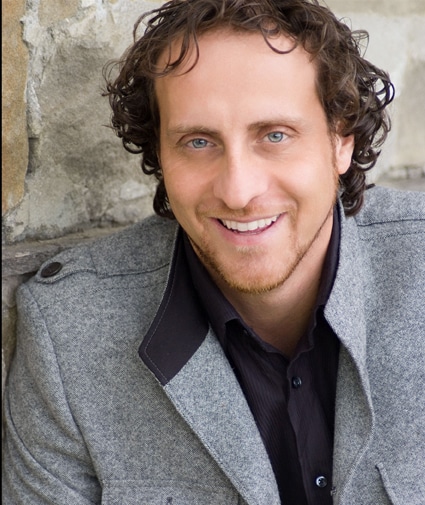
A headshot of Haysam Kadri.

This article was first published January 16, 2020 in DC Theatre Scene here.

A Thousand Splendid Suns, Khaled Hosseini’s best-selling novel, explores the lives of two Afghan women, Mariam and Laila, both living in war-torn Kabul and married to the same man, Rasheed. Ursula Rani Sarma’s script has been successfully staged at theatres in Canada, London, and California. On January 21st, this theatrical adaptation will be performed for the first time at Arena Stage in Washington, DC.

Haysam Kadri joins DCTS for a conversation about this production, his role as antagonist Rasheed, and his own work as artistic director of The Shakespeare Company in Calgary, Alberta.

How are rehearsals going?

It’s a good group. It’s always a good process with Carey Perloff (the director) at the helm.

What’s different about this production?

With any new script and any new story there’s an opportunity to discover things out of it. I run a Shakespeare Company back in Calgary. When you come back to a play you feel like you’re scratching the surface. This play is so topical now, it resonates with so many people. You travel around America and there’s an overwhelming response.

Every time I do this play I discover new things. I’ve been fortunate enough to do it in Canada as well. I’ve worn many hats for this play: there’s always something to unfold and discover. This will be my ninth or tenth time doing this production, so obviously, it’s doing something right. 

You’ve also directed this production in London?

London, Ontario and Vancouver. It looks like it’s going to continue to have a life in Canada and in the States.

Every time a new person inhabits a new role, they bring a new element to it. You’re always finding different dynamics, interpretations of the line, a different action, energies are different, so if things change. The stories of Layla and Mariam are elevated. They resonate differently with different people and Carey takes what we do across the country. “I discovered this moment here. It might help the actor in this particular case.”

Any particular changes to the play when you move closer to the nation’s capital?

We’re a little closer to the political pulse; we’re in the middle of the political pulse. I’m curious to see how the audience is going to react. We discover new things in different cities. Audiences are different in Canada.  American audiences seem to be very vocal, wanting to express how they feel during the show. Canadians seemed to be more reserved during the show. Americans are one degree away from the story— to Afghanistan. They have a different relationship to the political complexities of the story than Canadians.  It’s very curious to see what the DC and surrounding audiences will take out of it.

With A Thousand Splendid Suns, how important is that you’re seeing a degree of diversity on stage?

What’s important is that we’re giving a voice to the people of Afghanistan, a different voice you don’t see in the media or the news. This is a story set in Afghanistan but this story could happen anywhere. There’s a lot of domestic violence in the play, which is not reserved for one part of the world.

As we start to go and we start to see the voice of Afghan people, you start to see audiences that can relate to those characters. It’s not them and us. It’s a universal story.

This will be our ninth production of this play. It’s not a tour. We’ve spent over 3 1/2 years. It’s been a long process, page to stage. Audiences have been quite affected by it. We’re really excited to have 11 diverse people on that stage of South Asian and Middle Eastern extraction. When you get that, it doesn’t happen often.

Do you recommend the play for someone who hasn’t read the book?

You don’t need to read it. Actually, it’s one of those books you can’t put down; it’s a quick read. It has a built-in audience. it’s always difficult to transpose a novel into a play, to distill it into two hours, but I think we have a very successful adaptation on our hands. 

Tell us about your role as Rasheed.

Rasheed is very interesting character. The audience won’t like him, I will say that. What’s important is to find the humanity in a character that has not many redeeming qualities, and that’s been the challenge as an actor, to make this individual three dimensional human being. He does say things that are off-putting and actually offensive. What’s more important to me is to make this person a human being. He’s also a victim of society and ideology and a lot of the insecurities that he goes through are circumstances. 

How do you see the audience respond to him?

His version of love is distorted. His version of love is based out of a fear. He thinks he’s doing everything right. What makes a guy like Rasheed a villain is that people see his version of love and they’re just appalled by it. It’s quite an interesting character study and interesting to see audiences react. You feel the vitriol.

What’s something about you we won’t be able to find on Google?

I have three daughters. I love being a dad. [Thousand Splendid Suns] is a story about two women. I’m surrounded by women in my household. This play resonates when you see the friendship of two women: the adversity, the harrowing tale that they go through and the sacrifice of love. I think about my kids and it’s hard to be away from my family, but this play really puts into perspective the privileges we have in this part of the world. I don’t take for granted what it is to live in the western part of the world. Puts things into perspective as the father of three girls.

And I’m a Nationals fan. The Expo’s were my team when they moved.

What about your work as artistic director for The Shakespeare Company in Calgary?

Shakespeare became one of those things; I fell in love with it. I threw my art into the classical works. When I got to Calgary, it was just serendipitous. I got back and auditioned for the artistic producer role:  It’s been 7 years [I’ve worked] as an artistic producer.  And Carey Perloff just directed our version of Merchant of Venice. 

You also have something called Hammered Hamlet?

I’m always finding ways to make Shakespeare accessible. There’s always a stigma, because it’s taught in English class and taught in academic exercises, it’s quite a dry biscuit to swallow so we do shows that excite and inspire. And sometimes we do shows that entertain. We do shows where 3 of the 5 actors take shots in front of the audience before the show and we auction off to a king and queen of the house to dictate when the next shot goes. They’ll stop the play to say when the actors get to take another shot.

Let me tell you, Shakespeare sober is already quite a complex exercises. It was brilliant. We sold out three weeks before we opened.

It’s a novelty concept. We sprinkle that in there with our traditional shows. It brings a different demographic of people. We saw a completely different audience base. It was an exciting experiment and we learned a lot.

You aim to deliver a different accessibility to Shakespeare?

When high school students read it in English, it’s such a dry exercise because it’s being taught as an academic exercise. It’s taught cognitively and not creatively. Our attention spans are really short.  To sit down for three hours and hear English as a second language, it’s a tall task to ask from an audience, in my humble opinion.

What we’ve done is we’ve reverse the stigma and the perception by calling it “Lean and Mean Shakespeare,” by making it exciting and by doing those little things: drunk Shakespeare, we did a zombie Shakespeare (people afflicted by the plague). We brought in a younger demographic and build up future audiences. We also do traditional shows: period and hard-hitting Shakespeare.

I did a version of Hamlet and took it down to 2 hours and 10 minutes. 

Thank you!

Exactly! Because I’m interested in making it accessible to a wider range of people. There are very few people, I’m gonna be honest, who are going to want to sit through a three and a half hour Shakespeare without getting bored. It hurts me to slash it, but you want to make it exciting and you want to bring people to the theatre.  It makes a difference that people go into a show and 7 and are out by 9:15 pm. Psychologically, that’s a big deal. “Great, I’m gonna go to another one.”

shattering glass ceilings: Charlene V. Smith makes history with 8 play cycle of Shakespeare’s histories

By Julian Oquendo

This article was first published January 10, 2020 in DC Theatre Scene here.

Charlene V. Smith is not shying away from a theatrical marathon. As the artistic director for Brave Spirits Theatre (BST), Smith and the company’s productions have often focused on learning contemporary lessons from historical, usually action-packed, plays. The company’s tagline: Verse and Violence, acknowledges the nature of what you can expect from them, an appreciation of the writing of that era, and an acknowledgement of the violent drama involved.

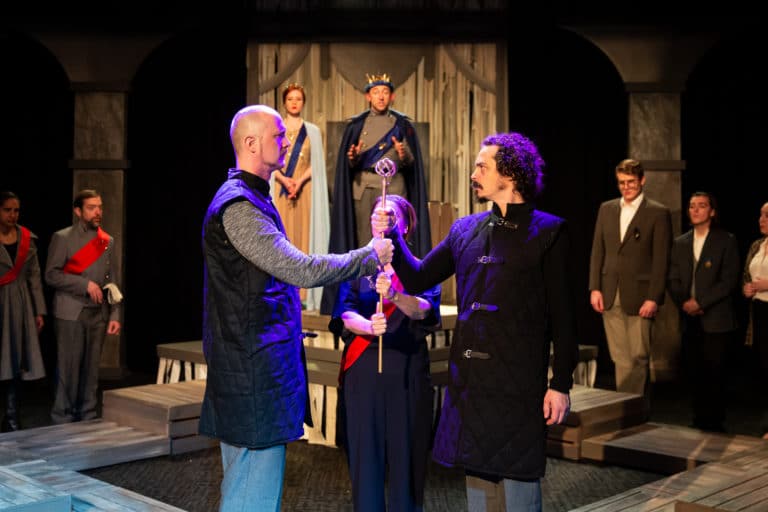
And this year, Smith will be the first woman in the world to lead an eight-play cyclical staging of one of the most dramatic arcs of William Shakespeare plays: Richard the Second, the Henry plays, and Richard the Third.

Starting with Richard the Second in January and culminating in a marathon performance of all eight productions during the summer of 2021, BST sees these plays through a feminist lens, and promises a look at they can reflect on issues of gender and race today.

Tell us a bit about yourself.

I’ve been doing theatre my whole life. My mother was one of the co-founders of Bay Street Players, a community theatre in Eustis, Florida. It’s where she and my father met, and where I grew up with my brother and sister. We all spent a lot of time together at the theatre, and there were several productions where all or most of us were involved. I knew from a very young age that I wanted to keep doing theatre for the rest of my life.

What brought you to DC?

I came to DC after college on what I assumed was a temporary stop on my way to New York City. I had heard there was a good theatre scene here, so it seemed like a friendly place to take the first steps into a professional theatre career. I was only here for about six months when I realized I wasn’t leaving.

Why this cycle, why now? 

In some ways, I’m doing the cycle as early as I thought I could get away with it! The longer answer is that I saw the Royal Shakespeare Company’s history cycle in 2008 and walked out of that experience determined to mount my own cycle at some point. Once Brave Spirits Theatre was growing and I started thinking about when we could do it, the year 2020 popped out to me. It was far enough away (at that point) to give us planning time, and it allowed me to make use of the clever tagline “History is 2020.” The year 2020 in of itself contains circles and repetition, and that hindsight always allows us to see much clearer the consequences of our actions, political or personal. I also knew then that we would be experiencing an election cycle during most of the project, though, of course, I couldn’t have predicted how painful and fraught our own political process would become.

I hope these plays will help us all think about the systems of power in our own society, the harms they cause, as well as who benefits from them, who is complicit in them, and who are the people always left cleaning up the messes.

What’s the story on how Brave Spirits got started?

So many coincidences and strange twists of fate! Victoria Reinsel and I were randomly paired together for a callback for The Comedy of Errors for the Virginia Shakespeare Festival in 2010. You always get very little time at these things to prepare with a stranger, but we went in together and something clicked. I remember thinking, “this woman knows what she is doing.”

We agreed that we loved how much Shakespeare there was in this area but we were both still yearning for a different kind of Shakespeare than what we were seeing. We wanted DC to have a company that was passionate about text work and that gave more focus to female artists and characters.

How did the Richard the Second rehearsal process look like for you and the actors? Are you prepping for the next production already?

I spent a couple of years on a very complex spreadsheet. I had to figure out how we would rehearse and perform eight plays on a non-equity schedule, ie, with only nights and weekends.

How does each play get the rehearsal hours it needs, and how do we do all this without burning people out who are also working other jobs? Due to venue availability, we ultimately split the project across two years and I think that has turned out to be a positive choice. We’ve been overlapping the first four plays in the rehearsal room since the beginning.

How many directors are going to be involved for this two year stint? 

Two. I am directing this year’s four plays and Jordan Friend, artistic director of 4615 Theatre Company, is directing next year’s four plays. The two of us have also had many conversations about the overall vision and arc of the project and we are staying involved in the other person’s half. He’s also composing and music directing for these first four plays, along with offering feedback to me from a director’s eye. I’ll be playing Margaret of Anjou in the second four plays when he takes over the directing reins.

Are you expecting to keep the same production team throughout the two-year period?

The hope is that the entire acting ensemble and production team will stay with the project the entire way through. 

Are there any moments from the cycle that you’re most excited about staging? 

I’m really excited about the Henry the Sixth plays in general – they are so rarely performed, even less so in three parts, and I love them dearly. For the plays I am directing, I have been most nervous from the beginning of the choruses in Henry the Fifth — how do we stage them in a way that makes sense in the context of the cycle as a whole and supports the way in which we want to critique these men in power?

I’ve found in the past that the moments in plays that I am most nervous to work on end up being the most rewarding. I’m hoping that will prove true here as well.

With such a busy/tight marathon scheduling, how are you (and the actors) keeping your spirits up?

I know we are very lucky that this cast bonded quickly and easily and remains close and friendly. They are excited each night to be working together and that really is what makes this all possible. They’ve also found their own traditions – this is a cast that is drinking lots of tea together and they chat and catch up each night in the kitchen as the water is boiling and the tea is brewing.

Your Twitter seems to be set to post the same thing every day?

Yes, I do! For those who don’t know, every day at noon, my twitter account posts a reminder that Hillary Clinton won the popular vote by almost 3 million votes. It is my own way of acknowledging the history we are currently living. And though my followers are used to it by now, every so often one of them responds because seeing it on a particular day hit them in a particular way. It’s an important reminder that more of us wanted to work for a better future and a sobering reminder of the way our antiquated and undemocratic electoral college subverts the will of the people.

There was this amazing study that came out a few years ago that tracked Hillary’s approval ratings – she was always more popular when she was doing a job and less popular when she was applying for a job or a promotion. Our society still punishes women for seeking power and I think about that a lot, especially with the material we are rehearsing now.

The Dead, A musical based on James Joyce’s story, from Scena Theatre

By Mercedes Hesselroth

This article was first published in DC Theatre Scene here.

Irish author James Joyce unfairly gets a bad rap for being “too difficult” to read. His first draft of A Portrait of the Artist as a Young Man was rejected with a note from the editor saying “I can’t print what I can’t understand.” Joyce’s last and most ambitious work, Finnegans Wake, is often said to require a second book, A Skeleton Key to Finnegans Wake by Joseph Campbell and Henry Morton Robinson, to be read in tandem if one has any hope of understanding the heavily experimental writing style.

Most appraisals of his incomprehensibility are exaggerations, but for those who want a lighter introduction to the world of Joyce, director Robert McNamara has selected James Joyce’s The Dead as Scena Theatre’s holiday show. The musical is a Tony Award-winning adaptation of the final installment in Joyce’s short story collection Dubliners, in many ways a prequel to his best-known tome Ulysses. Joyce’s literary admirer T.S. Eliot called The Dead “the finest” of all the stories in the collection, and perhaps of any short story ever written. Like Joyce’s other writing, The Dead focuses on the everyday people of early 20th-century Ireland and their search for meaning in the face of mortality.

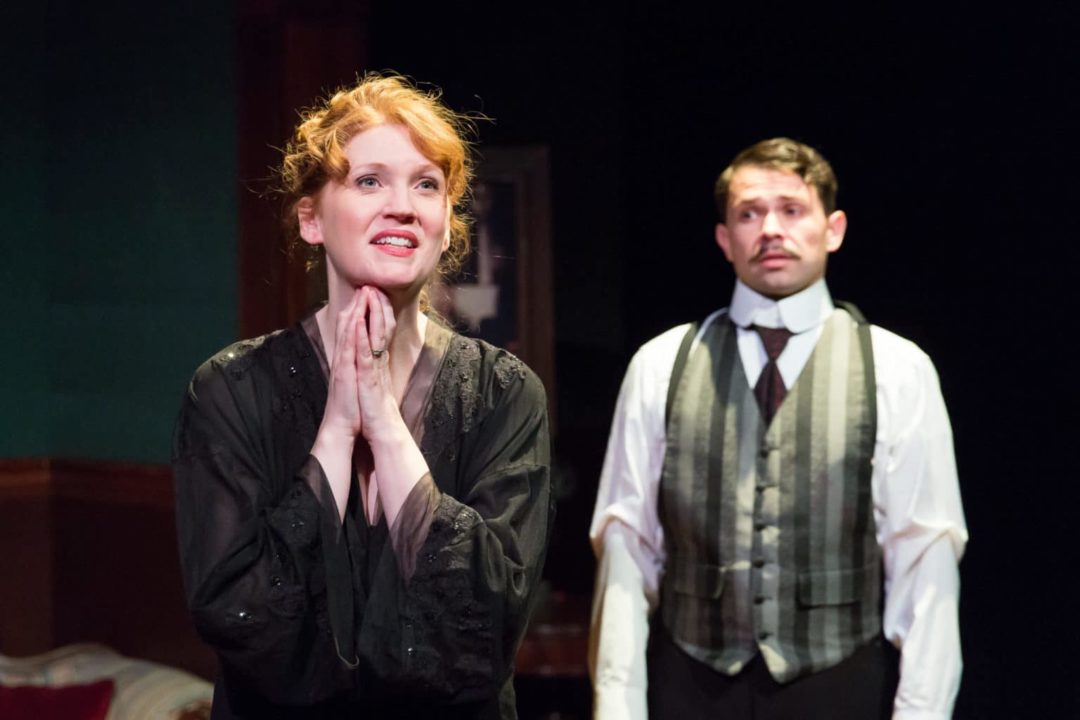
Gabriel Conroy (Louis Lavoie) and his wife Gretta (Danielle Davy) attend a Christmas party at the home of Aunts Kate and Julia Morkan (Rosemary Regan and Andrea Hatfield, respectively). But over the course of the evening, lost love, failed careers, and family secrets threaten the joyfulness of the proceedings. Most problems with the show come from the process of adaptation and are unavoidable for any production. For one, there are twice as many characters than necessary (13 in total), which prevents several of the party guests from having any discernible arcs and leaves cast members cramped into various corners of the stage. Just as Joyce’s writing alternates between the planes of realism and symbolism, this production also mills between a natural and a constructed world.

As such, many of the songs come stacked in rapid succession at the beginning of the show. Less than a breath after finishing their own number, the characters immediately cajole another partygoer into performing. Though this series of songs interrupts all the conversations we just got a peek into, the majority of these threads are dropped entirely and don’t impact the ending of the show. Almost as soon as he arrives, Gabriel is told off by the Jo March-like Molly Ivers (Mo O’Rourke) for writing at a pro-English newspaper, but their debate about the future of Irish sovereignty never reaches a full conclusion. Aunt Kate insults the maid Lilly (Emily K. Collins) at dinner – implying she’s on the verge of hiring someone new in her place – but this tension never resurfaces.

The songs themselves are adeptly accompanied by music director Greg Watkins on keyboard. James Joyce’s The Dead has never received an official wide release cast album, but one wonders if the emotional resonance of the songs would have been clearer with more musicians supporting the cast.

Irish author James Joyce unfairly gets a bad rap for being “too difficult” to read. His first draft of A Portrait of the Artist as a Young Man was rejected with a note from the editor saying “I can’t print what I can’t understand.” Joyce’s last and most ambitious work, Finnegans Wake, is often said to require a second book, A Skeleton Key to Finnegans Wake by Joseph Campbell and Henry Morton Robinson, to be read in tandem if one has any hope of understanding the heavily experimental writing style.

Most appraisals of his incomprehensibility are exaggerations, but for those who want a lighter introduction to the world of Joyce, director Robert McNamara has selected James Joyce’s The Dead as Scena Theatre’s holiday show. The musical is a Tony Award-winning adaptation of the final installment in Joyce’s short story collection Dubliners, in many ways a prequel to his best-known tome Ulysses. Joyce’s literary admirer T.S. Eliot called The Dead “the finest” of all the stories in the collection, and perhaps of any short story ever written. Like Joyce’s other writing, The Dead focuses on the everyday people of early 20th-century Ireland and their search for meaning in the face of mortality.

But over the course of the evening, lost love, failed careers, and family secrets threaten the joyfulness of the proceedings. Most problems with the show come from the process of adaptation and are unavoidable for any production. For one, there are twice as many characters than necessary (13 in total), which prevents several of the party guests from having any discernible arcs and leaves cast members cramped into various corners of the stage. Just as Joyce’s writing alternates between the planes of realism and symbolism, this production also mills between a natural and a constructed world.

As such, many of the songs come stacked in rapid succession at the beginning of the show. Less than a breath after finishing their own number, the characters immediately cajole another partygoer into performing. Though this series of songs interrupts all the conversations we just got a peek into, the majority of these threads are dropped entirely and don’t impact the ending of the show. Almost as soon as he arrives, Gabriel is told off by the Jo March-like Molly Ivers (Mo O’Rourke) for writing at a pro-English newspaper, but their debate about the future of Irish sovereignty never reaches a full conclusion. Aunt Kate insults the maid Lilly (Emily K. Collins) at dinner – implying she’s on the verge of hiring someone new in her place – but this tension never resurfaces.

The songs themselves are adeptly accompanied by music director Greg Watkins on keyboard. James Joyce’s The Dead has never received an official wide release cast album, but one wonders if the emotional resonance of the songs would have been clearer with more musicians supporting the cast.

Davy delivers the strongest vocal performance of the night, singing of a distant memory in “Goldenhair” and relaying the story of her first love to Gabriel in “Michael Furey.” Lavoie also serves as an able narrator, guiding the audience through the offstage action of the play.

All together the cast builds a believable camaraderie, the kind of laughter between old friends potent enough to make you forget what was so funny in the first place. Like the characters, this feeling of community is all one can hope for during the holidays while we celebrate loved ones past and present, as well as those we have yet to meet.