
Fat Kids are Harder to Kidnap reviewed

If you’ve seen Too Much Light Makes the Baby Go Blind—the innovative devised theater work by Chicago-based company Neo-Futurists—then in a significant way you have already seen Fat Kids are Harder to Kidnap. You will notice the same clothesline with numbered fliers, menu with play titles, and looming timer upstage. Even the language of the curtain speech is roughly the same. However, this similarity should not scare away audiences: Fat Kids are Harder to Kidnap is fun, despite being derivative in every sense of the word.

Very much like the Neo-Futurists’ piece, Fat Kids is based on a simple premise: the performers will put on 20 short plays in 30 minutes. The audience assists the five-person ensemble by selecting scenes/plays from a numbered handout that correspond to the numbered fliers on the clothesline. The audience shouts a number and the actors perform that play.Fat Kids differs Too Much Light in that the plays are teen-friendly, including bits about apps, parents, and the video game Call of Duty.

The performers are largely good but Ross Nasir is a clear standout. She performs a memorable parody of Beyonce’s hit “Irreplaceable” with perfect R&B warble, and is hilarious as a frustrated video game player. She sells one of the performance’s rare high-concept plays. She most fully embodies the energy which all of the performers have throughout; they’re having a great time and you will find it easy to join in the fun.

Fat Kids has a few small, but significant flaws. Allowing that the piece is intended for younger audiences, some of Melissa Sim’s joke writing feels stale. Young audiences will appreciate the lightness of the humor, but they will certainly hear jokes they have heard before. As the troupe is based in Singapore, some of the cultural jokes in pieces like “Singapore in Jeopardy” (for example) simply don’t land well with American audiences.

Fat Kids are Harder to Kidnap might be a hard sell for Fringe audiences because it’s brief, oriented toward young audiences, and offers material that patrons may have encountered before. But the explosive energy of the performers and delightful integration of the audience make Fat Kids worth a viewing. The performances of Fat Kids occur in the upstairs Fringe space making it a convenient refresher to enjoy between more adult shows.

This piece was originally posted on DC Metro Theater Arts

Elephant in the Room reviewed

Elephant in the Room at the Capital Fringe Festival

There is an ancient Indian story that tells the tale of blind men unknowingly encountering an elephant. Based on which part of the elephant they touch, each man proposes that the animal is something else. Elephant in the Room, from San Francisco-based physical theater company Right Brain Performancelab, presents a similar experience for audiences. Depending on which part of the performance you relate to most you may walk away with a different understanding of what the piece is about. That ambiguity, and the refined clowning of the performers, makes Elephant in the Room a treat.

The story is organized around the invisibility of the elephant and a conceit that actors and audience must work together to get the elephant to materialize. Two clowns (Jennifer Gwirtz and John Baumann) conduct and guide the mimed and sung vignettes, all of which allude to the Elephant’s meaning. Sometimes it seems she (the Elephant) symbolizes American apathy. Sometimes it seems she represents the meaning of life. It may be that she stands in for something about the performer and audience relationship. It’s never entirely clear, but seeking out meaning in the vignettes is a fun mental game.

Gwirtz and Baumann have great energy, a quirky sense of humor, and are powerful physical comedians; they’re especially strong in their dealings with the elephant, working together in mime to show the elephant growing and shrinking out of thin air. The pair has been creating experimental physical theater since 1998 and that long-term partnership is clear in their chemistry.

On reflection, it’s amazing that Elephant in the Room uses only one or two props, with no sets. Right Brain Performancelab is brilliantly creative about transforming costume pieces, and their own bodies, into useable props. The world they create with words, music, and movement feels just as full as more traditional theatrical productions. Elephant in the Room adds a healthy scoop of dark philosophy to the typically light fare of clowning.

Elephant in the Room is precisely the kind of show one expects at the Fringe. It’s quirky, and somewhat impenetrable, and the experimental energy is delightful. The performances are professional-grade, but the performers tell you at curtain call that you should find them at the bar. Some may feel around this show and find themselves disappointed, but others will discover they have found just what they were looking for.

This piece was originally posted on DC Metro Theater Arts. 

Elizabeth Bruce’s Theatrical Journey

A phone rings. The voice on the other end reports that there’s an emergency: a teddy bear has broken its leg and needs to see a doctor right away. Thankfully, the phone was answered by teaching artist Elizabeth Bruce and her young students are now on the case.

This scenario is one of many “journeys” created by Bruce through her Theatrical Journey project at CentroNía, an award-winning educational organization in Columbia Heights, where she serves as Community Arts Producer. Theatrical Journey use the arts to develop problem-solving skills in students aged three through five. The students solve scientific problems in pretend play scenarios: “journeys.”

As summer reaches its middle, American parents and students alike begin to think about returning to school for the fall. Simultaneously, the U.S. Department of Education is working to finalize statutes for implementation of the Every Student Succeeds Act, the 2015 national education legislation that will impact student teaching and curriculum across the country. Just as policymakers are considering a new approach to public education, unconventional educators like Elizabeth Bruce provide a window into a potential future.

“I have the best job!” Bruce exclaims in a Columbia Heights coffee shop.

Continue Reading

2016 Capital Fringe Review: ‘Hunt’

Jean P. Bordewich’s political drama Hunt turns back the clock to a divisive time in American politics – the early 1950s of Joseph McCarthy – but the characters and issues resonate in today’s political landscape. A passionate, high-profile Republican who blames minorities for America’s looming downfall. A powerful Democrat too focused on his own ascent to address pressing issues behind the scenes. Well-meaning politicians are caught in bi-partisan crossfire.

Hunt excavates the true story of Senator Lester Hunt (a solid Terry Loveman), who was blackmailed by McCarthyites Senator Styles Bridges (Scott Cummings) and Senator Herman Welker (Gary DuBreuil) in 1953. The Senators’ leverage against Hunt was the initially quiet arrest of his son Buddy (Brice Guerriere) for solicitation of a male undercover cop. Over the course of the play Hunt wrestles with whether to fight the system or give in, receiving help along the way from his insightful wife Nathelle (Suzanne Martin, in a sharp turn) and a kindly reporter (Michael David Anderson).

Despite some shortcomings in the script, Hunt benefits from strong performances. Director Kristin Shoffner manages an expert ensemble that fit well in the period setting. Anderson and Guerriere have a believable rapport, which brings some relief and humanity to the story’s development. Suzanne Martin is delightful to watch as the Senator’s wife, carefully balancing support and strategy. Cummings and DuBreuil are frightening as politicians who embody the banality of evil. Terry Loveman in the title role feels every bit the Wyoming politician: strong, principled, but still insecure at his core.

Costume Designer Julie Cray and, presumably, Shoffner, did strong work on the production design. The costumes and set are 1950s Americana, smartly simple enough to weather the notorious 15-minute Fringe pre-show load-in. Similarly, Lighting Designer Colin Dieck creates moments of thrilling drama using a modest light plot. The work of Composer Josh Harty and Sound Designer Niusha Nawab is complex, weaving original music and sounds from nature into popular songs and news reports from the period.

Audiences coming to the Flashpoint for Hunt will leave with a new perspective on history and, perhaps, even a new understanding of the present. With a disturbingly relevant subject, fabulous performances, and impressive design, Hunt should be near the top of every Fringe itinerary.

The piece was originally posted on DC Metro Theater Arts

2016 Capital Fringe Review: ‘Concrete Devotion’

Fringe performances tend to fall into one of the following categories: shows that make you cringe, shows that make you feel, or shows that make you think. Concrete Devotion, from well-established company Motion X Dance DC, offers three contemporary dance premieres with emotional heft and visual dynamism. It manages to make you feel and think while avoiding that other common Fringe experience.

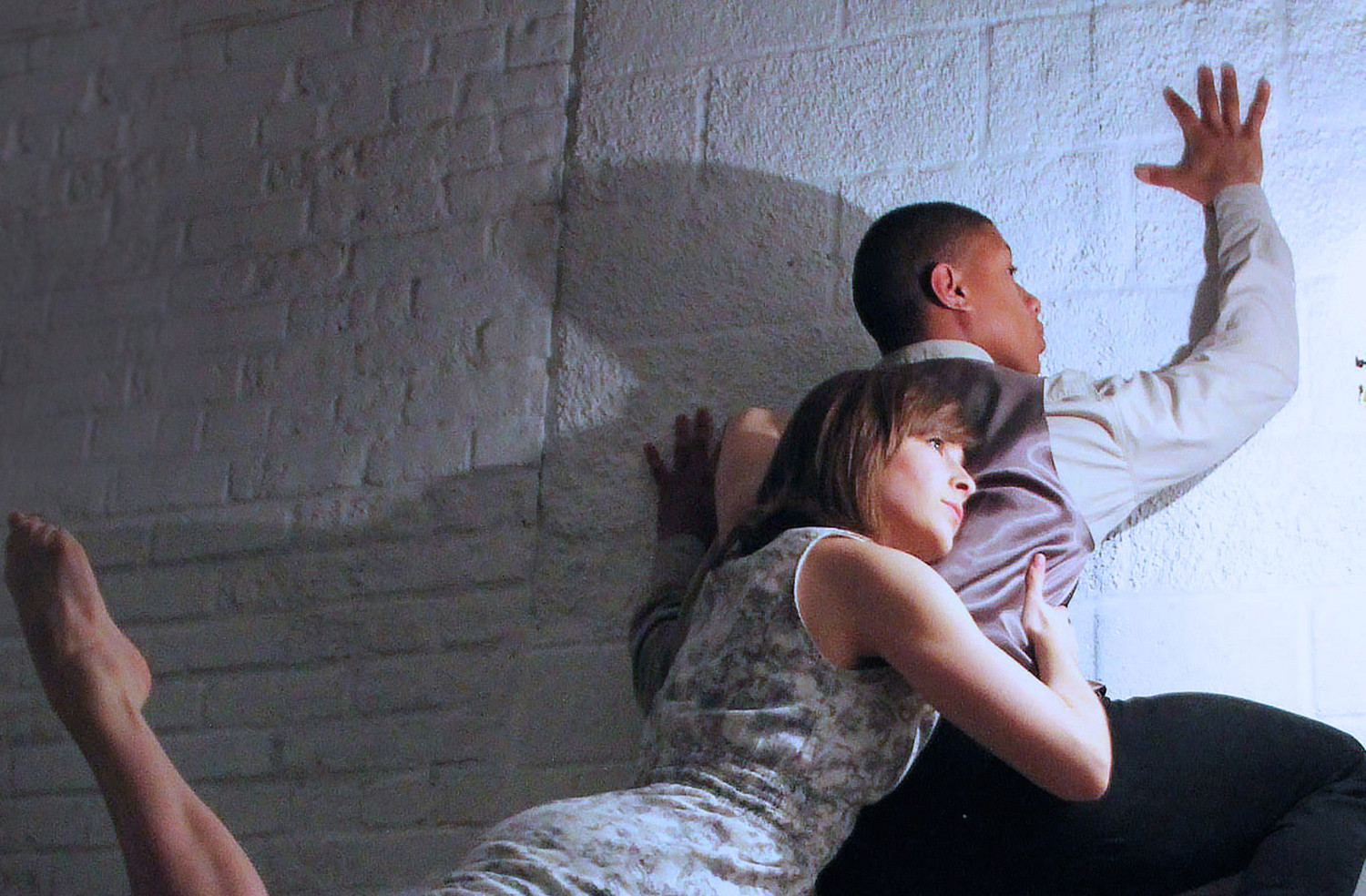
The first two pieces – “Kindred” and “It’s On Her” – tackle illness, physical and mental respectively. Lauren Carnesi’s choreography for “Kindred” smartly utilizes weight-sharing to portray how disease can make the body weak and the community strong in supporting the ill. Sammi Rosenfeld’s “It’s On Her,” however, is the stand out of the concert. An exploration of mental illness, the staccato rhythm in the music and movement envelop the viewer in the fever pitch of mania. Concrete Devotion closes with a featured piece of the same name that follows a couple as they balance shared professional life with the intimacy of their relationship. The choreography is beautiful at moments – two dancers slowly walking away from each other, for instance – but in places retreads its own imagery (without additional impact.)

The ensemble on the whole is strong, but could be more cohesive; there were many moments when the dancers seemed to be out of tune with one another. Christopher Saunders, the only male in the ensemble, was a standout also for his strong solos, including an emotional performance in “Concrete Devotion.”  Otherwise, the ensemble was balanced enough that all dancers could shine.

The technical elements of Concrete Devotion are intriguing and may be one of the central selling points for the performance. Film of the dancers talking about their personal lives, designed by Stephanie L. Dorrycott and projected throughout, gave each live piece emotional roots. The unsettling imagery in the film of dancers lying on their sides on the floor and running along the walls is striking. The puppet designed by Rachel Adler for “It’s on Her” could successfully play a variety of emotions and added depth as a “character.”

Concrete Devotion will transport you to a cerebral place of emotional contemplation. It’s honest expression of sickness, mental illness and relationship trouble could certainly inspire a fulfilling trip to the Fringe bar.

This piece was originally posted on DC Metro Theater Arts

Highlights – July 8, 2016


Artapedia Highlights
Check out our diverse June coverage! From an orchestral concert to a controversial panel discussion.


theoctoroon_178-webAn Octoroon by Branden Jacobs-Jenkins at Woolly Mammoth Theater Company
“What is it to be a modern black playwright? What is it to be a slave owner? What is it to be a free black man in the time of slavery?”

NOI-(6-18-16)-Main-Performance-14-by-Dylan-Singleton
Musicians at the National Orchestral Institute Perform Two Dances and a Titan
“[I]f the audience’s standing ovation is any indication, America’s orchestras may yet succeed in their battle for relevancy — without sacrificing artistic integrity.”

dance-of-the-serpents-by-amber-robles-gordon-at-capital-skyline-web
DC African-American Arists Challenge Stereotypes at Phillips Collection
“Does it matter if a work of art is made by an African-American? Broader still, does the identity of any creator matter to the artwork?”

and from our sister site, Bourgeon:

Rich O'Meara performing CropScoring One Mutual Happiness with Uncle Funsy
by. Rich O’Meara
“Each performance changes somewhat depending on the energy coming from the audience or how David improvises his lines. I’m constantly finding new things to play within the structure I’ve built.”


Upcoming Events


Artist Journalist Panelists
Panel Discussion: Artist Journalists
July 17
The evolving forms of news media have created a new kind of journalist: an expert in the field whose journalistic objectivity is sometimes suspect. What does it mean when artists are also arts journalists?

Kaiser-web-promo-crop
Capacity Building in the Arts: a workshop with Michael M. Kaiser
July 23
How can you, as an artist or arts administrator, ensure that you not only survive, but thrive? This workshop will include a presentation by Mr. Kaiser followed by a question and answer session.


Arts Journalism Spotlight


Angels in America playwright Tony Kushner
“Angels in America: The Complete Oral History”
by. Isaac Butler and Dan Kois
Slate
“Slate talked to more than 50 actors, directors, playwrights, and critics to tell the story of Angels’ turbulent ascension into the pantheon of great American storytelling—and to discuss the legacy of a play that feels, in an era in which gay Americans have the right to marry but still in many ways live under siege, as crucial as ever.”


Things We Have to Miss (But, You Don’t!)


Capacity Building for Artists and Arts Organizations: a workshop with Michael Kaiser

Capacity Building for Artists and Arts Organizations: a workshop with Michael Kaiser

Saturday July 23, 2016 3:30 PM – 5:00 PM
4201 Georgia Avenue NW, Third Floor

How can you, as an artist or arts administrator, ensure that you not only survive, but thrive? This workshop will include a presentation by Mr. Kaiser followed by a question and answer session. Space is limited; to register for this workshop click here.

More about Michael M. Kaiser:

Michael M. Kaiser is Chairman of the DeVos Institute of Arts Management.

From 2001 to 2014, he served as president of the John F. Kennedy Center for the Performing Arts. Dubbed “the Turnaround King” for his work at numerous institutions, including the Royal Opera House (London), American Ballet Theatre, Alvin Ailey American Dance Theater, and the Kansas City Ballet, Michael has earned international renown for his expertise in arts management. Through the DeVos Institute and the Kennedy Center, he has advised performing arts organizations around the world, working with arts leaders in nearly 70 countries.

In 2001, Michael founded the Institute to provide advanced training for young arts administrators and has developed a series of programs to help train others in the field. He created a Capacity Building Program for Culturally Specific Arts Organizations, which offers mentoring services to the leaders of African American, Latino, Asian American and Native American arts groups from across the United States. A similar program was instituted for over 280 arts organizations in New York City. In February 2009, he created Arts in Crisis: A Kennedy Center Initiativehttp://www.artsincrisis.org/, a program to provide free arts management consulting to non-profit performing arts organizations around the United States. He embarked on a 50-state tour for the program, bringing his expertise to every state in the Union along with Puerto Rico and the District of Columbia.

His books include Curtains: The Future of the Arts (2015), The Cycle: A Practical Approach to Managing Arts Organizations (2013), Leading Roles: 50 Questions Every Arts Board Should Ask (2010), and The Art of the Turnaround (2008).

Mr. Kaiser directs the DeVos Institute at the University of Maryland overseeing training and consulting programs in the United States and around the world.

To reserve your spot for the workshop: click here.

Thanks to the DC Arts and Education Collaborative, Dance Metro DC and Emerging Arts Leaders DC for their partnership in this event.