Say Their Names: Honoring Black Trans Lives lost in 2020

By Kelly McDonnell and Becca Damante

This article was first published November 21, 2020 in Tagg Magazine here.

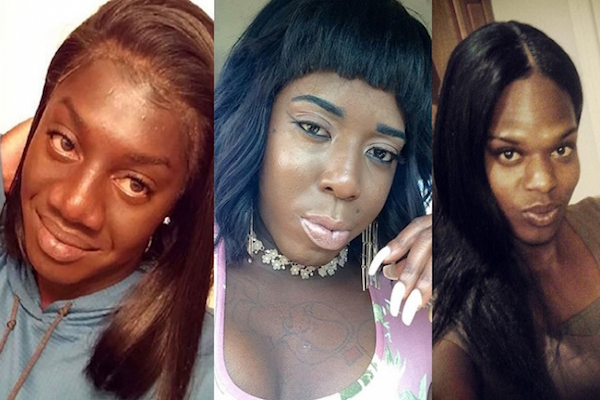
As of November 2020 there have been at least 21 murders of Black trans people this year. Let’s take the time to honor them by saying their names remembering their legacies.

MONIKA DIAMOND

Monika Diamond was a 34-year-old Black transgender woman killed on March 18, 2020 in Charlotte, NC. According to HRC, Diamond was “active in the Charlotte LGBTQ and nightlife community” and was “co-CEO of the International Mother of the Year Pageantry System—a pageant that honors LGBTQ mothers.”

LEXI

Lexi was a 33-year old Black transgender woman who was killed in Harlem, New York City on March 28, 2020. Her friend Lavonia Brooks noted Lexi’s love of poetry, fashion, and makeup and said: “I really looked up to [Lexi] because of her tolerance and respect. Lexi had a beautiful heart, she was very gifted.”

NINA POP

Nina Pop was a 28-year old Black transgender woman killed in Sikeston, Missouri on May 3, 2020. Pop was well- known in the area, and a friend shared that she was “always happy.”

TONY MCDADE

Tony McDade was a 38-year old Black transgender man who was killed by police in Tallahassee, Florida on May 27, 2020. Friends shared that he had “such a big heart” and his “energy would lift [their] spirits.”

DOMINIQUE FELLS

Dominique “Rem’mie” Fells was a 27- year old Black transgender woman who was killed in Philadelphia, PA on June 9, 2020. A friend shared that “Dom was a unique and beautiful soul who [they were] lucky to have known personally.”

RIAH MILTON

Riah Milton was a 25-year-old Black transgender woman who was killed in Liberty Township, Ohio on June 9, 2020. She was a home health aide and a loving sister and aunt.

BRAYLA STONE

Brayla Stone was a 17-year old Black transgender young woman who was killed in Little Rock, Arkansas on June 25, 2020. In honoring her memory, people have said that “Brayla was someone who always held space for others to be themselves and express their identities.”

MERCI MACK

Merci Mack was a 22-year-old Black transgender woman who was killed in Dallas, Texas on June 30, 2020. According to her Facebook page, she was a restaurant worker and loved baking cookies and relaxing in the jacuzzi.

TATIANA HALL

Tatiana Hall was a 21-year old Black transgender woman who was killed in New Jersey on or near June 30, 2020. Not much is known about Tatiana at this time.

DRAYA MCCARTY

Draya McCarty was a Black transgender woman who was killed in Baton Rouge in late June or early July 2020. Not much is known about Draya at this time, but she was from Hammond, Louisiana.

SHAKIE PETERS

Shakie Peters was a 32-year old Black transgender woman who was found dead close to Baton Rouge, Louisiana on July 1, 2020. Shakie’s friend shared that Shakie was “a very independent person and very loyal to her friends” and was also “full of laughter and an abundance of life.”

BREE BLACK

Bree Black was a 27-year old Black transgender woman who was killed in Pompano Beach, Florida on July 3, 2020. Not much is known about Bree at this time, but local activists set up an altar for Bree and are hoping to get in touch with her family.

BRIAN POWERS

Brian Powers, also known as Egypt, was killed in Akron, OH on June 13. Powers, 43 years old, was a passionate chef and worked for a catering company. He also had a love of dance.

QUEASHA HARDY

Queasha Hardy, 24 years old, was killed in Baton Rouge, LA on July 27. Hardy owned a hair salon business, “So Federal Styles,” that she had recently started. Friends said she was unapologetic about her identity.

TIFFANY HARRIS

Tiffany Harris, who also went by the name Dior H Ova, was 32 years old when she died in the Bronx borough of New York City on July 26. Her Facebook page noted her hometown as Kingston, Jamaica, and showed a love for fashion.

AJA RAQUELL RHONE-SPEARS

Aja Raquell Rhone-Spears, also known as Rocky Rhone, was 34 years old when she was killed at a vigil for a homicide victim in Portland, OR on July 28. She had studied at the University of Nevada, Las Vegas, and she was the owner and founder of her own clothing brand in Portland. She was active on social media against racial injustice.

ISABELLA MIA LOFTON

Isabella Mia Lofton, 21 years old, died on September 7 in Brooklyn, NY. She was originally from Chicago, IL. Her sister said she was kind to everyone despite hardships.

AERRION BURNETT

Aerrion Burnett was killed on September 19 in Independence, MO at 37 years old. She died several days before her birthday. At a vigil, a friend said, “She was a goddess.”

MIA GREEN

Mia Green, 29 years old, was killed in Philadelphia, PA on September 28. A friend said, “Her smile was so perfect and so contagious.”

FELYCYA HARRIS

Felycya Harris was killed in Augusta, GA on October 3. The 33-year-old was an interior decorator with her own business. Her social media showed her love of dance and fashion.

BROOKLYN DESHUNA

Brooklyn DeShuna, a 20-year-old who also used the name Brooklyn DeShauna Smith, was killed in Shreveport, LA on October 7. She studied cosmetology at Bossier Parish Community College. A friend described her as a “genuinely a good person.”

OML’s New Series Dating ‘In’ Place Explores Romance in the Age of Covid

By Clare Mulroy

This article was first published November 20, 2020 in Tagg Magazine here.

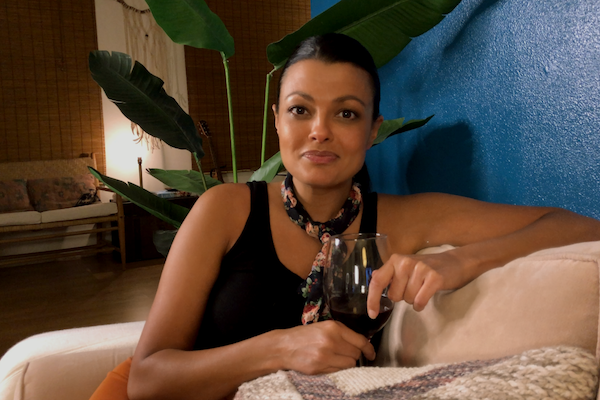
While many film and TV productions are halting due to the coronavirus pandemic, OML’s Dating ‘In’ Place incorporates the pandemic into the central storyline. The 10-episode comedy series, which debuted on Revry on November 1, follows two women exploring long-distance dating as the coronavirus pandemic turns their worlds upside down.

Dating ‘In’ Place was created by actress and producer Shantell “Yaz” Abeydeera and Marina Rice Bader. The cast and crew filmed and produced the entire series remotely, with meetings and rehearsal done over Zoom and filming done individually on HD smartphone cameras.

According to Abeydeera, the process was challenging as both an actor and producer. Post-production file transfers sometimes had to be done standing in the street with masks on, passing drives back and forth.

“As the actor, we had to do everything: setting up the lighting, the audio, all that kind of stuff,” Abeydeera says. “Some of the shots took almost two hours to set up and then the other actor would call in…and you would act for seven minutes.”

Still, the payoff was big. Abeydeera had never even been in the same room as her co-star, Emily Goss, when the two played characters falling in love. Despite the physical distance and virtual acting, Abeydeera says that she loves the energy the cast created and the chemistry they were able to find.

The content creator says she is grateful for the chance to get to tell queer stories during such an unprecedented time. The reason for making it a comedy and love story was simple — to show how connection was possible amid seemingly impossible circumstances.

“At the beginning of the pandemic I felt like everyone was really scared and everyone was spending an exorbitant amount of time online,” Abeydeera says. “What I saw was that people really needed a distraction…something else that they can hold onto that felt positive within the negative.”

Writing the series amid a pandemic also gave Abeydeera a chance to reflect on her own life. She knows living with her wife in Los Angeles means that they have the privilege of walking down the street holding hands without fear of harassment. Others don’t have the same opportunity.

“I understand that there are people all over the world that go to digital platforms to find content like this, to find answers,” she says. “And also so that they don’t feel alone.”

Queer representation is “everything” she says, but being able to tell those stories on a platform like Revry, which is ad supported by companies that support the LGBTQ community is equally important.

Abeydeera also serves as director of content and partnerships at OML, which provides free, accessible LGBTQ content to 186 different countries worldwide. According to OML’s website, its mission is to aggregate quality LGBTQ content in one place for the community to find and enjoy.

“This is specifically what I want to be doing,” she says. “I want to be making queer content and I want to be serving my community and making the stuff that I didn’t get to see when I was younger.”

Local theater company to release its first audio play this week

By Kelly McDonnell

This article was first published November 16, 2020 in The DC Line here.

DC theater company Edge of the Universe Players 2 will release its first-ever audio play — a production of Anton Chekhov’s comedy short, The Marriage Proposal.

Adapting a stage performance to an auditory-only experience, director Stephen Jarrett says, is a welcome challenge. “The fear is not a bad thing,” he said.

The show — which will be available through Dec. 2 — will feature local actors Kim Gilbert, Jamie Smithson and Cody Nickell. Rehearsals and recording, which will take place over Zoom, are occurring in the span of just one week.

Smithson has done several Zoom productions during the pandemic, but this is his first audio play.

“I’m very eager to see this podcast because it’s just a different way of approaching the art. I think a lot of companies are going to do it,” said Smithson, whose area credits include shows at Arena Stage, Folger Theatre and Signature Theatre, among others.

Moving a stage production into an audio-only format presents challenges for actors as they attempt to connect to the audience and to the other actors.

“The choices that I make as an actor are going to change a little,” Smithson said. “With a farce like this, so much of it is physical, especially the clowning and all that. The vocal choices will have to be more important.”

“You want emotion to be seen,” Jarrett said. Now, “everything has to be put into the voice.”

Jarrett said rehearsing and recording audio over Zoom will allow the actors to react to each other organically and convey emotion for the listeners. If audience members can imagine the characters’ facial reactions, they will be more engaged with the play, he added. 

Jarrett has directed two previous shows for the theater company, Entertaining Mr. Sloane in 2015 and The Summoning of Everyman in 2013. Jarrett was supposed to direct a third show at this past summer’s Capital Fringe Festival, which celebrates independent artists in DC, but the festival was shelved due to the coronavirus pandemic.

Despite the cancellation, Edge of the Universe Players 2 still wanted to mount a production, and an audio play, which many theater organizations have been producing for years, seemed most accessible, Jarrett said.

“There is no replacing the live theater,” Smithson said. “Artists have to make art, and what’s happening is that everyone is finding their own way.”

The Marriage Proposal is a 22-minute, one-act comedy about three Russian aristocrats who argue about everything from polite manners to property ownership to hunting dogs. The characters’ attempts to control the arguments are what make the play so funny, Jarrett said.

Amid so much uncertainty and contention across the nation and world, Jarrett said this may be the ideal time to produce a comedic play. “The whole purpose of art, for theater, is to make time stand still,” Jarrett said. “For 22 minutes, maybe that will relax some people.”

A free podcast of the show will be available on Edge of the Universe Players 2’s website, with listeners encouraged to donate to the theater company.

Award-winning playwright Adrienne Kennedy debuts new play in upcoming festival

By Jordan Ealey

This article was first published November 2, 2020 in DC Theatre Scene here.

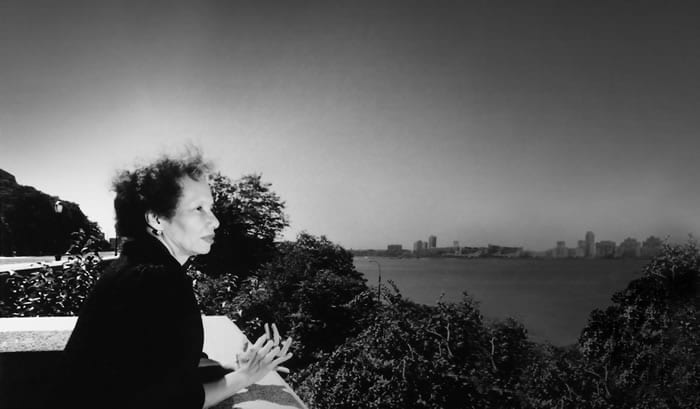
When I first encountered Adrienne Kennedy, through her Obie award winning 1964 play Funnyhouse of a Negro as a student in graduate school, I was surprised I had never heard of her. After all, I had studied Theatre and English literature as an undergraduate, attended a woman’s college, and completed a great deal of coursework featuring female playwrights. Yet here was this Black woman writing experimental, challenging theatrical work in the 1960s, and I was not familiar with her.

While the Black Arts Movement is known primarily for names such as Amiri Baraka, Larry Neal and Sonia Sanchez, Kennedy is rarely included in this esteemed list. Despite her numerous career achievements in theatre, her creative collaboration with theatre giants such as Edward Albee, and the inclusion of her work in university classrooms, one would be hard-pressed to find her plays receiving full productions in regional theatres. Even though I have read her plays and written on them for courses, I have never even heard Kennedy’s words out loud, let alone experienced a full production.

Knowing that there were many people out there who also had never even heard of Adrienne Kennedy, let alone ever read or seen her work, Nicole A. Watson, former associate artistic director of Round House Theatre and incoming associate artistic director at McCarter Theatre Center in Princeton, New Jersey, sought to change that. Two years prior, Watson directed a staged reading of Kennedy’s Sleep Deprivation Chamber at Shakespeare Theatre Company for its ReDiscovery Series, a program designed to introduce audiences to lesser-known playwrights. “It got me thinking,” Watson recalls, “Why wasn’t I directing her work? Or anybody?” An audience member during the talkback also asked the same question, further clarifying that this was a dearth that needed to be rectified.

And then, in March, the theatres shut down. In a discussion with another black woman about the state of theatre, Watson remembered saying, “We’re not bound by the things that go into a season selection.” The unprecedented amount of uncertainty accompanying the impact of the pandemic on the global theatre industry is certainly enough to be anxiety-inducing for theatre artists and professionals everywhere. But Watson considers that there is “a freedom in this moment to rethink” and that freedom led her to proposing the idea of a way to celebrate and produce Adrienne Kennedy’s work. Noting that her plays are “real, visual, and poetic,” Watson recognized that it could be interesting to produce Kennedy in the virtual platforms as they lend themselves to the form well.

Thus, “The Work of Adrienne Kennedy: Inspiration & Influence” was born. A partnership between Round House Theatre Company and McCarter Theatre Center, the virtual festival features four of Kennedy’s plays: He Brought Her Heart in a Box, Sleep Deprivation Chamber, Ohio State Murders, and Etta and Ella on the Upper West Side. Directors include Raymond O. Caldwell, Valerie Curtis-Newton, Timothy Douglas, and Watson herself.

Watson was drawn to He Brought Her Heart in a Box because of its timeliness for our current political and social moment. “In a time where we’re really being asked to examine our thinking and the way in which our thinking (or someone else’s historical thinking) has influenced racist institutions and white supremacy, to have [Kennedy] render that theatrically in such a direct way, I was so struck by it,” Watson remarked, also noting how Kennedy’s work is forward-thinking. One of the plays, Etta and Ella, marks the world premiere for the 89-year old playwright. Watson emphasized the decision was made to highlight this new work and its lyrical and incisive language, a trademark of Kennedy’s plays.

Another of the plays, Sleep Deprivation Chamber—which Kennedy co-wrote with her son, Adam Kennedy—has a timely and painful geographic relevance: the play details Adam’s personal experience with police brutality at the hands of the Arlington Police Department. Watson believes that this play had to be included, especially since Round House is located in a part of the DMV theatre community.

Watson sees it as the perfect bridge between her closing chapter at Round House and her new position at McCarter, which is funded by a BOLD grant for female-identifying leaders. But the partnership also has benefits for both theaters, which includes the reach to a wider audience, leading to more people being exposed to Kennedy’s life and work. Noting that it “allows for a different kind of access,” this is an opportunity to really demonstrate the importance of Adrienne Kennedy in the theatrical world. “For me, it feels like a huge gift,” Watson says.

I Put the Bi in Bitter is a Light-Hearted Portrayal of LGBTQ Teen Experiences

By Clare Mulroy

This article was first published October 26, 2020 in Tagg Magazine here.

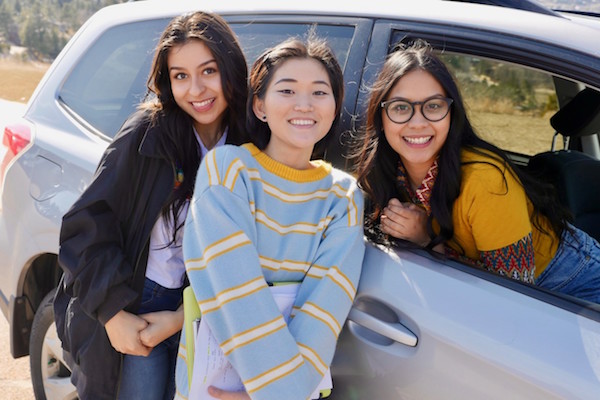
As a high schooler, filmmaker Marin Lepore wished she saw someone like herself on screen — LGBTQ characters with normal teen experiences. Now as the co-founder of Sad Girl Productions and writer and director of the web series I Put the Bi in Bitter, she is creating those characters for others.

I Put the Bi in Bitter is a coming-of-age comedy series following bisexual high schooler Sam (played by Rhema Srihartiti) as she navigates high school, friendships, and first relationships. Lepore wrote the series as a personal project in summer 2018 and was filming the first season by September of the same year. Kelley Zincone co-wrote and produced it. The series, which concluded after the season three finale, is available for streaming on Tello Films and YouTube.

Lepore says she wrote the series to fill in gaps she saw in the LGBTQ film category.

“A lot of the LGBT media we have right now [is] dramatic or tragic, or if they are comedies, then they rely on R-rated language or sexual humor,” she says. “A lot of the [LGBT] content we have right now isn’t really accessible to kids, so I wanted to make something that was light-hearted and cute.”

The series incorporates playful emojis into its production, which appear above the character’s heads in moments of expression and gives the series a truly Gen-Z feel.

Lepore’s ultimate goal is to normalize gay youth on TV and film. Like the character Sam, Lepore hopes other LGBTQ teenagers watching the show understand that you don’t have to have a “big, dramatic” coming out moment if you don’t want to.

What’s more important is representation. The majority of cast and crew are women, people of color, and members of the LGBTQ community. The three leads are played by women of color, which is especially important to Lepore, a woman of color herself. It’s made by people in the community, for the community, she says.

“If you have a gay story but it’s completely filtered through the lens of heterosexual people, cisgender people, people who aren’t in the community, that’s doesn’t do anything to change the film industry,” she says. “The representation won’t be authentic or relatable.”

After its debut, the series appeared at various festivals around Colorado like SeriesFest and the Colorado Short Circuit Film Festival, where the team won Best Comedy and Best Screenwriting in March 2019 and the Women in Film Award in February. The series also appeared at ClexaCon in both 2019 and 2020, a media and entertainment convention for LGBTQ women, trans and non-binary fans and creators.

Though I Put the Bi in Bitter is no longer in production, Lepore hopes to pitch the concept as a 22-minute TV show in the future. This would give her a chance to expand on the characters and storyline, she says.

For the time being, Lepore is balancing finishing her Film/TV BFA at the University of Colorado, Denver and making “as many [films] as she can” to satisfy her goal of empowering marginalized groups both on screen and behind the scenes.

LGBTQ History: Compton Cafeteria Riots

By Kelly McDonnell 

This article was first published October 20, 2020 in Tagg Magazine here.

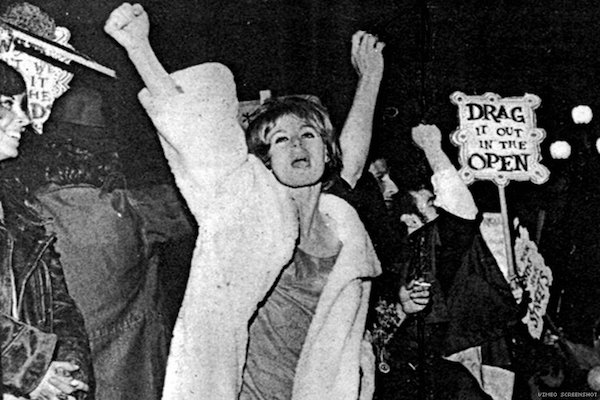
Three years before the Stonewall Riots, transgender activists fought police brutality in San Francisco.

In San Francisco, 1966, transwomen resisted police intimidation and brutality outside of a popular LGBTQ gathering spot and all-night diner.

Gene Compton’s restaurant chain was a popular spot for transgender women, who had been denied entry to gay bars, to hang out, but management frequently called police on transgender patrons. Police arrested transwomen for the crime “female impersonation” because cross-dressing was illegal.

Transgender and gay people picketed police injustice and the restaurant’s management outside of Compton’s Cafeteria. Police arrived and attempted to arrest protesters, then one transwoman threw coffee at the police. A multi-day riot began, though it’s unclear for how long or how intense the protests were since police records of the year no longer exist, and the event wasn’t covered by newspapers.

A plaque at the former Compton’s Cafeteria site says, “Here marks the site of Gene Compton’s Cafeteria where a riot took place one August night when transgender women and gay men stood up for their rights and fought against police brutality, poverty, oppression and discrimination.”

Many people involved in the riot were part of the first American gay youth organization, Vanguard, founded in 1965. Vanguard and the Glide Memorial United Methodist Church organized multiple equal rights protests against businesses that refused to serve LGBTQ people.

Documentary filmmakers Susan Stryker and Victor Silverman interviewed riot survivors and local transwomen of the San Francisco Tenderloin District for her 2005 film, Screaming Queens: The Riot at Compton’s Cafeteria.

Lez Hang Out Announces New LGBTQ Romantic Comedy Musical

By Clare Mulroy

This article was first published October 12, 2020 in Tagg Magazine here.

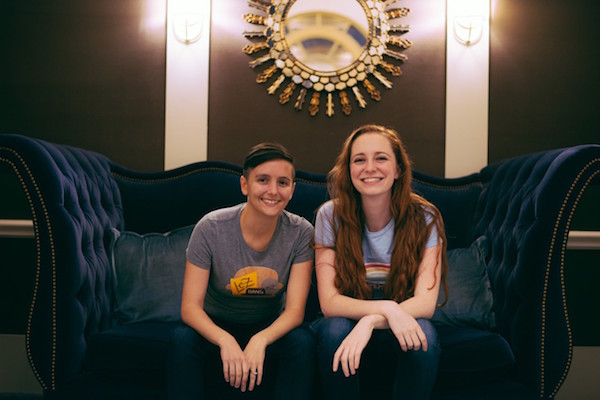
There’s not much in the category of musical theater podcasts, but Leigh Holmes Foster and Ellie Brigida of the Lez Hang Out podcast are determined to become a name in the genre.

The two are using their background in theater and music to write and produce “The Flame,” a queer romantic comedy musical podcast that will be released summer 2021. According to a press release, the eight episode series follows two women: Jamie, a queer bar owner, and Sam, the woman selling the building that the bar inhabits, and the relationship that sparks between them.

The idea came from their podcast Lez Hang Out, where Foster and Brigida regularly write original songs based on lesbian and queer movies. When they realized they were enjoying the music side of their production, they created a plan to branch out into new opportunities.

So what is a queer romantic comedy musical podcast? Foster and Brigida don’t exactly know — but they’re quickly finding out.

“There’s not a set answer for what that means yet, we’re kind of getting to invent it a little bit as we go,” says Foster. “It’s been this really fun game to say, ‘What are the things we love about musical theater, and how do you re-envision them or adapt them or capture that same thing in an audio-only setting?’”

The core production team is Brigida (Scoring and Music Producer) and Foster (Composer), joined by Caitlyn Clear (Screenwriter) and Valerie Rose Lohman (Executive Producer). The two brought in Clear, who Brigida said has a “knack for comedy” to help write the eight episode arc. They’ve written nearly 20 songs to accompany the storyline, which will be split between two four-episode acts.

As for recording the podcast, Lohman is going to work with the actors through guided Zoom sessions, an adaptation made by the voiceover community during the coronavirus pandemic.

“The arts are hurting, and especially the theater world is hurting right now, so it’s a great opportunity for us to be able to hire actors to do something that is theater, but that is safe, that they can do from home,” Foster explains.

With recording a fictional podcast comes uncharted territory for the pair, like hiring a paid team of actors. Foster says their team has been “blown away” by the support on their recently launched crowdfunding campaign. The team also recently announced two of their cast members: Chilina Kennedy as “Rachel” and Jesse Nowack as “Harold.”

“We’re not network produced, we do everything ourselves, the team is us, we’ve learned everything as we go,” says Brigida. “Now we’re venturing into this whole other world of doing a SAG project, we’ve never worked with the union before.”

One of their priorities is maintaining queer representation. According to Foster, the whole production team—including the actors—are part of the queer community. They’re placing an emphasis on paying queer talent, she said. The storyline itself will also make waves in such a new category of podcast production; Brigida is excited for audiences to hear a “positive queer love story.”

“There’s something about that type of Broadway music that just hits you immediately,” says Foster. “I think for queer people, we’ve had so few of those songs where we actually feel represented.”