Only Queen Latifah’s fabulosity kept ABC’s The Little Mermaid Live! afloat

by Mercedes Hesselroth

In 2013, NBC made a splash in event television by airing The Sound of Music Live!, attracting over 18 million viewers to a live telecast of the Rodgers and Hammerstein stage musical. Ever since, other productions and networks have tried to whip up a magic combination of nostalgia, stunt casting, holiday viewership, and integrated marketing to return these televised musicals to the juggernauts they were in the 1950s.

Last night’s The Little Mermaid Live! was the first such attempt from ABC, who only dipped their toes in the water by mixing live performances with footage of the classic 1989 film instead of committing to a fully live format. Ostensibly aired as a celebration of The Little Mermaid’s 30th anniversary, this production fell remarkably short as it understood neither animation nor musical theatre.

The hand-drawn animation of classic Disney films holds a certain charm unreplicable in other mediums. In the vast worlds of animation, anything seems possible, so audiences have a higher capacity to suspend their disbelief. In theatre, this surreality is traded for the spectacle of live performance. It is up to the audience to take the stage elements before them and collectively imagine them into being, like the masks and puppetry representing animals in Julie Taymor’s The Lion King or the lighting contraption that serves as the titular comet in Rachel Chavkin’s Natasha, Pierre, and the Great Comet of 1812.

By segmenting these two worlds instead of blending them together or letting each stand on its own, The Little Mermaid Live! simultaneously lost the magic of the original animation and shortchanged the human connection of its live performances.

Things, at first, got off swimmingly when Jodi Benson (the original voice of Ariel) introduced the telecast and an impressive ensemble delivered a spirited rendition of “Fathoms Below.” The curtains gave way to an enormous ship deck, flying aerial artists, a dreamy Prince Eric (Graham Phillips), and even a real dog to play Max (Bagel). It wasn’t until the disjointed movie clips overtook the telecast that things began to go underwater. Though Moana voice actress Auli’i Cravalho was supposedly the lead of the production, she didn’t even appear as Ariel until we had already gotten acclimated to Benson’s voice and the animated character design.

Since none of the animated characters looked or sounded quite like their live counterparts, the sudden cuts between them could be jarring. It’s difficult to stomach the sight of a fabric, unblinking Flounder after having just seen the emotive, bright-colored fish swirl around in the water. On top of that, audiences may have had trouble placing the characters and their motivations when they showed up in so many disparate forms. While Cravalho and Phillips pleasantly portrayed innocent teens falling in love, their reduced screen time hindered the ability of the performers to build effective emotional arcs. After the opening number, Phillips didn’t return to the stage for a full hour, and the couple’s most significant relationship developments were isolated to the film.

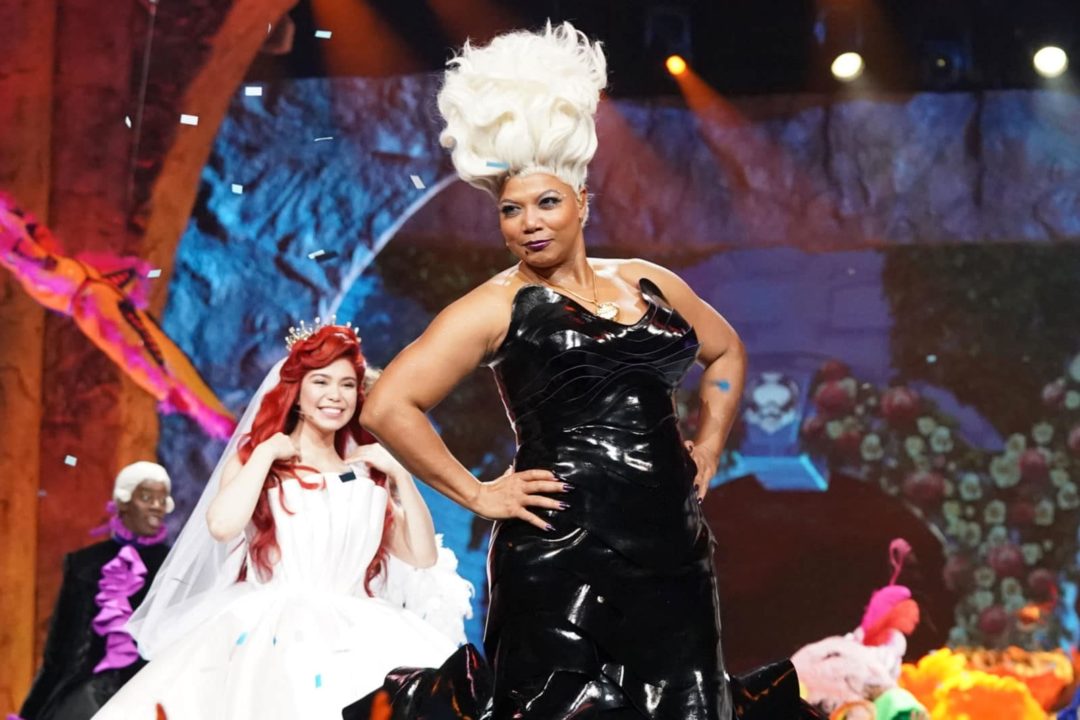
The highlight of the unsteady presentation was undoubtedly Queen Latifah, who had delicious fun as the villain Ursula and brought an original fabulosity to the role, making the case that she should have played the sea witch full-time. In comparison, other cast members seemed less than committed to their parts. Shaggy wore only a red jacket and pants to distinguish he was Sebastian, and gave the most concert-like performance, free from characterization. Even worse, at the end of his only number as Chef Louis, John Stamos openly announced he should have been cast as “Prince Albert” instead – confusing Prince Eric’s name and mistakenly thinking the show had already cut to commercial break.

What was most discouraging about watching The Little Mermaid Live! was it’s utter purposelessness – it’s not an homage to the 1989 film if you insert numbers from the Broadway version, and it’s not cultivating interest in theatre if you continuously cut away from the live sequences. Perhaps it’s no mistake Disney aired this special on Election Tuesday as people needed something light and mindless to switch to while waiting for voting results. But if you missed the telecast and have two hours of nautical apathy sitting in your DVR, you’re better off watching the original or taking the family for a night out supporting local theatre.
Mozart’s whimsical Magic Flute from Washington National Opera

By Daniella Ignacio

This article was first published in DC Theatre Scene here.

Wild things abound in this production of  Washington National Opera’s The Magic Flute, currently playing at the Kennedy Center. With Maurice Sendak’s artwork at its forefront, the opera’s elements of childlike whimsy makes it an entertaining night for audiences of all ages. Conventions of opera are adhered to, with all of the classical training obvious in each and every performer, from the principals to the chorus … yet there’s something more to it.

There’s whimsy and there’s a clear focus on the power of young people: something this opera always inherently does with its magical story about the journey of a prince, Tamino, and his sidekick Papageno, not to mention its accessible, tuneful Mozart score. This production highlights with no apologies in a language that children can understand: clear English (not the original German) and fun storytelling all-around.

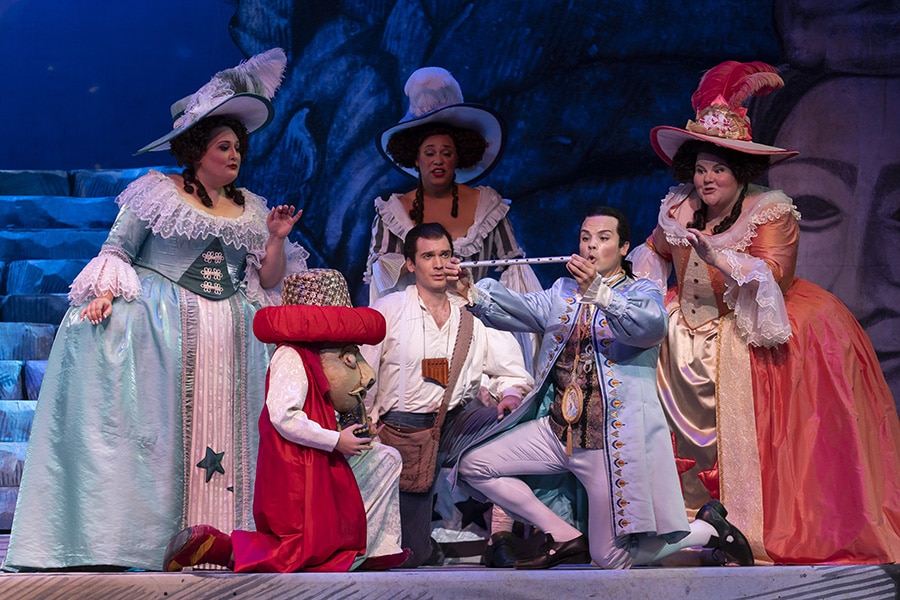
Neil Peter Jampolis realizes the Maurice Sendak scenic design and artwork in a way that allows for wonderful theatrical moments, with lighting design (John Garofalo) that brings it to life even further. It’s clear from the moment the curtains open up and the audience’s first glance is a Maurice Sendak illustration highlighting the moon above the priest. There’s a beautiful connection between static image and dynamic, live theatre through this design. As the light on the scrim dims and the audience begins to see the physical set behind it, for a moment, one might think that the fantastic creatures in the illustration are also onstage.

And then the opera begins and the audience immediately sees the three ladies (Alexandria Shiner, Deborah Nansteel and Meredith Arwady – a fearsome trio who can also be flirtatious) attacking a serpent that is coming after Papageno. Said serpent, quite adorable with its big green eyes, waddles out almost unsuspectingly until it’s killed, smoke comes out of it and it creeps offstage. A wide array of creatures inhabit this production besides our friend the dragon: lions with golden manes and creatures right out of “Where The Wild Things Are” that resemble trolls.

Pamina and Tamino are the heart of the story. Sydney Mancasola’s Pamina brings a master class of a performance in “Ach ich fühl,” fully using the legato lines to demonstrate the character’s sadness and allowing her voice to travel up and down fully and freely, which is not easy to do in that aria. David Portillo’s lush tenor provided for a romantic feel for Tamino with just the right amount of vibrato, especially in his opening arias, and when Tamino decides to join Sarastro’s brotherhood, Portillo portrays that resolve with strength and fervor.

Michael Adams as Papageno is the standout in this production. His soaring tenor has a powerful speaking voice to match, with a slight twang that characterizes the chatterbox excellently. Adams finds moments to make the score his own and to create physical comedy with the role and allows the audience to laugh at him, all while making Papageno a person that you want to root for. Especially in his interactions with Papagena (a winning Alexandra Nowakowski), all culminating in the “Pa-pa-pa-Papageno” duet where they celebrate their love, he crafts a truly winning character. Nowakowski is a standout in her own right, as well. Her reveal from the cleaning lady to Papagena’s true form, with bucking “ahhh”s turning into a beautiful true-to-opera “ahhh,” was a comedic highlight of the show.

As the Queen of the Night, WNO veteran Kathryn Lewek (who played the same role in 2014) takes control of the stage and pulls off a stellar “Der Hölle Rache kocht in meinem Herzen” that was the crowd pleaser of the night. Although she seemed a little off (one could wish for her to get some of the notes from right on top of them, not by working up to them), she still remained in character and made the number a showstopper. Her rival in this story, Sarastro, played by Wei Wu, has a lyrical bass with low notes that are a joy to hear. It can be soft, and one could wish that he could allow it to boom out a bit more, but overall his voice matches the character well.

On a libretto note: I can appreciate the original choice of librettist Emanuel Schikaneder to ground the story with spoken moments; however, sometimes I wished that I could hear more singing, as some of the book scenes tended to drag out and contributed to a feeling of the opera starting to feel long. One full scene in the first act was entirely spoken and, to be quite frank, it was forgettable. The second act opened with the priests and followers talking, rather than a grandiose opening like that of the first act, and I wanted to just get to another magical, musical moment again. Although the performers played the straight acting scenes as best as they could (some rather excellently: at one point, Papageno conjured up two imaginary chickens to play with, much to the chagrin of Tamino and much to the enjoyment of the audience), musical moments in combination with powerful acting and design choices are what draw people to The Magic Flute; filler book scenes, not as much.

However, that doesn’t discount all of the incredible moments of this opera. Washington National Opera’s The Magic Flute takes you on a journey with unexpected moments.Take it all in with heart and joy, and try to remember the childlike wonder of seeing your first opera or musical.

The Washington Ballet glimpseS A collaborative future IN NEXTSTEPS

By Ilena Peng

This article was first published in The DC Line here.

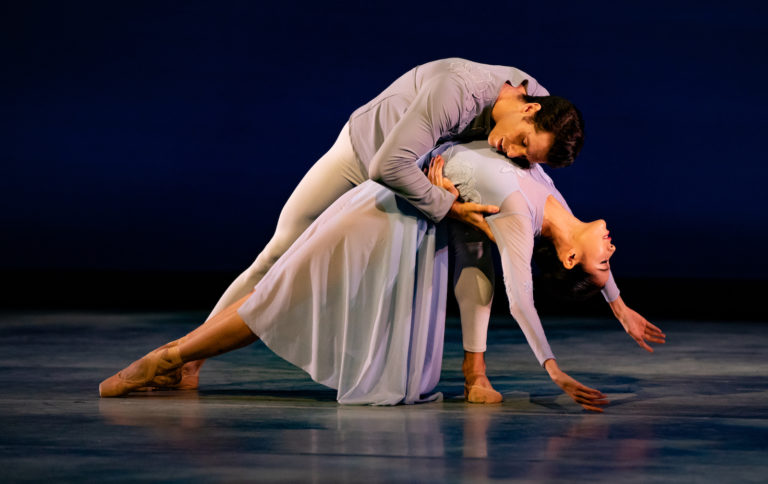
The Washington Ballet launched its 2019-20 season last week with NEXTsteps, an aptly named glimpse of dance’s interdisciplinary and collaboration-centered future. The show at the Sidney Harman Hall featured three evocative dances: Jessica Lang’s Reverence, Annabelle Lopez Ochoa’s Delusional Beauty and John Heginbotham’s RACECAR.

The dances in NEXTsteps reinterpreted notable works of music and art, including Robert Schumann’s Symphonic Etudes Op. 13 and Salvador Dali’s “Woman With a Head of Roses” painting.

“NEXTsteps reflects the voices and works of our time,” Washington Ballet artistic director Julie Kent wrote in a blurb for the show’s program book. “It is the responsibility of the leaders of our art form to allow for the development of new works and to steward ballet into the 21st century.”

The show opened with a performance by students from the Washington School of Ballet in celebration of the school’s 75th anniversary this year. Défilé, a choreography by Kent, drew audible awws from the audience when the curtain went up on two of the youngest students.

In a field known for impermanence, Lang’s choreographic career has enjoyed unusual longevity; Reverence is her 104th ballet. In addition to creating dances for her own company, Lang has choreographed for some of the world’s leading companies, including American Ballet Theatre, Alvin Ailey American Dance Theater and the Birmingham Royal Ballet.

Reverence was set to Schumann’s notoriously difficult etudes, which were brilliantly performed by pianist and Washington Ballet music supervisor Glenn Sales. American classical pianist Beth Levin once said Schumann’s etudes “can be the reason a pianist sometimes leaves the practice room on a stretcher.”

The muted-tone costumes, airy choreography and melodic piano accompaniment were reminiscent of Jerome Robbins’ Dances at a Gathering, but with a calmer energy. Where Robbins’ work evokes a joyous springtime walk in the park, Lang’sconveys a melancholic sense of camaraderie.

The ballet evoked a sense of tranquility and, while plotless, also conveyed a sense of community — the ballet began and ended with the dancers holding hands.

Additionally, Reverence played against convention in some interesting ways: Ballet dancers are commonly expected to be soundless, but Reverence incorporated clapping. It also defied traditional gender norms that ballet has long adhered to, including an entrance in which female dancers lifted a male dancer onto the stage. 

Reverence is my definition of ballet, and it was created with the intention that it be experienced, not explained,” Lang wrote in her choreographer’s note.

The second dance — Annabelle Lopez Ochoa’s Delusional Beauty —centered around “The Golden Figure,” who donned a floor-length golden gown and an oversize floral headpiece. Ochoa wrote that the dance is intended to be “an ode to Salvador Dalí’s surrealist world,” and was inspired by postcards she collected of the artist’s paintings, including “La femme à la tête de fleur” (roughly, “Woman with a head of roses”).

The piece left some ambiguity for the audience to ponder, namely the golden prop balloons and whispering vocals.

Groups of dancers performed independently in corners of the stage, asking the audience to take in the whole like a painting, considering countless focal points, striking details and the overall scene.

“While making the work, it struck me that I could still watch and enjoy [Dali’s] images while as a creative myself my art evaporates into the realm of memory once it happens, leaving merely a sensation,” Ochoa wrote in her choreographer’s note.

Music by Christen Lien and Aaron Martin, including eerie whispers and wind and water sounds, contributed to the eerie ambience of the piece, which was partly funded by the DC Mayor’s Office on Latino Affairs. Kateryna Derechyna never left the stage as “The Golden Figure,” with the other dancers all interacting with and revolving around her. The piece also included an exquisite pas de deux, performed Friday evening by Katherine Barkman and Javier Morera.

Where Reverence and Delusional Beauty share a sense of calm abstraction, John Heginbotham’s RACECAR revelled in structure and rhythm. Heginbotham started his arts career as a dancer in the Mark Morris Dance Group. Morris is known for the inventiveness and musicality of his choreography, and the dominance of musicality within the choreographic ideas of RACECAR may stem from Higenbotham’s time with Morris.

Guided by the drums in Jason Treuting’s unnamed composition that accompanied (and inspired) Heginbotham’s choreography, the work’s 16 dancers were tightly attuned to complex rhythms for the 20-minute duration of the piece. Treuting delights in “making pieces that translate numbers and letters into patterns of sound,” and this work, arranged by Alliance Artist Management and performed by Sō PERCUSSION, lent a sense of strict urgency reflected in the dancers’ sharp, but never abrupt, movements.

The visual spectacle of the dancers was emphasized by interlocking formations and changes between monochromatic white and red costumes. Even simple movements like rising on pointe with dancers’ feet in parallel were made intriguing with repetition.

“It moves from order to disorder to symbiosis and back out the other side,” Higenbotham wrote in his choreographer’s note.

The lighting for all three works, by Joseph R. Walls, added crucial elements: RACECAR’s jarring red and Delusional Beauty’s gradients added depth and texture to those works; the lighting shifts in Reverence made the audience feel as if days were passing by as the stage changed from brightly lit to largely in shadow, with colors shifting from light blues to purples. 

While NEXTsteps emphasized the future of dance, the remainder of The Washington Ballet’s season is drawn from the classical repertory, including story ballets The NutcrackerSwan Lake and Coppélia. The season will also include performance of works by George Balanchine and Frederick Ashton.

No matter the quality of the choreography and the skill of the dancers, no performance can succeed independent of quality production, including music, lighting and costumes. This first production of the company’s 2019-20 season offered hopeful insight not only into what ballet may look like in the coming decades,  but the quality of the forthcoming offerings.

In Theory at Mosaic Theater freedom of speech rings true

By Daniella Ignacio

This article was first published in DC Theatre Scene here.

If you were given free rein to say whatever you want about anything you want…how far would you go? And if you were the moderator of that kind of environment, at what point would you interfere? That’s what Norman Yeung explores in Theory, making its American debut at Mosaic Theater Company.

The play was originally written in Canada in 2009, but this story about freedom of speech seamlessly fits in with the culture of American college campuses today – especially the liberal arts universities of D.C. that profess freedom of speech, yet have professors and students who can be hypocritical when people are allowed to give their opinions. It succeeds as a cautionary tale, raising questions of empathy, complicity and the very extreme ends of the political spectrum.

When Isabelle (Musa Gurnis), a tenure-track film studies professor decides to create an unmoderated discussion board for her class, she aims to rile her students up and get them to dismantle the patriarchy, question authority and democratize their studies of the film canon. However, when the posts and videos on the board start to get questionable, offensive, downright abusive, life-threatening and invasive of Isabelle’s privacy, she becomes increasingly paranoid. She must decide if she should intervene, let the assignment play out, or shut down the board. All the while, her students, her wife and the dean of students challenge her.

The story is difficult to take seriously until Isabelle begins to go down the path of obsession. It becomes clear that there’s something else going on here – that it’s a thriller and not just your typical “hot take” on freedom of speech. In the beginning, Isabelle seems like a caricature of a professor, a satire on how professors who profess “freedom of speech” have no idea what they’re talking about. The way that Gurnis carries herself and speaks is so declaratory and self-important sounding that it’s no wonder that her students are resistant. One sitcom-like exchange between her and her students:

“Everything’s allowed here,” she proclaims.

“That’s a terrible idea,” one of her students responds.

Until the audience sees Isabelle’s relationship with her wife and understands the dynamics within their interracial marriage, it’s unclear who Isabelle is. Once this relationship begins to play out, you start to understand where she’s coming from and how much this means to her: the idea of giving these students the freedom to think, speak and share their voice when they may never have gotten to share their voice before. Gurnis portrays Isabelle’s idealism with fervent passion and by the dark, intense culmination of it all, succeeds in playing out these emotions in an absolutely captivating, gut-wrenching way.

Andrea Harris Smith plays Isabelle’s wife, Lee, in a way that makes her one of the most human characters of the play. Lee is a black tenured professor and author who’s heard her share of racialized hate speech, and Smith plays this character with just the right mix of coolness and firmness. She’s there for Isabelle at the beginning of the project, but becomes increasingly upset with Isabelle as she refuses to take down extremely offensive comments that began when Isabelle screens clips from “Birth of a Nation.”

The four students that Isabelle is drawn to the most, Josh Adams as Richard, Benairen Kane as Davinder, Camilo Linares as Jorge and Tyasia Velines as Safina, provide youthful voices who challenge Isabelle’s opportunity to challenge authority, which is an interesting dichotomy. They grow and learn to speak their minds in different ways. Some push the envelope a bit too far, like Jorge, and others, like Safina, learn to open their minds and think about films they initially did not want to even think about. Adams takes a star turn towards the end that sent chills down my spine.

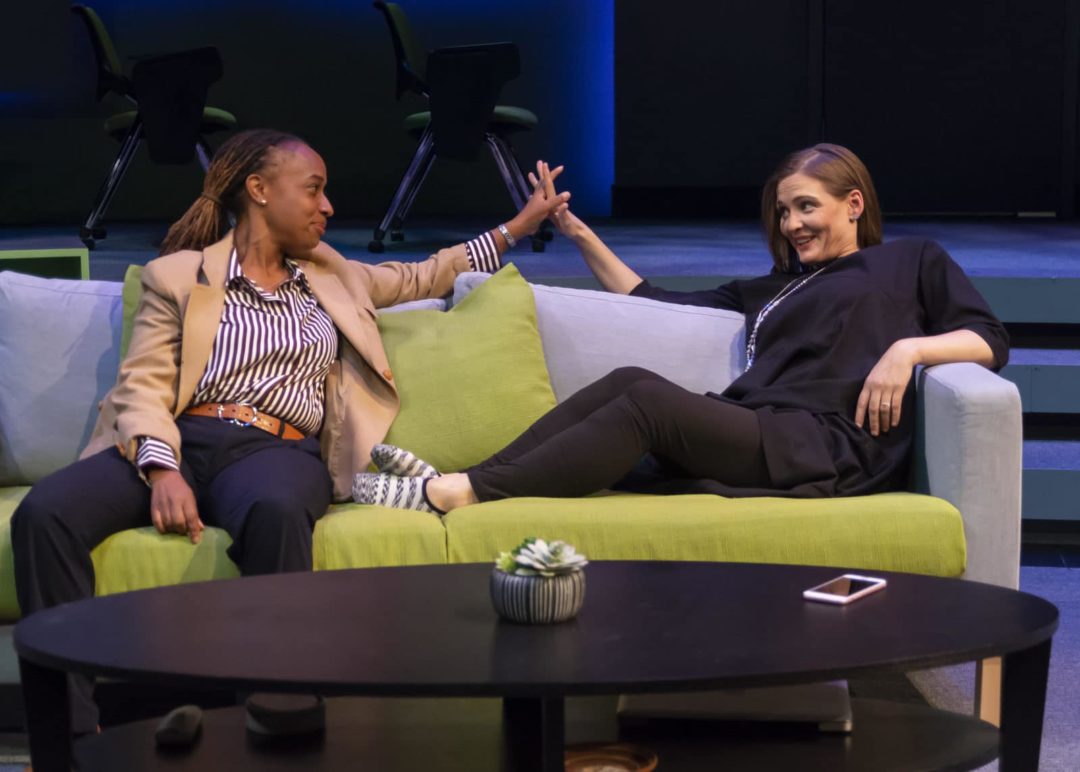
A simple set (Daniel Ettinger) gives just enough specifics to establish all three main settings: the classroom, the living room of Isabelle and Lee’s house and Isabelle’s office. The stage is filled with accents of light greens on the chairs, the couch and panel walls, with a splash of orange in Isabelle’s office, as well, to give the illusion of warmth and openness.

The lighting design (Brittany Shemuga) supports this, illuminating the set with five lampshades with singular light bulbs hanging above, creating the constant feeling that they’re in the classroom. One particular lighting scheme that stands out is in the scene in which Isabelle plays one of her most contested film selections from start to finish, as Isabelle stands in a very dark stage with light only on her showing her paranoia.

Dylan Uremovic’s projection design reflects the dizzying, overwhelming effect of technology on the lives of Isabelle and her students; the films seep over from the classroom into Isabelle’s personal life, and display the toll that it takes on her. At one point, as Isabelle texts one of her students, a Bitmoji version of the student’s head pops up, which displays her unrealistic view of what she thinks the students are like.

Another level of anonymity and eerie thrill is added through the sound design (David Lamont Wilson.) As the posts are projected, different voices of the students read off those posts, line by line. You can never tell who is truly who or if they’re reading lines they actually posted. In between scenes, the techno music allows the audience to reflect on the events that have just transpired and adds to the dark vibe.

As a college student of color who is studying media, I highly recommend catching this production, especially to other young people who are having conversations like the ones in this production every day. Theory is a welcome addition to Mosaic’s Season of Awakenings. Prepare to be awakened and shocked and, in Safina’s words, “wake up to the fact that this world sucks – so thank you.”

How Matthew McGee created new, more terrifying Audrey IIs for Little Shop of Horrors

By Daniella Ignacio

This article was first published in DC Theatre Scene here.

In a season with high profile productions of Little Shop of Horrors on Broadway and across the country,  the DMV is getting its own taste of the Alan Menken sci-fi musical theatre classic this October, with a new twist. Little Shop of Horrors at Constellation Theatre Company may be in a small space, but they’re doing big things, especially with its innovative puppet design by the intrepid puppet designer/actor Matthew McGee. The four pods – designated as Pods One, Two, Three and Four – display the terrifying development of a plant into an alien-like monster.

As the puppets are moved around the space and adjusted to be in the right place for a photo call, McGee speaks fondly of them, calling each of the four pods “this guy” like an old friend throughout the interview. McGee said that as a son of puppeteers, who joined them as they toured around California doing shadow puppet shows at elementary schools, puppetry is a pivotal part of his life.

“I like to tell people I was raised by puppets because I’ve been exposed to puppetry my whole life,” said McGee. “Growing up with it, going to festivals in the summertime, taking workshops and learning about puppetry…over the years, I just started tinkering with it and learning more by experience.”

McGee’s recent projects include designing puppets for The Lion King, Jr. in Alexandria, Minnesota’s Andrea Theatre and My Father’s Dragon at Synetic Theater last winter, in addition to his own short film puppet theatre pieces.

He believes in the power of making the impossible happen through puppetry in theatre.

“I’m a big advocate of incorporating puppetry for theatre because it is, in my opinion, the closest thing to magic that you can get on stage besides doing actual magic,” he said. “You can go to the movies and get CGI and special effects, but to see a piece of live theatre and have it be just as fantastical as something you could see in a movie, that excites me. If you can get people to go ‘Whoah! What am I seeing?’ [and] if they think they’re seeing the impossible, that’s magic and that’s what I live for.”

McGee’s original inspiration for the puppets came from his love of the original Little Shop movie, which he said has some of the best puppetry in a movie that he’s seen. He wanted to bring the life, articulation and believability of the original Jim Henson puppets into this production, while also expanding upon the possibilities for making the puppets easy to maneuver yet still terrifying and progressively alien-like. He called the process a “primarily solo undertaking of monstrous proportions,” which started in August.

Oftentimes, with the bigger Pods Three (which sings “Get It”) and Four (the final man-eating version of Audrey II), the puppeteer has to sit or stand inside the puppet with their arms stretched out to control it, which McGee acknowledges is a workout.

In McGee’s designs, Audrey II is devised as an adaptation of a bunraku rod puppet where the puppeteer is not confined inside the puppet. Puppeteer RJ Pavel wears a black jumpsuit that covers him from head to toe, gets into a harness that’s connected to the back of Audrey II’s head through a rod and operates the plant from behind using that rig system. He uses handles that control the mouth through the leaves the mask him and is completely hidden from the audience.

“You get to see the stem of the neck, and you get to see the head moving and everything is alive,” McGee said. “Just seeing it in action – even for me, knowing how it works, I think ‘there it is, there’s the magic.’”

A lot of the material used for the plants is high density foam rubber sheet, which comes in sheets with different thicknesses and dry out patterns based on a model mockup. McGee blew out the pattern to the scale that he needed, and then traced it on the foam, cut it and glued it together to get the shapes of the heads and the leaves. They were then painted and coated in rubber to make them durable.

McGee said that he’s taken a lot of joy out of the differences in color patterns on the leaves, which are inspired by not only plants, but reptiles like lizards and frogs. The baby Pod One, “Twoey,” has leaves around his head that have highlights of greens and purples. By the time it progresses to Pod Three, he’s still got purples and greens, but the tips are blue, orange and yellow – it’s not exactly your typical “mean green mother,” but it’s definitely “from outer space.” When we spoke, McGee was finishing up Pod Four, which will be darker, with more of a grey tone.

“I’m excited by the contrasts of darks and brighter eerie neon greens and yellows, so it becomes less earthly,” he said. “The bigger he gets, the more alien he should become. It starts out looking like a little flytrap but by the end he has to have the essence of a flytrap that grows into something truly monstrous.”

McGee also uses his puppets to tie this production directly to the DMV area during the time period of Little Shop. McGee put Twoey in a Wilkins coffee can, a popular DMV coffee brand during the ‘60s, to pay homage to the fact that this production is being done in Washington, D.C., where Jim Henson got his start. To make this “puppet nerdy happy little Easter egg,” he found photos of the cans, edited the label from those photos, and Photoshopped it to put it onto the can.

“It’s so satisfying,” he said. “I get to tie in all these things [together] and make it pertinent to not only the time period but also this show and the location.”

McGee was also involved in teaching the actors to use the puppets, and spoke highly of the puppeteer RJ Pavel, who’s had puppeteering experience before. Pavel bases the movements on a lot of the inflections and cues of Marty Austin Lamar (the voice of Audrey II), and translates it into the physical life and the plant’s body language.

THE 29Rooms festival Features interactive Art and Social Media opportunity

By Julian Oquendo

This article was first published in The DC Line here.

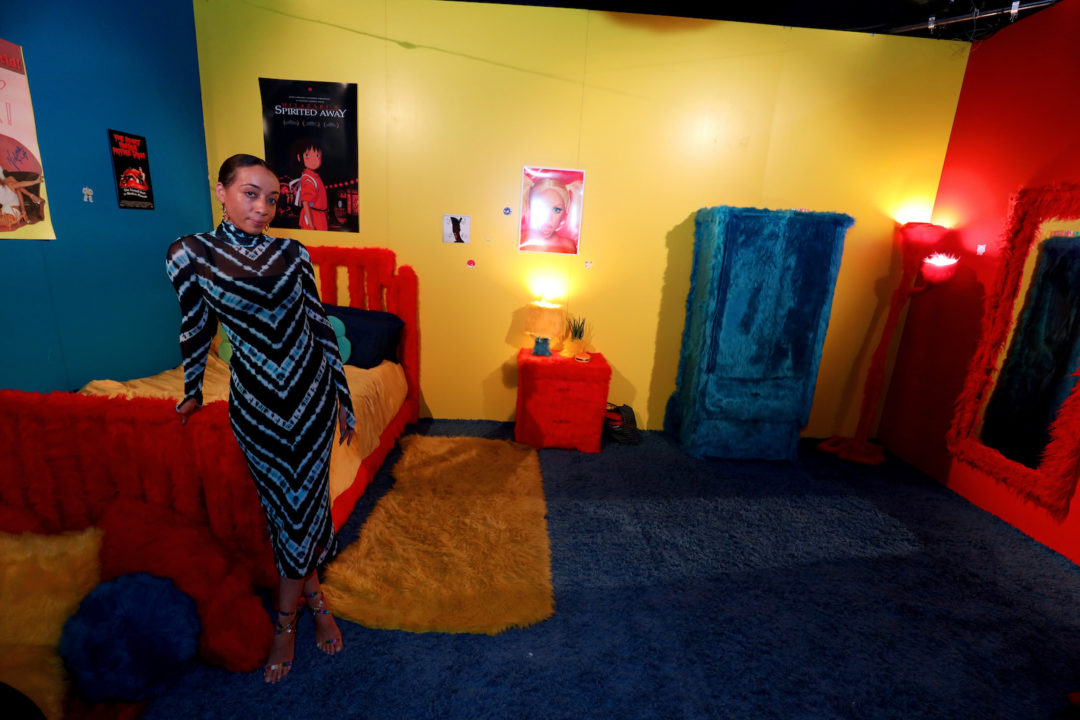
Whether it’s a social scene to get to know a stranger, or a space for internal reflection, 29Rooms: Expand Your Realityoffers just the right backdrop. This inspired, eclectic and culturally conscious festival — featuring interactive workshops, installations, performances and more — invites guests to engage with the work of approximately a dozen female artists from DC and across the nation. 

The DC Armory in Southeast is hosting the touring festival — which opened Friday and features multiple art stations, or “rooms” of Instagram-worthy installations — through Sunday, Oct. 27. With some minor variation to the art installations, the tour highlights local artists for some of its pieces.

Refinery29, the digital media company behind this event, has an audience of young women in mind, but the event offers a celebratory environment likely to appeal to anyone who enjoys a curated selfie. 

This is the first year the festival is making a stop in the District, having made its previous appearances in Los Angeles and New York. Since the event’s launch in 2015, reviews have focused on the social messages behind the art, and, of course, its photogenic appeal. Organizers encourage guests to pull out their phones and share pictures of themselves engaging with the art on social media. Each room’s introductory placard provides a brief description of the installation, along with a number of suggested Instagram hashtags to promote the work. 

And each room offers a slightly different message or theme. 

“Some of our rooms have very simple prompts … asking for [the] audience to engage [in order] to power the room and bring them to life,” says Olivia-Jene Fagon, who oversees 29Rooms as creative director of events and experiential at Refinery29.

In one of the rooms — centered around A Conversation With Your Inner Child byBarcelona-based movement artist Carlota Guerrero — attendees are asked to write out messages to their inner child on pink Post-It notes that line the walls. In the middle of the room is Guerrero’s statue of an adult reaching out to a child. 

Another set of rooms forces strangers to interact. A Blind Date With Destiny requires exhibitgoers to sit across from one another with a wall between them, leaving only the other person’s hands visible; after receiving a quick tutorial, the participants are asked to perform amateur palm readings. On the opposite side of the Armory, the room 29 Questions features prompt cards that help guests get to know each other.  

Most rooms try to share a powerful social message. A Long Line of Queendom is a monument and tribute to the experience of black women, both as individuals and as a group. Messages such as “Say her name” and “My hair ain’t up for debate” are written on the walls of the room. A golden carpet leads up to an altar. 

Of course, the biggest draw for some attendees is the “Instagram-able” feel of the festival. A room called No Filter plays with light to enable you to “experience creative lighting methods … to see yourself,” making it an excellent and easily transformed space for taking a selfie.

Other rooms, such as those set up by 29Rooms corporate partners, are really just promoting a brand. Prudential Financial, for example, put together an “escape room” activity that prompts a group to complete challenges and build toward financial wellness. The ACLU, the event’s nonprofit partner, has a “Values Stand that resembles a New York City bodega and promotes the American values and rights the organization protects. 

The rooms that were curated by individual artists will likely be the biggest draw for local patrons, and deservedly so. Trap Bob — a DC-based visual artist, illustrator and animator as well as creative director for the women-centric collective GIRLAAA — designed the images for a staircase installation, one of a number of contributed pieces for The Art Park in this year’s festival. 

Installation-based artist Yvette Mayorga, another contributor to The Art Park, presents a playful work with a subversive, solemn message that highlights issues of immigration. Using a cake frosting-like material, child-like coloring, industrial materials and the American board game Candy Land, Mayorga has created a conceptual framework that juxtaposes the border areas of the U.S. and Mexico. This piece travels along with the rest of the tour. 

“It was a great opportunity to think about my paintings in a 3D form across the country,” Chicago-based Mayorga says. “That’s super exciting to me — to have elements that have become synonymous in my work come to life and travel across the country.” 

The chance to reach audiences across the country is also part of the excitement for Trap Bob.

“[Refinery29] really allowed me to experiment,” she said. “I was able to brand the staircase with my designs and have this message that would go to all these different places and resonate with so many people.”

Trap Bob also notes that she has seen how social media has contributed to her installation’s value. “It’s amazing that people are not only taking pictures but [also] relating to the theme. I’ve had people with these captions and tagging me and stuff. … I feel like I just got to know hundreds of thousands of people over the past couple of months.”

Mariinsky’s new ‘Paquita’ shines as modern homage to golden age of classical ballet

By Ilena Peng

This article was first published in The DC Line here.

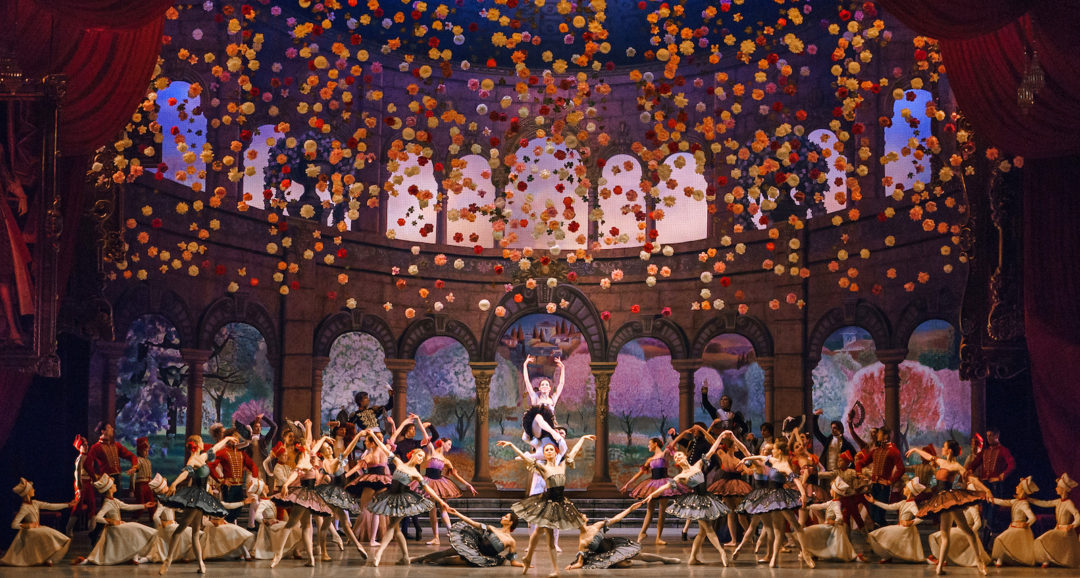
Mariinsky Ballet’s Paquita — on stage for the past week at the Kennedy Center — combines new choreography with that of its 19th-century predecessor in an updated production that maintains the same grandeur and classical technique that defined the original.

The first performances of the ballet Paquita occurred in Paris in 1846 with choreography by Joseph Mazilier, but the well-loved versions still performed today are based on a Paquita choreography by Marius Petipa that premiered the next year. The Mariinsky’s Paquita at the Kennedy Center since Tuesday is a new-millennium Paquita inspired by the Petipa iteration but infused with choreography by Mariinsky dancer Yuri Smekalov. 

One can conceive of the relationships between these two Paquita choreographies as something like the difference between the Lurman movie Romeo + Juliet starring Claire Danes and Leonardo DiCaprio and a version of the same story performed by the Royal Shakespeare Theatre. Somewhat confusingly, while retaining some of the traditional choreography, this new Paquita produced by the Russian-based company incorporates elements of Miguel de Cervantes’ novella La Gitanilla, about a teenage girl born into an upper-class family who was kidnapped as an infant by gypsies. 

Both the original and new Paquita culminate in a glittering Act III Grand Pas wedding celebration, which is the only part of the Mariinsky’s new production that retains Petipa’s original choreography (with reconstruction and staging by Mariinsky’s Yuri Burlaka). Paquita is one of a handful of 19th-century works that have become synonymous with ballet. Giselle, another mainstay of the classical ballet repertoire, will be performed by the American Ballet Theatre at the Kennedy Center in February.

Maria Khoreva is a stunning Paquita, embodying the character’s youth both in her exuberant onstage energy and her actual age — Khoreva is only 19, having risen to the rank of first soloist in just her first season at the Mariinsky. DC balletgoers first met Khoreva when she performed the lead role in Le Corsaire at the Kennedy Center last year.

Yet Khoreva’s Paquita is also mature and independent — she commanded the stage Friday night in her ability to convey emotions from joy to despair in the first two acts and in her third-act portrayal of Paquita as both sophisticated and free-spirited.

The athleticism of the Mariinsky’s leading men seemed at times more than human, including seemingly effortless turns and jumps where the performers appeared to hover in the air. Konstantin Zverev’s portrayal of the male protagonist, Andrés, was notably elegant and was most expressive in Act II alongside Khoreva in the jail scene; Zverev’s pathos and sadness were palpable. Victor Caixeta, as the poet Clemente, commanded the audience’s attention early in the ballet with an Act I variation where his grand jete series sent him nearly floating across stage in a tuxedo tailcoat.

Smekalov’s choreography retains the same sense of grandeur as the Petipa Paquita but with added humor (including two dancers who donned a horse costume). Signs of the Mariinsky’s traditional technical style were evident throughout, including a focus on expressive upper-body movement, made eye-catching by colorful capes and skirts.

The Russian dancers’ acting skills were impeccable, allowing a narrative to be conveyed to the audience more clearly than in many similar performances. Particularly effective performances in this regard came from Maria Bulanova as Carducha, Alexander Romanchikov as the young man, and Elena Bazhenova as the old woman who raised Paquita. The ballet opened with Paquita being kidnapped by Bazhenova, who triumphantly lingered to show the audience her victory before scurrying offstage. Bulanova was convincingly jealous of Paquita in Act II, and Romanchikov maintained his relaxed demeanor into his bows, drawing laughs from the audience.

Maria Shirinkina stood out throughout the show as Paquita’s friend Cristina, most notably in her Grand Pas variation. Anastasia Lukina’s and Yana Selina’s Grand Pas variations were also exceptionally elegant. 

Smekalov’s new Paquita is part of an ongoing trend of reinterpretation of the classical story ballet. Area audiences may have seen what’s become a local holiday tradition — The Washington Ballet’s Nutcracker, choreographed by former Washington Ballet artistic director Septime Webre and set in a Georgetown mansion with George Washington as the heroic nutcracker. American Ballet Theatre artist-in-residence Alexei Ratmansky is reconstructing/re-creating several 19th-century ballets, part of an ongoing conversation about tension between innovation and preservation of classical ballet. 

The Mariinsky describes this Paquita as a modern “homage to the golden age of classical ballet — a mark of respect and gratitude” to Petipa. Taken in its entirety, the Mariinsky’s Paquita succeeds as a gimmick-free yet modernized display of classical technique.