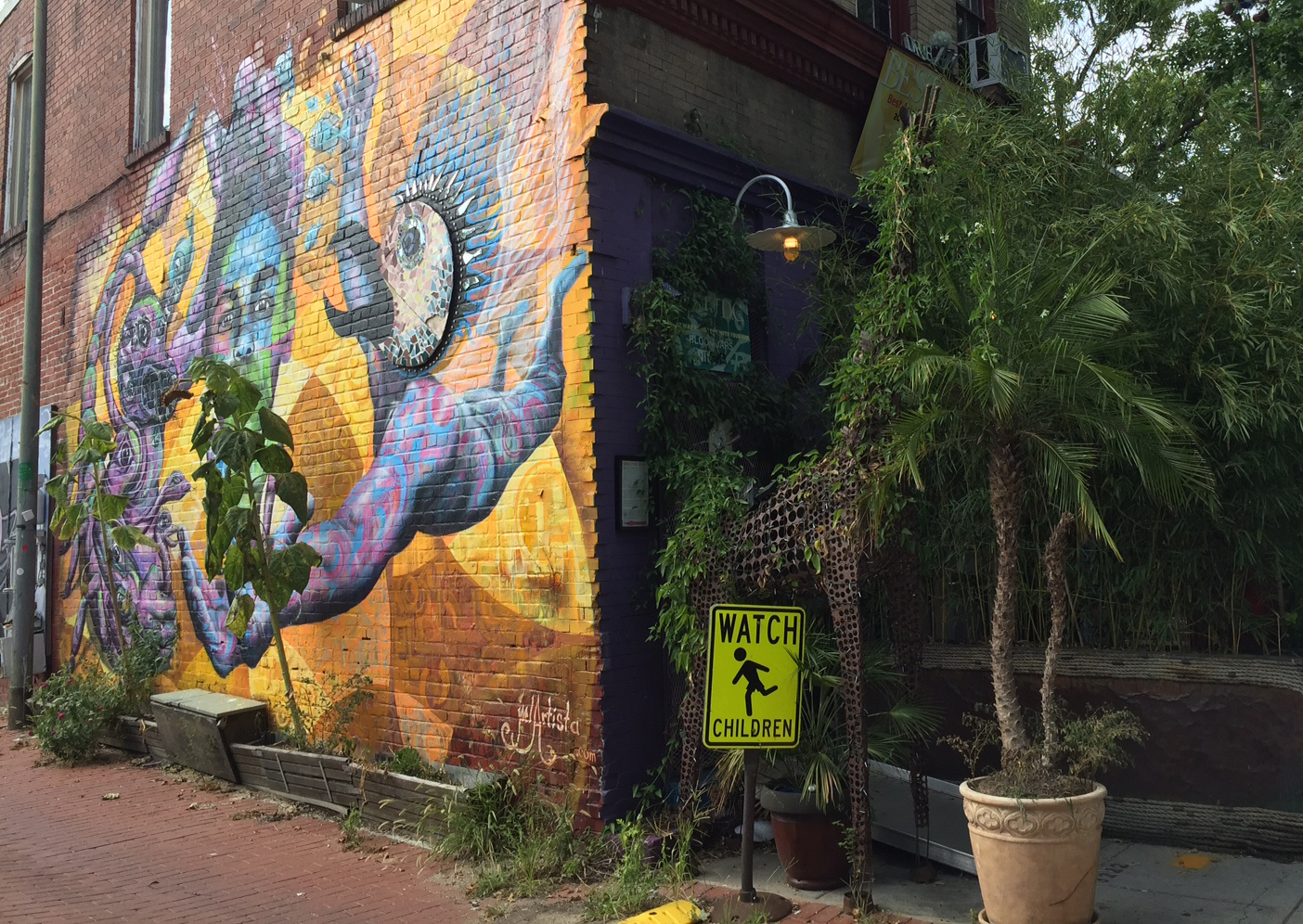
Artists Cause/Change at Gallery Opening in Columbia Heights

Every artist dreams of a gallery show or even a museum retrospective dedicated to their singular artistic vision. In the reality of the working artist, however, more often than not one must find a way to let individual artistry shine in group exhibitions. One gallery show opening last week is confronting that challenge head-on by presenting a variety of artists who share little but passion.

On November 5th, Columbia Heights arts and community center BloomBars hosted an opening-night reception for Cause/Change, a new art exhibition bringing together an eclectic group of artists. The exhibition features seven creators, billing themselves cheekily as The November 5thArtists Group: Rebecca Clark, Richard DuBeshter, Joel Bergner, Pat Goslee, Clarke Bedford, Sean Lee Bourne and Andrew Krieger.
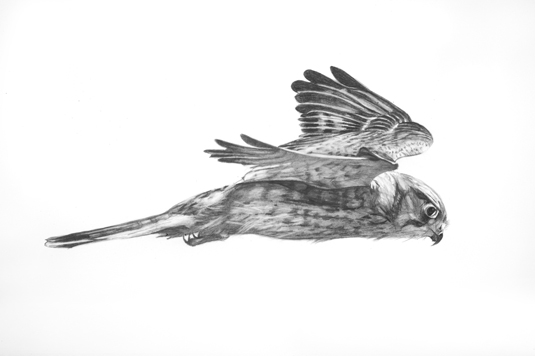
“Kestrel 1”, a drawing by Rebecca Clarke, is one of the pieces featured in the show Cause/Change, opening this Saturday at Bloombars

The exhibition description states that the artists share a “skilled passion” that might “change the way we see and respect our roles in the greater harmony to one another and the cosmos.” Just as broad as their aesthetic range are the artists’ backgrounds and level of notoriety.

Most prominent of the bunch is Joel Bergner, – otherwise known as Joel Artista – a mural artist, educator, and activist who has facilitated community art projects all over the globe. Bergner is perhaps best known for the Kibera Walls for Peace project, which sought to empower youth and promote peace in the lead up to the 2013 election in Kenya through graffiti.

Rebecca Clark, who creates realistic line drawings of both flora and fauna, and Pat Goslee, whose work reminds one favorably of both Picasso and mammalian entrails, have similarly impressive CVs, with a number of group and solo exhibitions both in the United States and abroad.
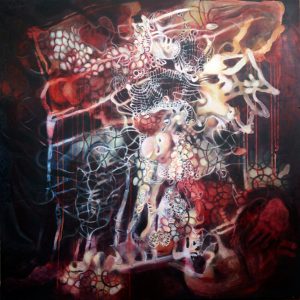
Nocturne Angelus by exhibiting artist Pat Goslee

Some of the artists are more experimental with form: Andrew Krieger works in multimedia, creating three-dimensional pieces which often blur the lines between painting, sculpture, and installation. Others live a multi-hyphenate life: Sean Lee Bourne has used his skill as a painter to design album art for DB Records record company and manages a record store, in addition to his art.

While it has no overarching theme or central political statement, Cause/Change includes everything from colorful, politically active murals to stirring black and white line drawings – perhaps something to suit the tastes of every regular gallery-goer.

Cause/Change will be on display at BloomBars from opening night November 5th at 7pm to its closing on December 11th. The BloomBars gallery is open Sunday’s 1-5pm, and by special appointments. More information is available on the exhibition’s Facebook event and the BloomBars website.

This article was originally published on UrbanScrawl.
Make Film Great Again?

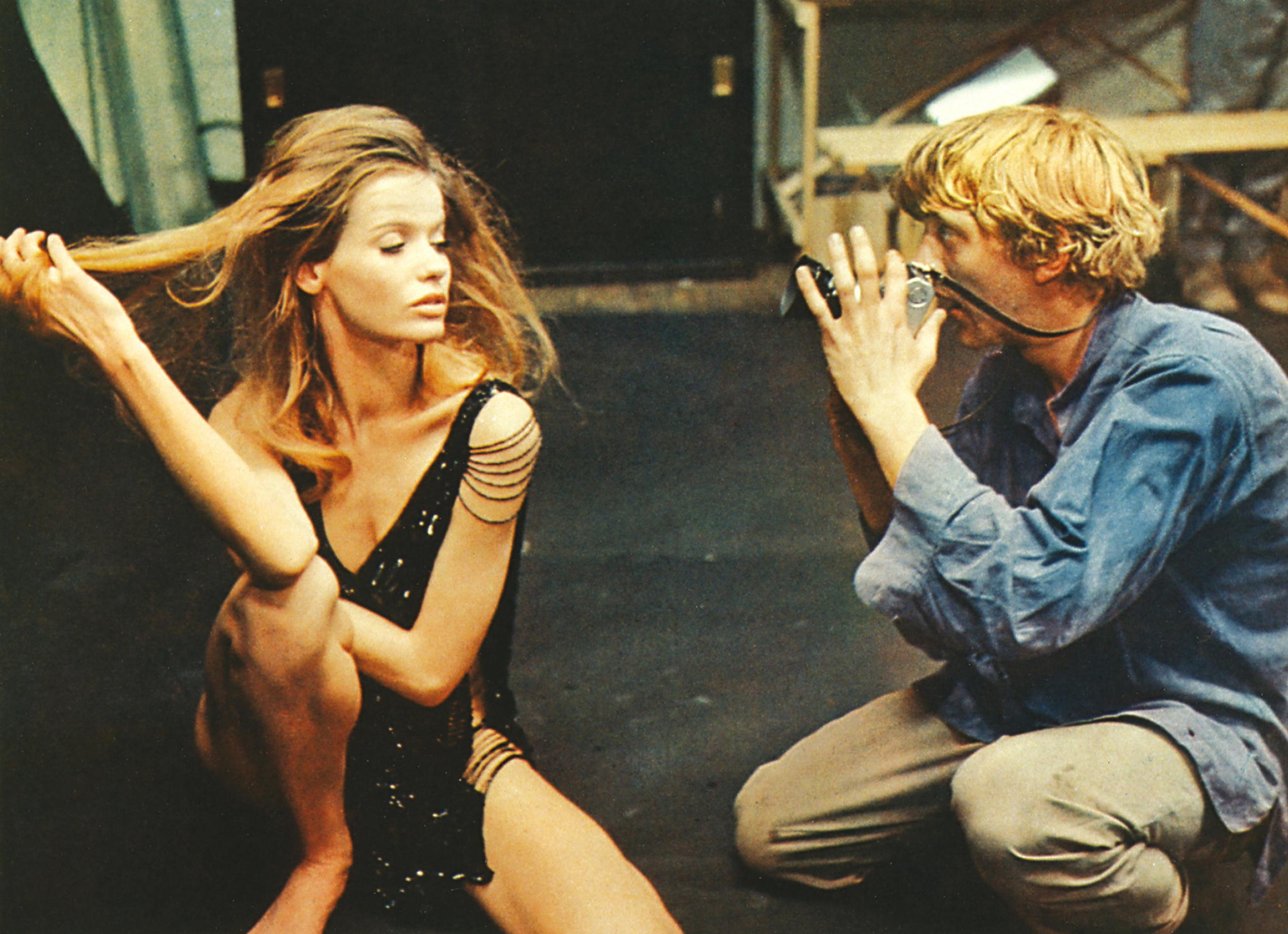
A still from “Blow Up”, one of the films screening in the Noir City DC Festival at AFI

Before the late night screening of Blow-Up at the AFI Silver Theatre on Saturday night, film scholar Foster Hirsch joked in his introduction, “It’s the witching hour … perfect for a drug-laden, sexy film.” The late hour of the screening was indeed an ideal complement to the evening’s context, as it brought to a close the first day of the AFI’s Noir City DC festival.

The festival, running through October 27, will screen 20 significant films from the film noir genre as curated by the Film Noir Foundation. Film noir is difficult to define, but characterized by its brooding dark themes, equally dark lighting, and an obsession with the gumshoe detective story. It has birthed such mid-century American classics as The Maltese Falcon and Rear Window, but its influence can be seen in today’s thrillers and parodies like Who Framed Roger Rabbit? The genre is considered a distinctly American form, and a representative from the Foundation – joining in Hirsch’s jovial mood – joked that she believed preserving it was “the most important work in the world.”

While she was clearly joking, the representative’s statement inspires a real question: Why have a film noir festival in 2016? With its morally gray male heroes and often villainous femme fatales, what about the film noir is worth preserving or reliving? During this final wind up to the election, one is reminded of Donald Trump’s campaign slogan, “Make America Great Again.” Those focused on preserving film noir – which had its heyday in post-World War II America – are in a sense idealizing the genre, making film great again, as well.

Saturday night’s screening brought audiences to another politically fraught period in our national history.

Blow-Up is an outlier both from the rest of the festival’s offerings and from film noir as a whole: it was released in 1966, it was filmed in color; and it was directed by Italian auteur Michaelangelo Antonioni. All of these elements make Blow-Up a far cry from the stark black and white Los Angeles so often seen in noir films. However, Hirsch argued in his opening address, the film is a “neo-noir” pulling plot tropes from those older films with nostalgia.

Blow-Up follows one day in the life of hip fashion photographer Thomas (David Hemmings) as he photographs models, cavorts around London, and stumbles upon a possible crime in a public park. After photographing a mysterious beauty (Vanessa Redgrave) in the park, he notices something suspicious in the photos as he develops them. It’s not clear to Thomas that he may have photographed a murder until he makes blown-up prints of the photos, tightening his focus on key details until the truth comes to light.

The film is an intriguing take on the film noir plot, possibly enhanced if you’re familiar with other films from the genre. The crime at the film’s center takes place in a park during the middle of the day, which is an unsettling contrast to the shadowy ne’er-do-wells of classic noir. Antonioni’s meandering cinematic eye also gives the viewer freedom to put the pieces of the puzzle together independently.

Blow-Up uses color to great effect within Antonioni’s well-crafted and visually stunning shots. The earth tones of an antique shop, the bright green of park grass, and startling blue of Hemmings’ eyes all make for memorable scenes. The film’s famous and fluffy scenes of fashion shoots are especially delightful; it’s almost as if Antonioni knew how outrageous Technicolor 1960s fashion would seem to future viewers.

What stands out most about Blow-Up in the current political climate is its representation of gender and gender roles. Most film noirs center on a shady man and a shadier woman, but this film turns that subtextual battle into text. As a fashion photographer, Thomas spends his entire day rolling around his studio with half-naked models (scenes which, again, add little or nothing to the plot.) His own femme fatale uses her sexuality to play him for a fool. His lover similarly refuses to leave her husband. What’s being communicated to straight men, then, about relationships is to always be the player and not the played; photograph the women, but never let them get to your heart because they are often cold, deceptive, untrustworthy …This may appropriately begin to sound like the public characterization of a certain candidate for the presidency.

That brings us back to the question posed earlier: what is being preserved when we preserve film noir? If film patrons hold nostalgia for genres from a time when civil rights were minimal for any but white men; when LGBTQA folks were unsafe outside the closet; when women were shackled to the home, perhaps they are then also holding nostalgia for that time more broadly. The Film Noir Foundation does important work preserving films, and making sure they’re not lost to history, but should some films (like some social attitudes) be lost to history?

Interested readers will have a good time taking these questions into the theater and deciding for themselves. The Noir City DC festival runs through October 27 at the AFI Theater in Silver Spring. Show times and more information is available here.

The article was originally posted on Urban Scrawl.

Jerome Paige Wants DC’s Cultural Plan to Include You

It’s not uncommon to think of change in the city as bad.  One of D.C.’s leading planners, Jerome Paige, thinks otherwise.

“The premise now is that Chocolate City is disappearing, and that has to do with a sense of being left out, and pride in local identity. But the 1980’s were a period of black suburbanization for DC, just as the 60’s and 70’s were a period of white suburbanization,” Paige said. “That’s why people started calling Montgomery County, Maryland DC’s ‘Ward 9’. The way I think about it is we don’t need to try to be Chocolate City, but Cosmopolitan DC… Urban out-migration and In-migration hasn’t stopped. We need a language that helps get us to where we need to go – stabilized neighborhoods and help for people who want to stay, to stay,” whether it’s Shaw or Chevy Chase.

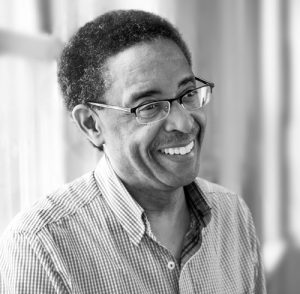
Jerome Paige

Paige is the consultant, hired by Humanities DC and the DC Office of Historic Preservation, working to develop the new DC Living Heritage Network (DCLHN.) The DCLHN is a coalition of organizations that work on heritage, culture, and local history and they include the Historical Society of Washington, DC, the DC Preservation League,ONE DC, Black Broadway on U, Howard University, and the Anacostia Community Museum, among many others.

The concept for the DCLHN was developed by Humanities DC in response to legislation by Councilmember David Grosso mandating development of a new cultural plan. The original legislation for the cultural plan called for an Arts plan, and the DCLHN was organized to ensure that the process include the Humanities. Humanities DC is a grant-making organization that supports Humanities and Heritage programming.

DC’s cultural planning process has just started, and the Office of Planning is launching a series of public forums to receive stakeholder input.

“If you’re really going to talk about culture you have to include humanities, heritage and preservation; you can’t just talk about arts… when we talk about culture, we tend to talk about it in terms of the arts. That has to stop. What the DC Living Heritage Network has been doing [is saying], ‘let’s begin to reframe our language’,” Paige said.

In the late 1980s and early 1990s Paige worked on the DC History and Public Policy Project, through which he performed research and analyzed the effects of neighborhood change and gentrification. The city was changing significantly even in the 1980s, Paige says, and in some ways the DC Living Heritage Network aims to address similar issues.

Paige’s enthusiasm for data and history is contagious and he speaks about economics and city planning with the gusto of a college professor — which he in fact is. Paige has been an instructor and administrator at the University of the District of Columbia, the University of Baltimore, and the National Defense University.

Paige grew up in a politically engaged family in Philadelphia, and while he says there was no one moment of civic activation Paige’s father ran a series of small businesses and he reported seeing first-hand the importance of engagement at the neighborhood level. Paige came to DC in 1965 as a freshman at Howard University and has been a resident since then. He and his wife raised a daughter in the city.

The DCLHN addresses a tendency to frame the Creative Economy around the arts, with an over-emphasis on supports for design, culinary, visual and performing arts at the expense of other facets of local culture.

“What’s getting left out is… the storytelling, the civic discussions, the neighborhood histories, the preservation of neighborhood stories, family histories, genealogies; the ways in which people are using conversation and culture at the local level to help people understand themselves, their families and what’s going on,” Paige said.

“The ways we produce, distribute and consume culture drives lots of the new economic activity in our cities and… the major benefit of the network is to collaborate and share resources.”

recent-monthly-dclhn-meeting

Jerome Paige and attendees at one of the DC Living Heritage Network’s monthly meetings.

The Network has already won its first battle: the RFP for the Cultural Plan noted that the plan is to include not only the Arts but also Humanities.

Paige encourages residents and organizations interested in seeing increased support for Humanities and Heritage projects through the Cultural Plan to participate in upcoming Living Heritage Network meetings, which occur monthly. To participate, Paige suggests emailing Louis Hicks, Grants and Special Projects Manager at Humanities DC, at LHicks <at> wdchumanities.org.

“Culture is more than a series of institutions. And for us, we feel that for the cultural plan to be successful it needs to provide support for everyday aspects of life. We are promoting neighborhood-based humanities and heritage and preservation ‘by-and-for-locals’. We’re trying to stimulate conversation and make sense out of all the physical, social, economic, and demographic changes unfolding,” Paige said.

This article was originally posted on Urban Scrawl.

Inbal Pinto Speaks on Shimon Peres and her ‘Wallflower’

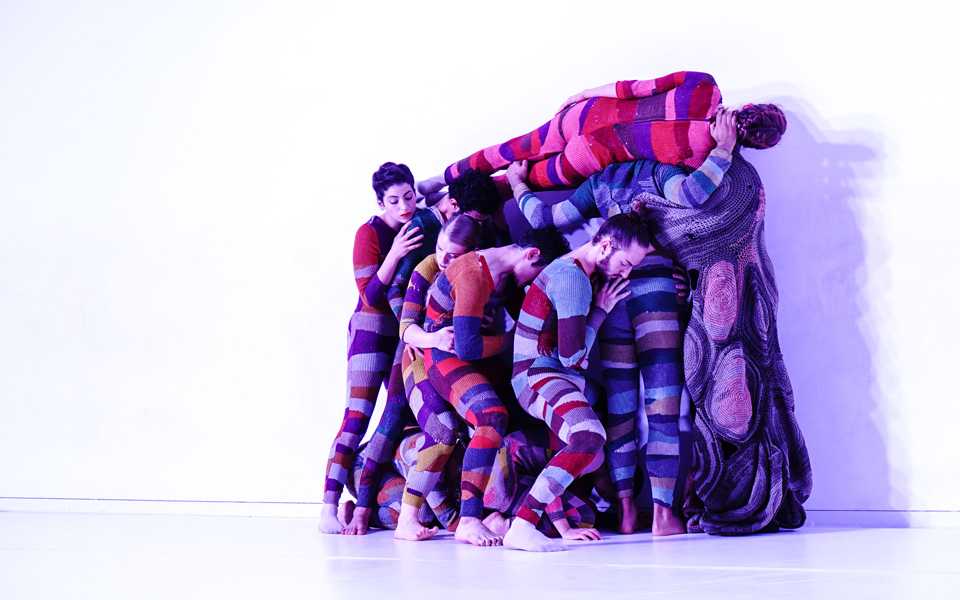
The Inbal Pinto and Avshalom Pollack company performing ‘Wallflower’ in 2015

The eyes of the world have turned to Israel this week following the death of Shimon Peres. Twice the prime minister of Israel and a member of the Israeli parliament for more than thirty years, Peres was a winner of the Nobel Peace Prize, and a prominent advocate for peace. Peres’ death has put Israeli politics in the news this week, but Israeli culture is also having a moment here in D.C. – live and on film.

This Sunday you can see Ohad Naharin, the founder of the Gaga dance movement style and Batsheva Dance Company, in the award-winning documentary about him — Mr. Gaga – at the Jewish Film Festival. And the following Thursday, the Inbal Pinto & Avshalom Pollak Dance Company will perform their choreography Wallflower live in a one night stand at The Clarice.

Inbal Pinto got her start as a dancer with Ohad Naharin/Batsheva in the early 1990s. Joining forces with Avshalom Pollak – an experienced actor – the company creates distinct artistic visions. I spoke with Pinto by phone to ask her about the Company’s upcoming performance at The Clarice, the piece the company will be performing – Wallflower – which was first performed at a museum, and the legacy of Shimon Peres.

Jonelle Walker: What was the inspiration for Wallflower? What generated it among the company?

Inbal Pinto: First of all, this piece was created for the Tel Aviv Art Museum and, so, it was basically the first time we did a piece outside of a normal stage and the fact that it’s in the museum has a big effect on the process of the creation, of building it. The way that we approached it was using our bodies in the craftiest ways. Like, imagining our bodies like a plastic artist using his tools and materials. Refining our bodies as texture, as different textures. Almost like imitating strange combinations of materials, and how we define those in our own bodies … Of course, we are talking about human beings, so that creates all kinds of images when you are using your body as a metal … it defines your communication with others.

Continue Reading

Dana Tai Soon Burgess Company Opens Dance Studio in Glen Echo Park

Past the pottery yurts, glass-blowing demonstrations, and children’s theatres, a troupe of dancers practiced enthusiastically in the Hall of Mirrors at the recent Glen Echo Park Open House. Jan Tievsky, manager of the new Dana Tai Soon Burgess studio at the Park, invited passersby to watch the company as they practiced for an upcoming performance at the National Portrait Gallery. The open rehearsal also served as a preview for potential dance students.

This fall at Glen Echo, the Dana Tai Soon Burgess Dance Company (DTSBDC) will be offering classes in hip-hop, Bollywood dance, contemporary modern dance, improvisational movement and ballet. All of the classes will take place in the newly-renovated Hall of Mirrors dance studio, continuing a tradition first established by Tievsky in the late 1970’s.

Dana Tai Soon Burgess Dance studio manager director Jan Tievsky

Jan Tievsky, DTSBDC studio manager.

The renovated studio space is clean and bright, with a fresh coat of light blue paint and two walls covered in floor-to-ceiling mirrors. A windowed observation area looks into the practice room along a hallway with new changing rooms and a bathroom.

“We’re trying to get people interested in modern dance again,” said Tievsky, also vice president of DTSBDC’s board of directors. “These classes are open to any adults or teens who want to experience the Burgess School.” She explained that Burgess’s style is notable because he draws inspiration from a wide variety of dance traditions, and incorporates little details, like subtle hand movements, into his choreography.

“There is a ballet basis in everything,” Tievsky said. “He is so precise, and he grapples with huge, important ideas. You can tell when dancers have been with him for a long time because of the way they move: cerebral, emotional—the entire body is expressive. ”

DTSBDC is now in its 24th season and company members will be leading the classes at Glen Echo Park under the guidance of Burgess. The company has toured to over 20 countries and performed in the

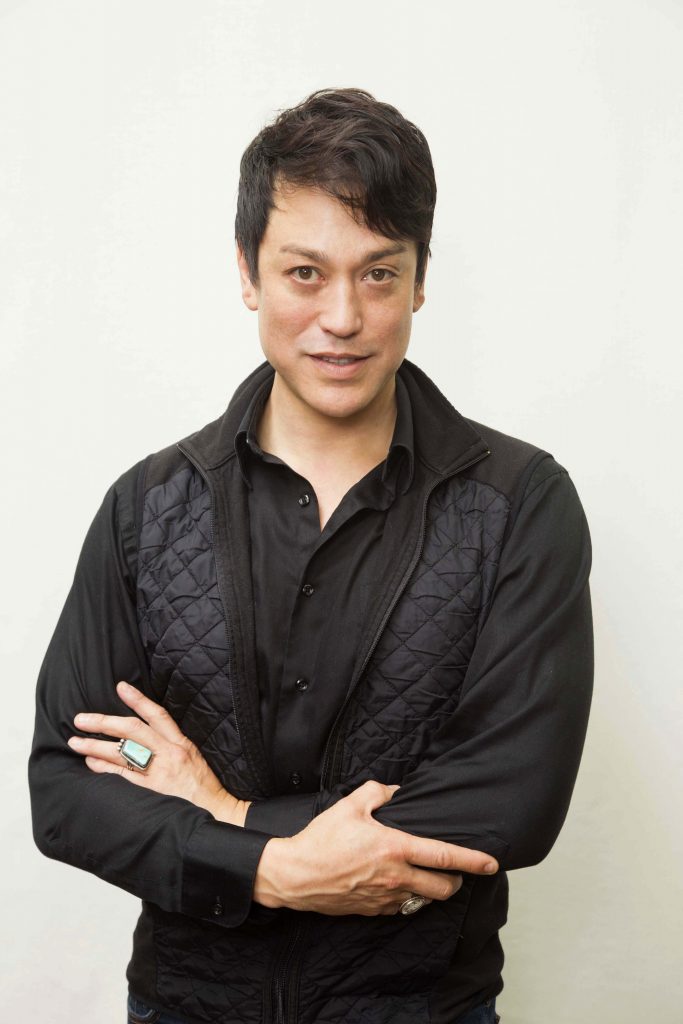
Choreographer Dana Tai Soon Burgess

Dana Tai Soon Burgess (Photo: Tom Wolff)

White House at the invitation of President and First Lady Obama. Burgess has received numerous honors and awards for his work as a teacher and choreographer, including two Senior Fulbright awards, a Washington D.C. Mayor’s Art Award, and the Pola Nirenska Award.

The Washington Post’s chief dance critic, Sarah Kaufman, has noted Burgess’s use of subtle movement to tell powerful stories. “The basis of Burgess’s choreography is sympathy with what we struggle not to show. He can portray, uncannily, the flickers and stabs of feeling that swarm through us as we try to stay calm under stress,” Kaufman wrote.

The new Glen Echo Studio isn’t the only exciting development for the company. Recently announced as the first choreographer-in-residence at the Smithsonian National Portrait Gallery, Burgess will create dance performances inspired by the museum’s exhibitions over the next three years.

As a part of the residency, the company will perform Burgess’s “Margin” in conjunction with the 2016 Outwin Boochever Portrait Competition this October.

The Outwin Exhibit, on display at the Museum through January 8, 2017, represents the best of current portraiture and examines issues of modern American identity.

Burgess has said that his unusual upbringing has been a major influence on his work. “Being half-Asian, growing up in Santa Fe, New Mexico, going to these bilingual schools, the concept of being ‘the other’ and looking for a sense of home, or looking for a sense of place was a continual challenge,” Burgess said.

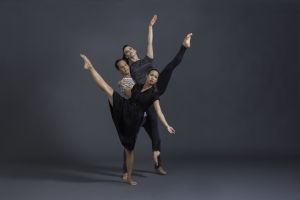
Three dancer strike a pose

Kelly Southall, Christin Authur and Joan Ayap strike a pose from “Margin”. (Photo: DTSBDC)

The excerpts performed during the Glen Echo Park open rehearsal explored complicated questions about oppression and navigating life on the margins of society. In one scene, a solitary female dancer moves in tandem with a pair of male dancers. The woman and the pair mirror each other’s movements, except the woman is alone, holding hands with an imaginary partner while the men dance in one another’s arms.

The dancers’ movements fall in and out of sync with the bright, yet melancholy, melodies Burgess has selected. The soundtrack for “Margin” includes Concha Buika’s “Volver, Volver” and Ryuichi Sakamoto’s “Bibo No Aozora.”

The public is invited to attend open rehearsals at the National Portrait Gallery on October 1, 8, and 15, from 11:30 a.m to 2 p.m. each day, and on October 28 the world premiere of “Margin” will be held in the Kogod Courtyard of the National Portrait Gallery at 6:30pm.

Washington Ballet looks to past to begin future with Julie Kent

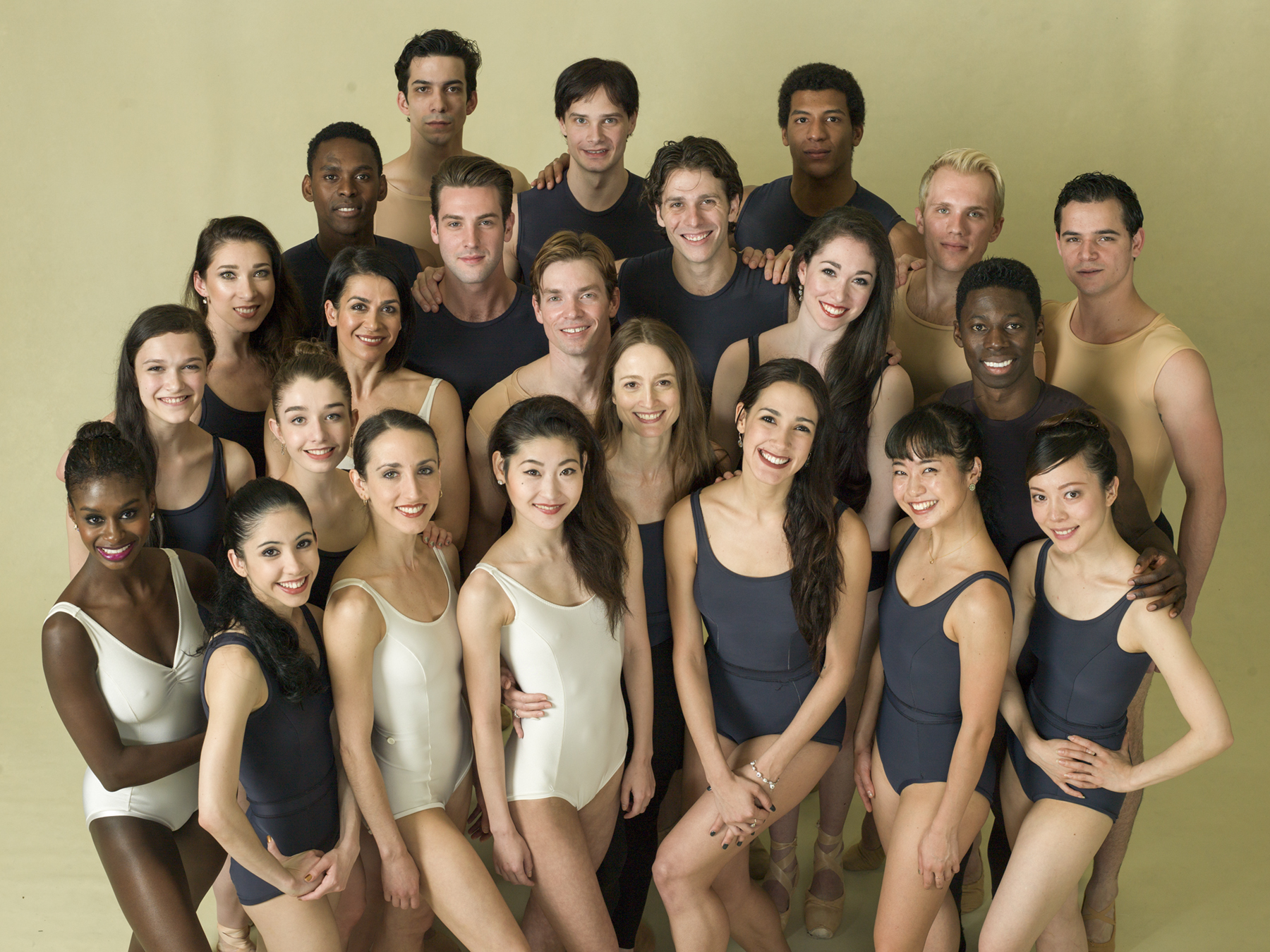
The Washington Ballet with Artistic Director Julie Kent (Photo: Dean Alexander)

When new leadership takes the reins of an arts institution, the focus tends to be on where the company is going in the future. For the new Artistic Director of The Washington Ballet, Julie Kent, however, her first season will open with a celebration of the company’s past.

On September 30, The Washington Ballet (TWB) will present its one-night-only 40th Anniversary Celebration in the Kennedy Center’s Eisenhower Theater. The evening will be a three act program featuring signature works created for the company by former artistic leaders Choo San Goh and Septime Webre, as well as well-loved excerpts from TheNutcracker, Swan Lake, Don Quixote, and Theme and Variations.

Julie Kent, Artistic Director, Washington Ballet (Photo: Dean Alexander)

Julie Kent, Artistic Director, Washington Ballet (Photo: Dean Alexander)

Kent thinks the diverse retrospective is the perfect way to start her tenure with the company: “It’s a wonderful starting point for everybody to look back and appreciate everything that has been accomplished for the company in the last 40 years and the more than 70 year legacy [founder Mary Day] left with the Washington School of Ballet.”

Kent comes to Washington from the American Ballet Theatre, where she was a principal dancer until June, 2015 and served as the Artistic Director for their summer intensive programs until joining TWB on July 1. However, some might recognize her best from her role as Kathleen Donahue in the cult-classic dance film Center Stage.

The 40th Anniversary Celebration, in addition to recognizing a milestone, will also serve as a symbolic transition of power from former Artistic Director Septime Webre to Kent. Webre’s work as a choreographer will be highlighted in the second act of the program as representative of a key turning point in the company’s history. The Celebration will be the first performance for the company which will place Webre in its past instead of its present.

“[W]e have to celebrate and pay tribute to [Webre’s] contribution to growing the company to the size it is now … and all of the lives that we have helped shape through studying of a classical art, which I’m a huge advocate for,” said Kent.

In addition to creating original pieces for the company during his 17 year tenure, Webre developed some of the company’s key community programs including a residency at THEARC in southeast DC, a program with DC Public Schools, and the well-regarded collaborations with Imagination Stage.

Webre was not the first artistic leader to make his mark with TWB.

Singaporean choreographer Choo San Goh was invited by TWB founder Mary Day to join the company as a resident choreographer in 1976. Goh would go on to become the company’s Associate Artistic Director. “40 years ago that was a really big idea,” Kent said. “At that time, that was very unusual for a small company of this size and smaller then to have its own choreographer creating works for the company.”

Before his untimely death at the age of 37 in 1987 from complications related to AIDS, Goh inspired international interest – including from dancer-turned-Artistic-Director Mikhail Baryshnikov, who as Artistic Director brought Goh’s choreography to American Ballet Theater. In addition to his work for TWB, Goh’s commissions include works for Joffrey Ballet, Houston Ballet, Alvin Ailey Dance Theater and the Dutch National Ballet.

During his time with TWB Goh created 14 original pieces including “Fives” which will be performed as the first act of the 40th Anniversary Celebration next week. The Washington Post once called “Fives” the company’s “signature piece,” noting in a 1993 review that its finale almost always “brings down the house.”

With a rich history of works and choreographers, TWB fans might be wondering if Kent will continue the tradition of commissions.

“I feel that any thriving arts institution has to have the creative process as a part of its internal dynamic for dancers, for the audience, for the community to have the opportunity to create art that is reflective of our time and what’s happening now,” she said.

While she could not confirm details, Kent did say that her first commission as Artistic Director will arrive before the end of this season: a planned world-premiere to be presented at the Kennedy Center on Memorial Day weekend 2017.

“[T]he creative process is an important part of the big picture here,” she affirmed.

The third act of the program for the 40th Anniversary will be a medley of famous and demanding ballet masterworks, which Kent hopes will demonstrate the company’s commitment to excellence, which is “at the heart of the company.” A commitment that she thinks Washingtonians can take pride in and hopes they will support as she looks to grow the company’s prominence on the national stage.

Ultimately, Kent hopes that this retrospective will “inspire great excitement and investment in taking this company to even greater heights” in the future. While the company has a past to be proud of, she insists there is still work to be done to establish The Washington Ballet as an international force, a major focus of her vision for the next 40 years.

As the company looks to the past, Kent foresees a future of hard work as the company continues to grow and maintain its excellence. Kent emphasizes that it will take enormous effort from the company and support from the community. “Diamonds don’t come cheap!,” she added with a laugh.

For now, however, the company will celebrate.

The Washington Ballet presents its 40th Anniversary Celebration on September 30 at 8pm in the Kennedy Center’s Eisenhower Theater. More information and tickets are available here.

This article was originally posted on DC Theatre Scene

Terra Firma Dance at Dance Place

terra firma performance photo yvonne allaway

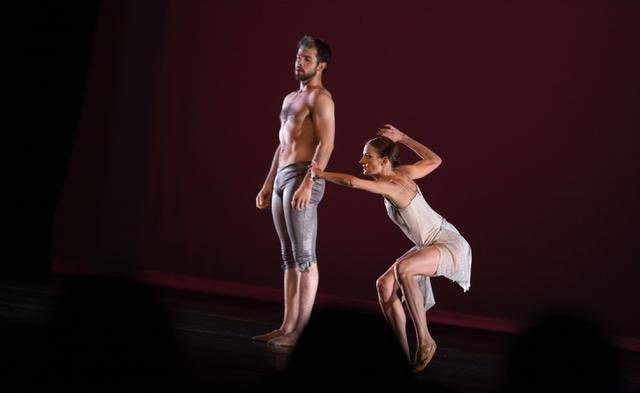
Terra Firma Dance performance (Photo: Yvonne Allaway)


Even if you think of yourself as being more cultured than the average American, it can be hard to work up the courage to attend ballet performances. What if it’s too long? What if it’s boring?

Those fears can pushed aside this weekend at Dance Place when ballet choreographer Stuart Loungway’s Terra Firma Dance Theatre presents an evening length show in a presentation by local non-profit DanceMetroDC.  Loungway says that it’s his intent to create “dance for dance’s sake” and present something that audiences will finds utterly relatable and cathartic.

stuart loungway headshot - terra firma

Photo courtesy Stuart Loungway

“Dance is a tool for capturing the essence of what it means to be a human being. I think that’s what audiences look for. And you can speak to the ‘human condition’ without being pandering or sappy or maudlin,” he said.

Currently on the faculty of the The Washington Ballet, Loungway had a performing career as a member of The Houston, San Francisco, and Joffrey Ballet Companies. His dances and dance-making are informed by his years performing the works of Balanchine, Forsythe, Morris, Stevenson, and others.

“While the caliber of the dancers involved and the technique and training [is traditional], we want there to be a sense of inclusion and we want to serve the community at large,” Loungway said.

This weekend his company will perform “Mockingbird”, “Stagioni”, and “Chamber Duet”. “Mockingbird” explores themes of love, loss and redemption while “Stagioni” is a modern interpretation of Vivaldi’s famous “Four Seasons”.

The company is performing at Dance Place through Dance Metro DC’s 2016 Presentation Grant award. The mission of Dance Metro DC is to serve the whole spectrum of dance in DC, and to increase accessibility for local audiences of dance.

Dance Metro DC Executive Director Stephen Clapp said, “The dance community in DC is incredibly vibrant, incredibly diverse, and incredibly hardworking. The resources are also extremely limited, which is part of the reason Dance Metro DC exists… One of our initiatives is to look as how we are serving the entire spectrum of the dance community.”

Clapp said he is excited to introduce new audiences to dance with Terra Firma.

Terra Fima Dance Theatre will be at Dance Place Saturday, September 17 at 8pm and Sunday, September 18 at 7pm. Details and tickets.

This article was originally published on DC Theatre Scene.