Browsing Category

Literary Arts

Ballet dancers showcase recently renovated Martin Luther King Jr. Memorial Library in new video

By IIena Peng

This article was first published in The DC Line here.

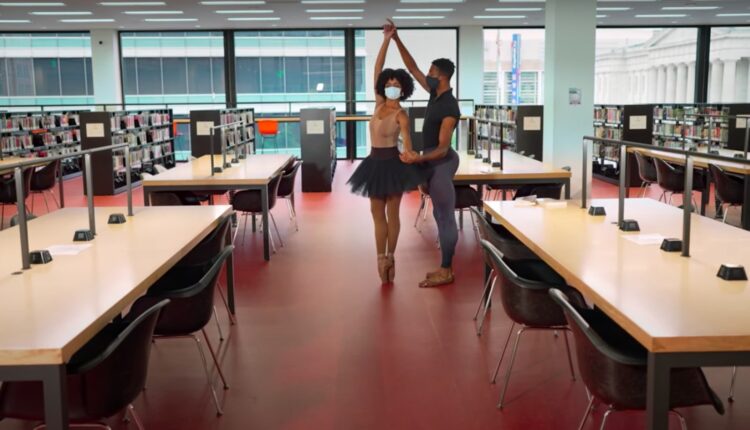
Derek Brockington and Alexandra Hutchinson dance in the grand reading room of the recently renovated Martin Luther King Jr. Memorial Library. The roof of the room is decorated with a textile art installation by Zenobia Bailey. (Screenshot from “Library Reimagined: A Tour in Dance”)

On the last Sunday that Martin Luther King Jr. Memorial Library was closed to the public, two professional ballet dancers whirled through the historic building’s newly renovated space.

The dancers, Alexandra Hutchinson and Derek Brockington, are featured doing lifts in the grand reading room and jumping through the rooftop garden in a new video, “Library Reimagined: A Tour in Dance.” The video showcases the revamped library, which hosted a public celebration late last month to mark the first anniversary of the completion of a four-year renovation that cost more than $211 million.

“We’ve been involved for years and years in renovating the MLK Library, a historic property, and it just needed to be exposed to everyone for all of the new improvements that have been made,” said Robin Diener, the president of MLK Library Friends and a member of the DC Public Library’s MLK Renovation Advisory Panel. “I didn’t know why, but the idea of ballet or dancing or something in the various spaces just seemed to me completely natural.”

The library, located downtown at 901 G St. NW, has been gradually reopening with limited public access since September 2020 due to the pandemic. The day the video was filmed, Sept. 5, was the last Sunday before DC’s central library resumed Sunday and holiday hours.

Hutchinson and Brockington are members of Dance Theatre of Harlem, a company founded by Arthur Mitchell, the New York City Ballet’s first Black principal dancer. In the summer of 2020, the duo produced the video “Dancing Through Harlem,” which caught Diener’s attention. Having known Hutchinson since she was a ballet student, Diener reached out to ask whether she would be interested in dancing through DC’s renovated library. 

Hutchinson, a Southwest DC native who grew up frequenting the MLK and Southwest libraries, readily agreed. 

“I was really excited to be able to tell a story with our bodies. As dancers, we love being storytellers,” Hutchinson said. “And so I think it’s perfect to go with the library.

Working together in New York City, Hutchinson and Brockington began choreographing a piece to music by composer and conductor William Grant Still (1895-1978). Hutchinson said they wanted to incorporate Black artists in their piece. Music by Still — who was the first African American artist to conduct a major symphony orchestra and have a symphony performed by an American professional orchestra — was a “driving force” for the choreography in those early stages, Hutchinson said.

Though Hutchinson and Brockington choreographed most of the piece in New York City, their physical presence in the library on the day of the video shoot inspired elements of their storytelling. In one scene, Brockington hands Hutchinson a library card, which she clutches to her heart. Sitting in a nook, Hutchinson reads a book about famed Sierra Leonean American ballet dancer Michaela DePrince — a current Boston Ballet second soloist and a Dance Theatre of Harlem alumna.

Alexandra Hutchinson reads a book about Michaela DePrince, a Black ballerina and an alumna of the Dance Theatre of Harlem. (Screenshot from “Library Reimagined: A Tour in Dance”)“Little improvisations would come out of just being there, and so we got an element of magic in the filming,” Brockington said. “You’re not really sure how all of this is possible, but when you’re a little kid in a library, sometimes it does feel like that.”

As Hutchinson reads the book about DePrince, Brockington hands her a pair of pointe shoes. The next scene in the video shows Hutchinson lacing up the ribbons on her shoes, wearing a tutu. Hand in hand, the pair walks up the library’s new spiral staircase. 

Hutchinson’s narrative arc in the video — reading a book and then transforming into a ballerina — represents a library’s “limitless possibilities,” said DC Public Library events program coordinator Ryan Williams. Hutchinson’s return to the MLK Library, where she used to study whenever she performed at the nearby Warner Theatre with the Washington School of Ballet, is a real-life example of how libraries are linked to upbringings and growth.

“It’s almost like a Madame Butterfly moment where she ascends those stairs,” Williams said. “That ascension is very much what we want all of our customers to do, no matter where they are in their lives.”

Hutchinson said the scene was “whimsical,” since a librarian ordinarily wouldn’t have pointe shoes available to lend out. But with all the library’s new gadgets and improvements — including a 3-D printer, power tools and a ballet barre — Diener quips that maybe pointe shoes aren’t too far off.

“In the past, they wouldn’t have necessarily had power tools or a ballet barre — but we do have those things,” Diener said. “Toe shoes are probably coming.”

David Weiner, who filmed the video, said it is purely a celebration of the completed space following years of discussion regarding the building’s renovation, a process that began formally in 2011

“This was an opportunity to be something that was purely positive — just something that was just good feelings,” said Weiner, who first began working with Diener and the Friends of MLK Library in the 1990s on the issue of adult literacy. “That’s how I thought about it. And clearly, in the choreography, in the dance, is just the spirit of joy.”
MahoganyBooks Begins a New Chapter

By Nyah Hardmon

This article was first published August 4, 2021 in Washington Independent Review of Books here.

The DC-based indie opens a second store at National Harbor.

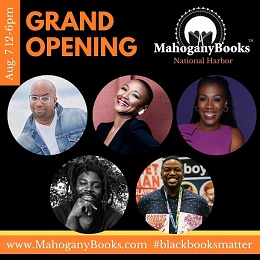
With summer in full swing, Anacostia-based MahoganyBooks is set to expand its colorful impact on DC’s literary scene with the opening of a second location, at National Harbor in Prince George’s County, Maryland, this Saturday, Aug. 7th, at noon.

According to owners Ramunda and Derrick Young, the new outpost will capture the same intimate spirit of their charter store, while also tapping into novel ways to connect with their community of readers.

“We want people to feel like they have to go to both stores because there’s something unique at each location,” says Derrick.

Along with having nearly double the space of the original venue, this new location will also feature distinct additions like coffee from Jirani Coffeehouse, a fellow Black-owned business. As the Youngs adjust to this transition, they recognize that a brand-new space comes with a brand-new clientele.

“I’m excited to try a new path,” Ramunda says. “There hasn’t been a Black bookstore in [the National Harbor] area, so it’ll be interesting this next year to see what that looks like and what kind of changes we’ll make along the way to really service our customers.”

Both Derrick and Ramunda have taken a hands-on approach to everything in the new space, from fabric selection to interior design. The owners insist that the end result will be a domain that customers can come to know, love, and, most importantly, feel safe within. Thus, the Youngs will continue to follow pandemic-related safety procedures like hosting virtual events, adhering to capacity limits and sanitation protocols, and expanding the use of their curbside-pickup service, Black Books to Go.

“We still want to make sure people feel comfortable,” Derrick explains. “It’s a community bookstore, so we wouldn’t be doing our job if we weren’t there for the community.”

While putting community first means putting a momentary pause on in-person initiatives like their monthly book club, the Youngs are confident that they’ll soon get back to the group gatherings they’ve grown fond of hosting.

Until then, MahoganyBooks has begun to revive smaller in-person events like meet-and-greets as a way to ease book lovers back into the swing of things. Still, because personal contact has been a pillar of the shop since its inception in 2007, both Derrick and Ramunda agree that nothing can compare to face-to-face engagement with customers. 

“The energy from our events was amazing and it really fostered community in a great way,” says Ramunda. “I can’t wait until that time and space comes again.”

As the Youngs look to their future, they also look back to the foundation that started it all. Originally an online platform, MahoganyBooks was created to give people across the country access to literature centered around the Black experience. Even before a physical space was a viable option for the business, the Youngs became a consistent neighborhood presence via pop-up events and school engagements. Now, the once-digital platform has not only one brick-and-mortar place to call home, but two.

“Opening up this space really allowed us to create that community that we longed for,” Ramunda says. “It was important for us to have a sacred space where we could just get deep on topics that other people may shy away from.”

Despite the pandemic-related chaos and stress of their new journey, the Youngs remain optimistic and excited for the days to come.

“It’s like giving birth. You have this short amount of time where you’re doing these things that will never happen again, and then for the rest of your life, you’re dealing with the growth,” Derrick says.

“I try to take a step back and enjoy some of these nuanced moments because this is not something people get to do often.”

[Image courtesy of MahoganyBooks].

Area arts organizations every writer (and reader) should know.

By Clare Mulroy

This article was first published July 1, 2021 in Washington Independent Review of Books here.

Even throughout the pandemic, we were reminded of the resilience of the arts. Now, with the world beginning to open again, read how a few local nonprofits are contributing to the arts and literary scene in DC.

826DC

Under the storefront of Tivoli’s Astounding Magic Supply Company in Columbia Heights, 826DC provides free writing and publishing opportunities to young people in the District.

According to incoming Senior Manager of Communication and Development Sarah Richman, nonprofits like 826DC are essential in serving DC’s youth.

“Too often, literary spaces only feature adults, and that is such a disservice to young people who have incredible and powerful things to say, but also to us,” Richman says. “We’re missing out on magnificent stories, on important points of view, and on a really valuable slice of the human experience.”

826DC focuses on creating relationships both with the writing community and among writers. Supporting newspaper clubs at schools in DC is one way it encourages aspiring journalists to identify what is important to them within their own communities and nationally. Students not only find mentors in 826DC volunteers; older students get the opportunity to mentor younger ones.

The organization also hosts programs like the “Young Authors’ Book Project,” which gives students the hands-on experience of writing, editing, and publishing their own book. This year’s project is “Sometimes I Have to be Brave,” which includes personal narratives and poems about community written during the coronavirus pandemic.

Though the pandemic shifted 826DC’s operations to fully online, Richman says it gave the organization another unique opportunity to foster space for young people to cope with and process difficult changes in the world.

Day Eight

An artist and writer himself, Robert Bettmann created Day Eight as a way to further connect the world of the arts and creative projects. According to Bettmann, the “left and right hands” of the organization are its poetry publishing and arts journalism work.

Day Eight offers opportunities for local poets through publishing and performance. The organization is currently working on a nature-themed anthology featuring the work of 16 poets and four visual artists.

For the past six years, Day Eight has also hosted the DC Poet Project — one part poetry reading series, one part open-mic contest. Accompanying the competition is the DC Poets for DC Schools Project, where finalists and winners of the contest are invited to perform and teach in local schools.

Day Eight’s work with students doesn’t stop there. They also host an Arts Writing Fellowship, which is designed to support early-career arts writers. The program is often sought out by college students, and Bettmann says that this kind of experience is particularly important for young journalists entering such a competitive field.

“By creating this program where we make the decisions for who is included based on the quality of the writing, we feel like we can actually affect that trajectory a little bit,” he explains, “helping people stand out as having been recognized as one of the best writers in the area and also make actual connections with editors and mentors who could possibly hire them.”

The Inner Loop

When Rachel Coonce and Courtney Sexton moved back to DC in 2014 after college, they struggled to find a literary community that wasn’t affiliated with a school or specific program.

Soon after, they launched the Inner Loop, whose mission is creating connections between local writers and the community. With around 75 attendees at their first event in April 2014, Coonce and Sexton realized that there was an empty space in the District that needed to be filled.

Years later, the Inner Loop is operating with that same mission. The organization has five distinct programs. Their writing series brings both established writers and beginners in fiction, nonfiction, and poetry together each year. “The Inner Loop Radio” is a podcast hosted by the pair. The Inner Loop also hosts a summer writers-in-residency program and fall retreats, and their author’s corner project works as a publicity campaign for newly published writers by partnering with local restaurants to promote their work.

During the pandemic, this project became especially important as the arts and food-and-beverage industry struggled to adapt to a newly virtual world.

“How can we engage and support them and our writers at the same time?” Sexton recalls asking. “The idea there was this ‘side of literature’ with your order, essentially. Encouraging people to patronize the restaurants where our writers were being featured.”

They started an “inspiration series” on the podcast, too, speaking to authors about coping during lockdown, and they launched a writing contest in partnership with District Fray. Surprisingly, Coonce and Sexton say event enrollment did not suffer during the pandemic. The need, evidently, persists.

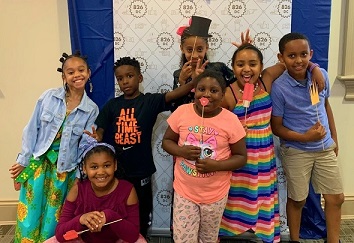
[Photo of future authors courtesy of 826DC]

Day Eight fellow Clare Mulroy is a rising senior at American University studying journalism and minoring in both sustainability and women’s, gender, sexuality studies. Her freelance work appears in the Hill, Cape Cod Health News, and Tagg Magazine. Clare is also an intern at NBC News’ Washington Bureau. She lives in Washington, DC, but hails from Cape Cod, Massachusetts. In her free time, you can find her searching for something new to paint or picking up a good book.

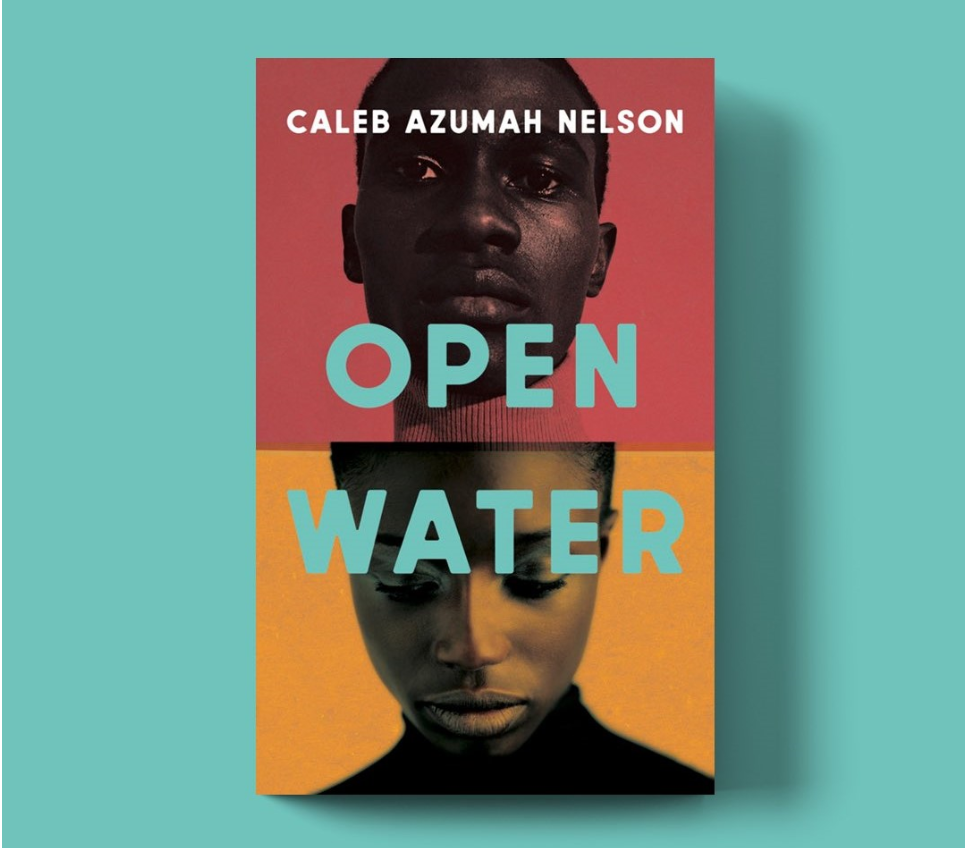
Book Review: Open Water by Caleb Azumah Nelson

This lyrical debut speaks to the universality — and complexity — of love in its many forms.

By Nyah Hardmon

This book review was first published April 16, 2021 in Washington Independent Review of Books here

A refreshingly poetic ode to Black love, Caleb Azumah Nelson’s debut novel, Open Water, follows the relationship of two young British artists who meet by happenstance, or perhaps fate, and traces their intricate journey as they navigate what it means to find the right person at the wrong time.

Nelson’s bold writing style — which includes leaving his main characters unnamed and using intimate, second-person narration — allows the reader to step directly into the story, embracing the familiarity of love rather than hiding from it. Although the plot is composed of a series of specific events, from not catching someone’s name at a party to taking late-night strolls to Shake Shack, the tale is universal. A love story is a love story, and Nelson deliberately plays into this strange phenomenon we call human connection:

“Last time we met, you said you were a photographer,” she says.

“No, someone told you I was a photographer, and I squirmed at the idea,” you say.

“Why?”

“You did the same when your dancing was brought up?”

“You didn’t answer my question.”

“I dunno,” you say. “But yeah. I take photographs.” On the other side of the window, Piccadilly bustles. A man swells his bagpipes, the sound drifting up towards you. Friday evening and the city is bordering on frenzy, unsure of what to do with itself.

From its opening lines, the novel’s casual construction is apparent. It reads like a story being told by an old friend, so much so that by its closing paragraphs, you can’t help but feel emotionally drained, as if you’ve experienced love and loss alongside the characters.

Still, this book isn’t perfect. But neither is love. Neither is life. While its lyrical nature is one of its most appealing aspects, the narrative sometimes becomes too reliant on obscurity at the expense of clarity and brevity. In moments as tender as the physical joining of two bodies, the intimacy should speak for itself; flowery metaphors only cloud the beauty. Yet even with the author’s word choice booming like a yell when I, at least at times, would’ve appreciated a whisper, I understand. Love is exciting. It makes me want to yell, too.

And then there’s the music, which courses through the novel from page one. The author does this not simply by including song lyrics — that would be too obvious — but by connecting the beauty of love with the beauty of music, an artform as universal as love itself. The seamless but consistent integration of music is so foundational here that it’s necessary to mention the soundtrack.  

Nelson’s musical choices ring authentic. He doesn’t rely on the same overused love songs. In fact, he barely relies on songs explicitly about love at all. Instead, he lets the music speak for itself, such as by opening the novel with a quote from Earl Sweatshirt and, later, having his protagonists sing their hearts out to Isaiah Rashad. (Even those not hip to the underground hip-hop scene will be able to follow the author’s references — an impressive feat.)

Open Water isn’t merely the story of two young Londoners. It’s everyone’s story. Yes, physical attraction plays a part, but it’s about so much more than that. “You came here to speak of what it means to love your best friend. Ask: if flexing is being able to say the most in the fewest number of words, is there a greater flex than love? Nowhere to hide, nowhere to go. A direct gaze.”

This may not look like the love stories of my grandmother’s time, but it’s just as relatable. It’s about familial love. Friendly love. The kind of love that feels good and the kind that hurts. Caleb Azumah Nelson has taken many risks in this promising first project, and most of them pay off.

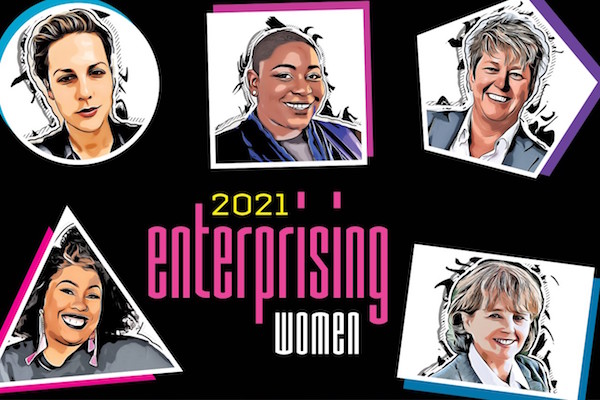
Feature: 2021 Enterprising Women

By Kelly McDonnell

This article was first published March 16, 2021 in Tagg Magazine here

Alane Freund has always noticed injustice. Equipped with her intersecting identities as a nonbinary lesbian and highly sensitive person—which she sees as her superpower—Freund uses her psychotherapy practice to teach young people how to be themselves and be powerful.

Freund grew up in a conservative community in Oklahoma, but she says her mother was a confident, influential role model who encouraged her to become an activist. Many women in her family also identified as lesbian, so she felt comfortable with and close to the queer community. This combination led her to activism, like joining ACT UP in the 1980s to provide AIDS education to others.

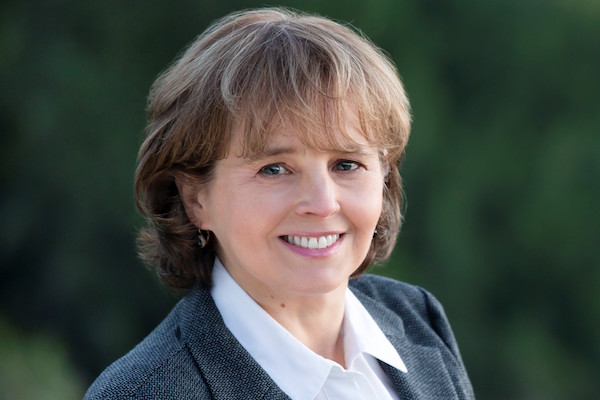
Alane Freund
Alane Freund

For 35 years, Freund has advocated for LGBTQ people and young people struggling with their highly sensitive emotions. Freund says her psychotherapy practice, which includes equine therapy, is activism in itself.

“Every moment has been driven by youth, especially in this era,” Freund says. “The drive to change their identity and the identity of the world—that’s beautiful. We need to give them space to do that.”

In fact, Freund says that talking to young patients who were questioning their gender helped her understand her own identity as nonbinary.

Freund’s goal as an enterprising woman is simple: “I want to show people how their insides and their outsides can match.”

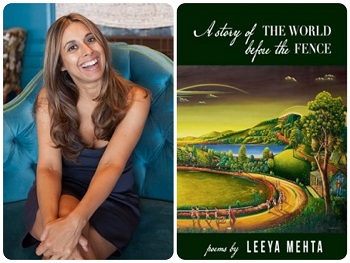
An Interview with Leeya Mehta

The poet/columnist talks community, multiculturalism, and feeling terribly possessive of her desk.

By Nyah Hardmon

This article was first published March 16, 2021 in Washington Independent Review of Books here

Award-winning poet, novelist, and essayist Leeya Mehta writes because she’d “die otherwise.” In her work, Mehta — who is also a columnist for the Independent — confronts her heritage head-on, showcasing a distinct pride in where she comes from and how that upbringing affects where she is going. She does so most recently in her new poetry collection, A Story of the World Before the Fence.

In A Story of the World Before the Fence, you journey from Persia to India all the way to DC. Do you find that your work is influenced by international cultures?

Yes. I come from this community of [Zoroastrian] Persian immigrants. Most Parsis came to India over a thousand years [ago], but my father’s side is third-generation Iranian. Living in India, you’re at the crossroads of so many civilizations; you’ve had multiple colonial masters, and they’re integrated into our culture. So growing up there and coming to America in my twenties, having gone to England for my education and living in Japan and then spending the better part of the 2000s in Washington, which is a big international city, there is no one home, but then at the same time, we have to create the sense of home.

In this collection, you discuss that sense of unbelonging, but then you use relatability to make audiences feel like they do belong right here in the text. Talk to me about that paradox.

For many, there’s this sense of “Where is home?” I remember growing up with a family that I was very close to, and the man was the first chief of police for India after Independence. He was posted everywhere around India, and my grandfather, who was his friend, was posted everywhere. They were all “company men,” or people who were always moving, and there was a sense of “Where is home?” Home is where you were born, to some degree, but at the end of the day, human beings have always migrated. I’ve come to embrace the reality this family shared, that “Home is where I am.” A lot of my poetry is rejecting that idea of belonging that’s nihilistic [in favor of] a belonging that’s more inspirational. The idea of sanctuary, of potential.

Because your writing takes readers on transcontinental journeys, do you find any trouble in embracing your own culture without being boxed into the “international” genre?

I haven’t so far. Having multiple identities is so useful since I come from such a small community. I’m culturally from a community of 80,000 people, and so it’s like a little tribe. There’s so much specific humor and culture that I think people are drawn to. I don’t find it very limiting given I write fiction, short stories, poetry, and I do a column [for the Independent] called “The Company We Keep.” I have this really great opportunity to explore a variety of places and people. It’s really very liberating.

You dive heavily into ancestral trauma and how it travels to future generations.

My poetry tends to refer back to historical events a great deal, but my fiction is where I really carry the intergenerational trauma. My novel Extinction is about four generations of women from India who pass this intergenerational trauma to each other. The idea of Extinction is how do we stop it, how do we end it, how do we get past it, and that’s what the title signifies.

I notice you play with different styles, jumping from this somber, serious tone to lighthearted humor. Do you mix elements of different genres into your work?

Thank you for saying that. I love it when someone says they notice some lightheartedness or humor. I was actually deliberating how to be both somber and humorous at the same time. My genres tend to be quite separate from each other. The fiction is very different from the poetry. The only time that they do tend to overlap is when I write certain poems where the prose and the poetry work really well.

Talk to me more about your creative process.

I have a playlist for each book, and sometimes I’ll listen to one when I’m doing another. I don’t have a space of my own, really, except my desk. So I’m terribly possessive of my desk. Ideally, I work six hours a day. I have specific music. I tend to only read for my book, and I read for my column. It’s very difficult for me to add in other reading because to stay pure to the voice of the novel — in different directions, especially when you’re writing a novel over 10 years — it’s difficult to step out of it and go off.

Has your writing been affected by the pandemic?

Definitely. Very much affected. The nice thing is that I’m enjoying doing more podcast-style interviews on Zoom of other writers. Especially before the 2020 election, there was this sense that we had a community depression from the last four years, and then [again] with covid, and I suffered from all of that just as much as everyone else. It deeply impacted my ability to write. At the same time, I have been writing 80,000 words of a new novel, so I’m sure that I’m actually writing but I don’t feel like I’m writing. There’s this sense of disconnect with the outside world, but I am very grateful to have writing as my profession right now. I feel like it’s a big blessing.

Besides Extinction, do you have any other projects on the horizon?

I’m focusing all my attention on Extinction because I’m trying to get it ready to send out to publishers this year. And then the next novel is a romance novel that’s set [against] the backdrop of a very big riot. So those are the big projects, but I have so many projects. The next three years are going to be very exciting.

LGBTQ Black History: Black Transgender Activist Elle Hearns

By Kelly McDonnell

This article was first published February 25, 2021 in Tagg Magazine here.

Elle Hearns has been an activist ever since she was growing up in Columbus, OH. She credits her inspiration from Marcus Garvey, Malcolm X, and Marsha P. Johnson, though she is inspiring all on her own.

Hearns is currently the executive director of the Marsha P. Johnson Institute, which she founded in 2015 and has quickly become a leading organization fighting for an end to violence against Black transgender people through civil disobedience, direct action, and community organizing.

She was also a co-founding member of the Black Lives Matter Global Network. She also led a GetEQUAL campaign for Tamir Rice, a Black child who was shot and killed by Cleveland police. She advocated for a revised case for Rice and called for the immediate firing of the officers involved.

During the 2020 summer protests for Black Lives Matter, Hearns was vocal about protecting those who intersect with Black and transgender identities, especially after Tony McDade, who was Black and transgender, was killed by police in Tallahassee, FL. In interviews, she called for abolishing the police as the way to abolish anti-Blackness and transphobia.

Under Hearns’ leadership in 2020, the Marsha P. Johnson Institute was able to give over 400 Black transgender people in America stipends, totaling over $250,000, for COVID-19 relief.

Hearns has a love for cosmetics and beauty, but she said she struggled to conform to Midwestern beauty standards and protested how her jobs would force her to appeal to customers in a style that wasn’t her own. Hearns still talks about how Black women have power in their beauty alone: “Our beauty is unmatched. Periodt. I remember being a young girl and recognizing the curve in my lip and the curl in my hair and being so fascinated that no one looked like me. It is completely fair to say that we are unapologetic.”

Hearns’ fierce will and political power is active and unshakeable, making her an assured Black History Month figure in the present and future.