All Posts By

Mary Holiman

Timely ‘The H Twins’ from Pinky Swear and Nu Sass echoes Nazi eugenics

By Mary Holiman

First published March 25, 2026 in DC Theater Arts, here.

Picture it. The year is 1943 in Nazi Germany. It’s the middle of World War II, and a brutal Holocaust that deemed millions inferior. From Jewish to Romani and the disabled, over a million and a half people were displaced and sent to concentration camps, where most died. “Uncle M” (played by John Stange, a stand-in for Nazi doctor and “angel of death” Dr. Josef Mengele) is conducting experiments on twins, Hilda and Helga, in hopes of developing the perfect “specimens” for a superior white race. 

It’s an era that seems far away and long ago, and yet, in today’s growing tension between the haves and the have-nots, the rich and the poor, the able-bodied and the disabled, the heterosexual vs. the queer, many of the same ideologies and beliefs remain. 

This is what makes The H Twins, written by Hope Campbell Gundlah and directed by Karen Lange, so timely, thought-provoking, and profound. Even the production company, Pinky Swear Productions, feels intentional as it’s a women-focused company that works to uplift the female-identifying writers, actresses, and directors who help these shows come alive. While historical fiction, The H Twins is rooted in the history of these events and the reality that we shouldn’t and can’t forget. While the play is humorous and witty, don’t be fooled by the jazzy musical numbers (sound design by Lex Allenbaugh) and seemingly light-hearted commentary from the titular blonde-haired, blue-eyed identical twins, who begin to question their own upbringing after secretly watching popular American movies. The serious themes — eugenics, white supremacy, nationalism, and ableism — are almost painfully woven throughout the play, challenging the audience to sit with the discomfort. (The occasional misplaced usage of African American English [e.g., “let me cook] stands out in the script because after all, it is the 1940s in Nazi Germany — no one was saying that yet.)

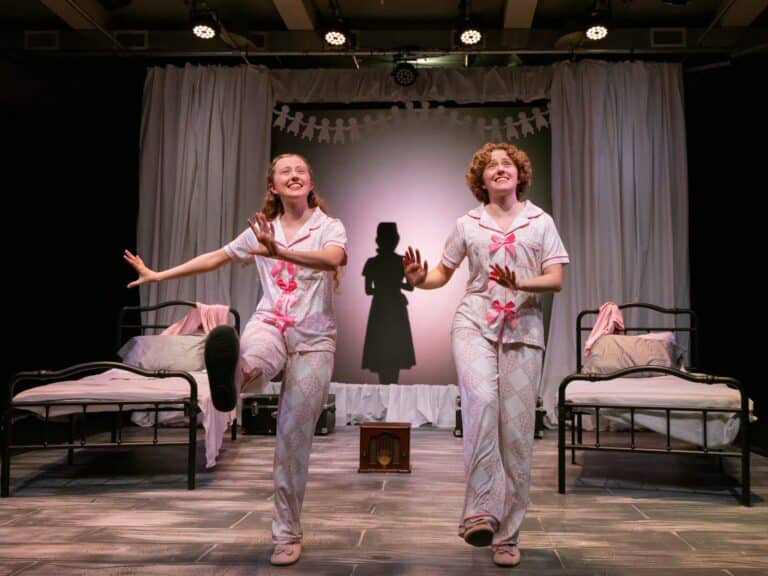
The small, intimate setting makes the characters come alive, even several that the audience doesn’t physically see. The relatively simple set by scenic design consultants Simone Schneeberg and Tess Cameron Gundlah leaves no room for distraction from special effects or a busy production, with just two beds, one on each side, framing the floor to represent the “orphanage” the twins call home. With only their bodies illuminated like stick figures, projecting their shadows to the audience via intentional lighting courtesy of E-hui, the presence of Uncle M, Nurse A (Carolyn Kashner), and Nurse B (Nicole Ruthmarie) is felt in how Hilda and Helga interact with them, and their influence. 

Not only is Hope Campbell Gundlah the playwright behind The H Twins, but she also plays one of the main roles, Hilda, alongside her twin sister, Tess Cameron Gundlah, who plays Helga. Talk about a commitment to the bit. Clad in matching pajamas, their offstage sisterhood is transparent as they feed off each other’s energy, especially in moments when they break the fourth wall, suspending disbelief to engage the audience directly by asking questions and seeking commentary. 

Art is often a vehicle where creatives explore, interpret, and make meaning of reality, and The H Twins is no different. As the show progressed — and maybe it’s my training as a communication and media student — I found myself making connections between the play and real life: beauty standards, propaganda, and my own experiences as a racial and gender minority. I even paid attention to the reverence for vaudeville, which has many origins, including minstrel shows, which notoriously featured primarily white actors in blackface, portraying racial stereotypes of African Americans. Functioning as educational entertainment, The H Twins turns a horrific time in history into a digestible performance that leaves a lasting impression.
HERstory: Women Artists Make Their Mark With Pantyhose, Scrap Materials, and More

by Mary Holiman

First published March 24, 2026 in DC Trending substack here.

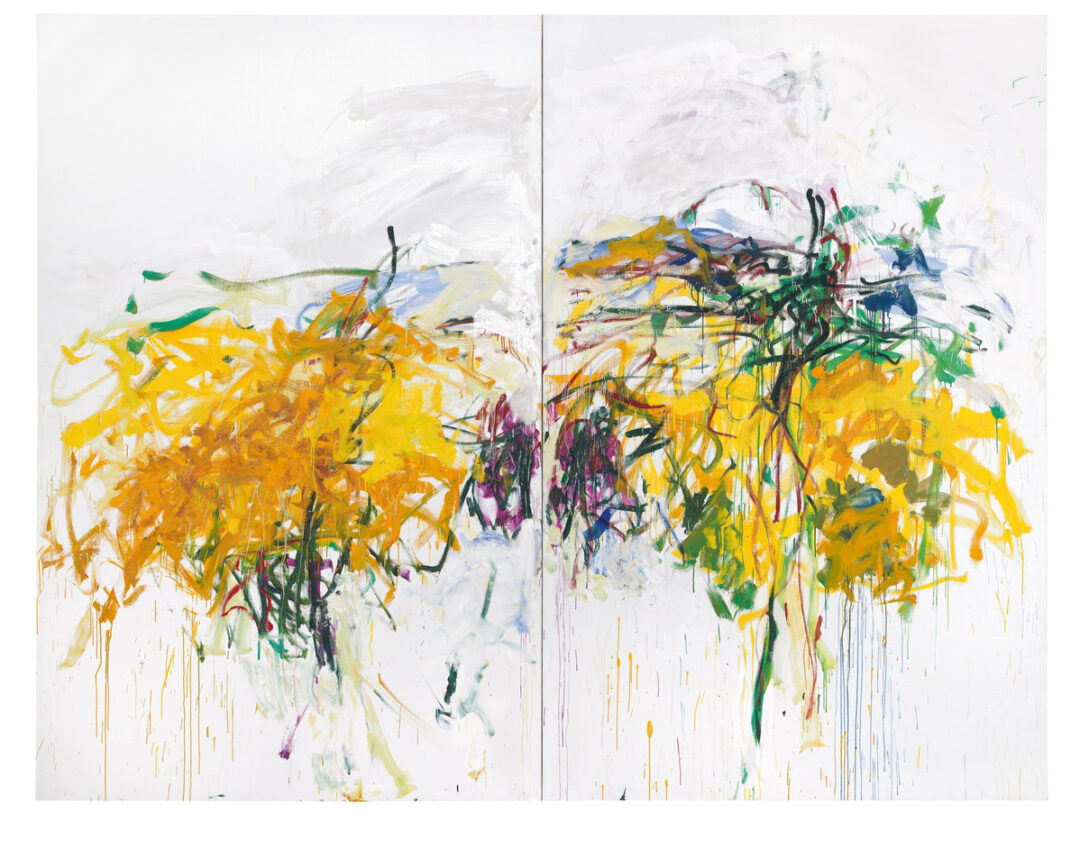
Making Their Mark: Works from the Shah Garg Collection at the National Museum of Women in the Arts (NMWA) is a kaleidoscope of textiles, paintings, sculptures, and mixed-media works that celebrate our humanity and imperfections. Drawn from the personal collection of Komal Shah and her husband, Gaurav Garg, co-founder and managing partner of Wing Venture Capital in Silicon Valley, the exhibition centers on abstract art and explores themes of representation, identity, and power through women’s eyes.

Abstract art emerged in the 20th century as a movement with various styles, relying on shapes, colors, forms, and gestural marks rather than depicting reality. Featured in the exhibit, artists use everyday materials such as women’s pantyhose and leftover paper from a hole puncher to push the limits of abstraction, all while reclaiming their autonomy, embracing their bodies, and defying negative beliefs about women aging. Contributors such as Kay WalkingStick, Joan Semmel, and Samia Halaby are in their eighties and nineties. Despite decades of obscurity and a lack of institutional recognition, the exhibit is a testament to women’s craft, creativity, and resilience, affirming that through it all, women continue to create with conviction and confidence, telling our own stories on a canvas.

“Many of the artists who moved me most were women of my generation who were actively reinventing abstraction. – Komal Shah”

This statement draws attention to what seems like a deliberate choice — bringing the exhibition to the nation’s capital at a moment when funding for diversity, equity, and inclusion initiatives, safe spaces, and the organizations that support them is being stripped away. The National Museum of Women in the Arts (NMWA) holds a singular distinction: it is the first and largest museum in the world solely dedicated to women, housing over 6000 pieces from more than 1,500 artists – among them Indigenous, African, and Palestinian voices.

In a 1989 study of the Metropolitan Museum of Art by the Guerrilla Girls, it was found that women produced fewer than 5% of the works featured in Modern Art galleries, while a staggering 85% of the nudes were female. Since then, although these figures have changed, the disparity remains.

So, in many ways, the NMWA stands as a direct rebuke to these institutions. It’s that kind of gender inequality seen in the art world, as well as in her own career in a male-dominated field, that first inspired tech-aficionado-turned-art-collector Komal Shah.

Komal Shah, born and raised in Ahmedabad, India, initially found her bearings in the technology industry after discovering computer programming at a young age. It’s a career she held for nearly 20 years after completing her master’s degree from Stanford University in computer science/engineering, and an MBA from the Haas School of Business at UC Berkeley, which led to jobs at Oracle, Netscape, and Yahoo! before she set her sights on philanthropy and the transformative power of art. Building her collection deliberately after stepping away from the world of computers and engineering, her passion has accumulated into nearly 400 and counting pieces of art from the likes of Elizabeth Murray, Trude Guermonprez, Rina Banerjee, Jennifer Bartlett, Laura Owens, Carol Bove, Carrie Moyer, Phyllida Barlow, Jaune Quick-to-See Smith, and Cecily Brown, establishing her as one of the most influential collectors in California. She also currently serves on the Board of Trustees of the San Francisco Museum of Modern Art and previously served on the Board of Trustees of the Asian Art Museum. She also serves on the acquisitions committees of the Hammer Museum, the Studio Museum in Harlem, and MoMA, underscoring her reach and influence well beyond the Bay Area. It is through this same spirit of advocacy that Shah co-founded the Making Their Mark Foundation, which highlights women artists through scholarship, support, and public engagement.

The Making Their Mark: Works from the Shah Garg Collection will be on display at the National Museum of Women in the Arts from February 27th to July 26th. Admission is $16 for adults, and $13 for D.C. residents, visitors 65+, students, educators, active-duty military, veterans, and those with a Native/Tribal affiliation. For visitors 21 and under, with disabilities, and/or SNAP/EBT holders, admission is free. The museum is also free to all guests and visitors on the first Sunday and second Wednesday of each month.

The Superfair DC: Where Art Isn’t Just For the Elite & People Feel Seen

by Mary Holiman

This article was first published in DC Trending substack December 14, 2025, here.

For many, when we think of art fairs and galleries, the likes of Miami’s Art Basel or the Armory Show in New York come to mind.

You see, although art has long been a critical part of various cultures- from cave drawings to paintings and sculptures, there’s a common criticism that art, the making, creating, and even the buying, is for the elite, the upper echelon of society. And in the era of AI, it’s more imperative now than ever that we remember art’s organic origins, and color outside the lines, all over again.

In comes The Superfair, formerly known as the Superfine Art Fair, a leading platform for independent, contemporary artists and creatives since 2018, with its start right here at DC’s own Union Market. The Superfair held this year at Gallery Place (November 7th – 9th) isn’t just any art festival, but a movement, one that redefines how art is experienced by empowering independent artists, elevating the collector’s experience, and encouraging authentic relationships between the artist and the ones who support them. If you’re interested, the next Superfair will be taking a trip to the Lone Star state in Austin, Texas from February 20-22nd, 2026, with other stops in the San Francisco Bay and the city that never sleeps – New York City!

Admittedly, when I was first approached with the opportunity to review the event, I was unsure of what to expect. I’d never attended something of this size and caliber before, and truthfully, I never really gave much thought to the idea of collecting art, intimidated by the prestige and the cost.

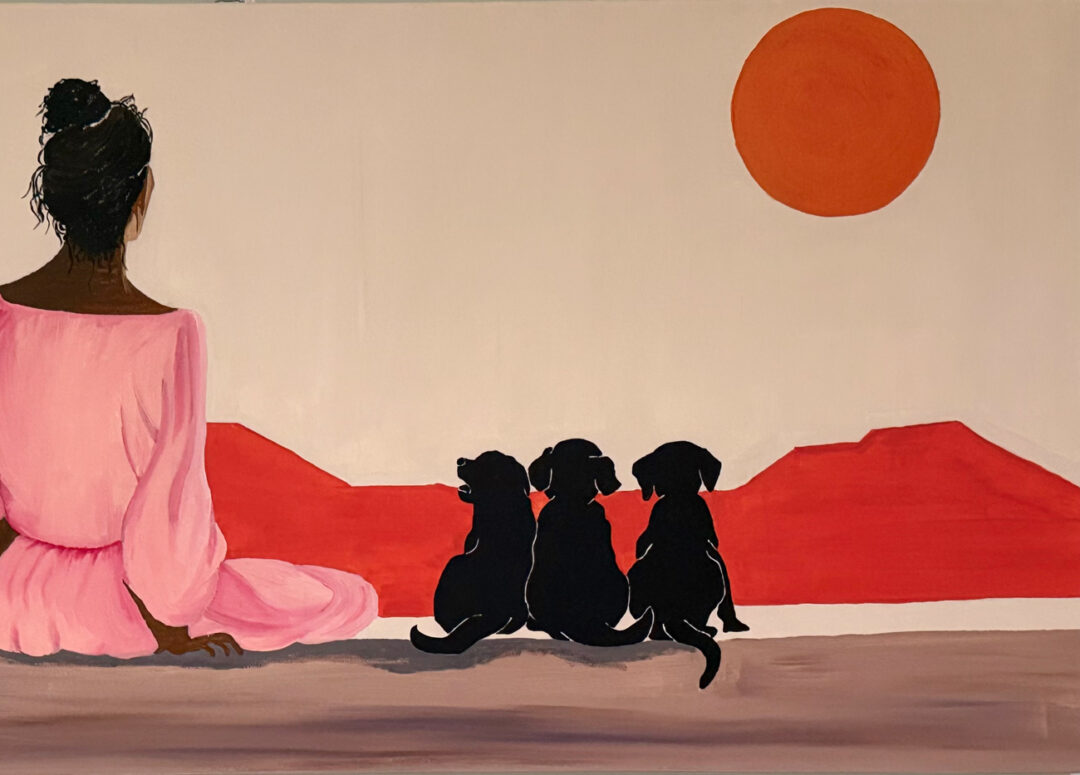
But, as soon as I stepped in, I was transported to another world – one full of bold colors, traditional African fabric, and pop art, just to name a few. Each piece of artwork tells a story, some a reflection of the past, others in honor and remembrance, and one that combined a teacher’s love for science and art.

Perhaps, it’s this ability to take everyday objects and commonplace things and turn them into elaborate works of art, the embodiment of a picture book from start to finish, that made The Superfair this past weekend so unique, warm, inviting, and in the words of curator and fair manager Sharone Halevy, “immersive.”

But, more than anything, it also felt like an ode to local flavor and a tribute to identity. Because isn’t that what’s makes the capitol city so great, with a diverse list of artists, some near, and others far, some with a professional background, or family lineage?

Yet, despite these differences and traits that made us stand out from each other, and despite the variety in mediums, styles, and techniques, we all ended up at the same place, bonding over shared experiences, lifestyles, or, in my case, even the same name.And maybe, just maybe, that’s the beauty of The Superfair, aside from the awe-inspiring canvases and creativity displayed, bringing people together. Even if it’s only for a little while, and reminding us that in times of crisis, disjointed pieces can still make a pretty picture.

Spectacles of Blackness: In Conversation with Artist Elizabeth “Liz” Mputu

by Mary Holiman

First published in DC Trending substack November 15, 2025, here.

My interview with first-generation Congolese artist, registered nurse, and community advocate Elizabeth “Liz” Mputu, one of the featured artists in VisArt’s Flip It & Reverse It: Spectacles of Blackness in Popular Media exhibit in Rockville, Maryland, was more like two girlfriends having a “yap sesh” than a formal interview. Our conversation flowed naturally, without the awkwardness that comes from asking questions, as we shared stories of similar upbringings and familial elders.

It was raw, real, and uncut, much like her early adulthood. But, it was also a moment steeped in the unique culture of Blackness — a little bit of sisterhood, long-lost kinship, and our ability to feel at home with people all across the diaspora.

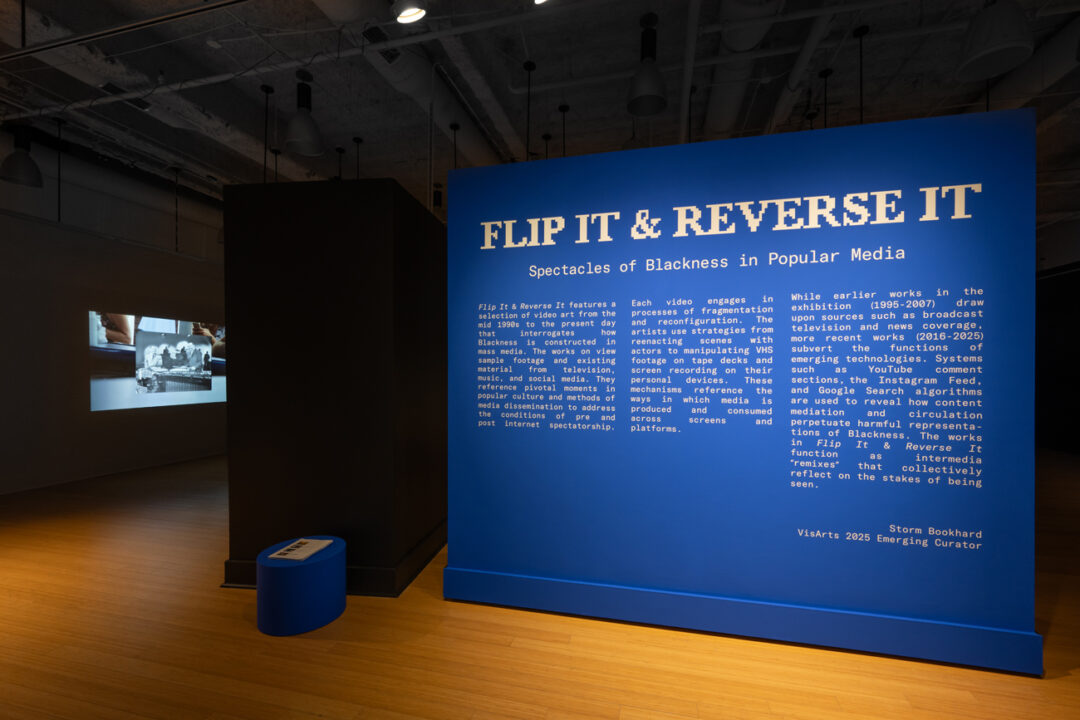
Flip It and Reserve It, now showing at the Kaplan Gallery, features a selection of video art from the mid-1990s to the present day, interrogating and challenging how Blackness shows up in mass media. Carefully curated by Storm Bookhard, it features seven talented and creative artists reflecting on the cost of being seen.

Liz started as an artist, studying at the Art Institute of Chicago after dropping out of DePaul University. A sheltered kid, she couldn’t focus on the coursework and, in her own words, “was a loose cannon, chasing highs and neglecting my health.” An experience of growing pains and a lot of trial and error that I resonated with. Through laughs, she recalls the time she performed a piece in a very public space on campus using a dildo. Now, keep in mind, DePaul is a Catholic university, so one can picture the embarrassment turned humorous, much like the way Liz says, “Black people have this unique ability to bring humor into trauma, our people —we process pain abstractly.”

A self-proclaimed club kid, a term associated with the New York City-based artistic and fashion-conscious youth movement, she found community in doing performance art simultaneously at parties and online, running an underground magazine. Liz recalls that much like neighborhoods, towns, and forests, the digital space is its own ecosystem, one where people learn from and hold space for each other. In fact, her online experiences led her to a perspective that might surprise some: she rejects the idea that formal training defines a professional artist. “You don’t necessarily need to go to art school,” she says. “You just need artsy friends and spaces. And you don’t have to be an artist to create art.” This rejection of what she calls the illusion of the professional, the belief that if you have a body, you can dance, is evident throughout her work.

Yet, like many artists and creatives, art wasn’t paying the bills. She became a receptionist at Planned Parenthood, then a certified nursing assistant, and eventually trained as a registered nurse during the COVID-19 pandemic lockdown— a career she maintains today. This shift in career path led her to where she is now. Liz says, “wellness and healthcare have inversely influenced my creative praxis…I like to use my video art as propaganda. Art is one of those ways we can control the narrative: What it means to show up and assert ourselves in the media. With capitalism, there’s a need to control, so there’s always a pimp and a ho.”

In recent years, terms such as social prescribing and arts-on-prescription have been integrated into healthcare. Holistic approaches to health and wellness, social prescribing, and arts-on-prescription are models of care that connect people to community-based and/or art activities to improve their well-being. People are social beings by nature, and in an era of capitalist individualism, connection with others is more important than ever.

People are experts of their own bodies, and everyone isn’t looking for a solution. Some people want to be seen.” -Liz

Being seen, and using art to do so, is a practice Liz believes in, firm in the idea that art is an act of liberation, and there’s a connection, a correlation, between health and creativity. In a world where Black people have historically been experimented on for the sake of medical advancements, from J. Marion Sims to the Tuskegee Experiment, Henrietta Lacks, and more recently, Adriana Smith, she finds value in the lived experience and the idea that knowledge doesn’t always come from scientific experts.

“Indigenous people and our ways are efficient, advanced technology is just an advanced system.” -Liz

And it’s an ideology she hopes the audience sees, too. When asked what people should take away from the Spectacle of Blackness exhibit, she encouraged audiences to go into it with an open mind and respond organically without overthinking. Then, she dished out a challenge: “Unpack the discomfort, and sit with it.”

Flip It & Reverse It: Spectacles of Blackness in Popular Media is an exhibit that explores and addresses how Blackness is structured in mass media through a selection of video art. The title borrows from popular rapper Missy Elliot, an icon known for her artistic music videos and specifically from her 2002 hit single Work It. Flip It and Reverse using popular culture to propose avenues for Black self-determination and liberation. It also exposes the racial biases in technology and the digital space, such as the paradox of what happens when Black people are seen.

The Spectacles of Blackness exhibit is located in the Kaplan Gallery (Floor 2) at the VisArts Center in Rockville, MD. The exhibit is free and open to the public now until January 18th, 2026.