Joanna Hiffernan Through the Looking Glass

By Thais Carrion 

This article was first published August 7, 2022 in DC Trending here.

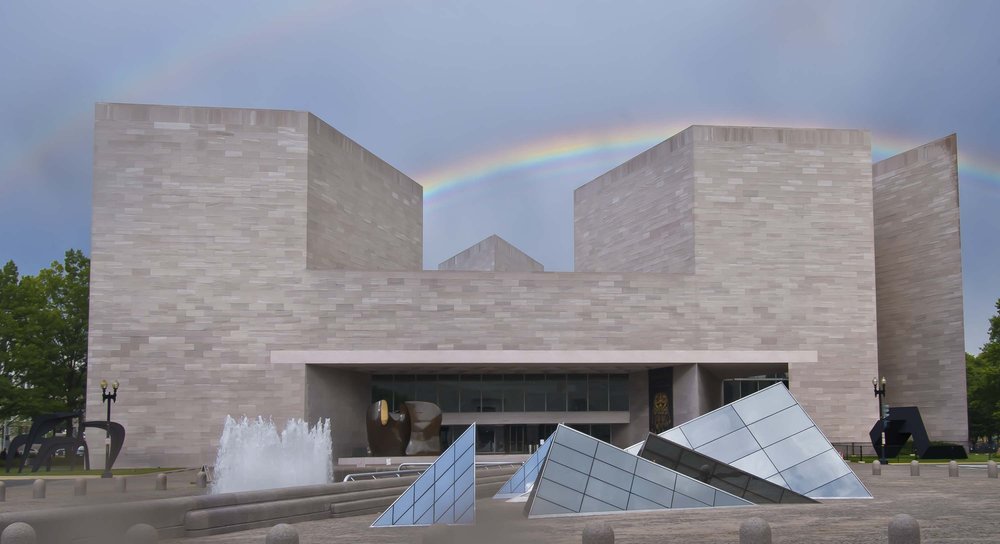
This past June, the National Gallery of Art celebrated the re-opening of I. M. Pei’s light-filled East Building, following a series of renovations and structural changes that have been taking place since its most recent closure in February of this year. The exhibition chosen to inaugurate the iconic space is Margaret MacDonald, Anne Dumas and Charles Brock’s The Woman in White: Joanna Hiffernan and James McNeill Whistler, a beautiful and essential exploration of Whistler’s most important subject, Joanna Hiffernan. On view through October 10th, Whistler’s many depictions of Hiffernan provide an exquisite impressionist contrast to the bold colors of Rothko and random splatters of Pollock currently housed in the East Building’s permanent collection. 

Few gallery spaces are as dynamic and visitor-centered as the National Gallery of Art’s East Building, whose quirky trapezoidal shape and abundance of light has seen important infrastructural changes with the new renovations. With Pei’s original vision at the forefront of renovation initiatives, new skylights have been installed to both filter out paint-harming UV rays and restore the level of light within the building to what it was at its opening in 1978. New galleries have been installed, as well, to house the growing permanent collection and temporary exhibits that find themselves within the East Building.

“I’ve always found this building very uplifting and full of life. The architecture is very movement-oriented and the way the light enters the building is truly special,” says Susan Wartheim, Chief Architect, National Gallery of Art.

With the integrity of the building as a work of art in and of itself at the center of the renovations, the gallery has been transformed into a more technologically modern, accessible space.  In contrast to the symmetrical, rectangular galleries of the neoclassical West building, the dynamism of the East building provides open gallery spaces full of personality.  “As an architect, I think the architecture and the modern art really go well together,” says Wartheim, “there’s undeniably a conversation taking place between the East and the West [buildings]”. 

This conversation takes place between the art and architecture within the East building as well, with James McNeill Whistler’s white-clad muse in The Woman in White reminiscent of the light-filled  atrium just outside the three connecting rooms that make up the exhibition. “It’s very intriguing to put 19th century art in modern galleries like the East building because it gives [the public] a new perspective on how relevant they are to modern design and certainly that’s the case with this [exhibition], ” says Charles Brock, Associate Curator of The Woman in White exhibit.

Filled with ethereal white dresses and her signature wild red hair, The Woman in White, is Margaret Macdonald, Anne Dumas, and Charles Brock’s attempt to piece together the human behind Whistler’s depictions of Hiffernan and to explore the resonance of Whistler and Hiffernan’s collaboration for Victorian culture as a whole in the late 19th century. Posed just at the entrance to the exhibition, Hiffernan stares out at her voyeurs atop the menacing skin of a wolf in Symphony in White Number 1, the wild eyes of the dead animal at her feet seemingly acting as a vessel for whatever hidden emotions run beneath Hiffernan’s composed surface. Despite the curator’s best efforts, Joanna remains at arm’s length throughout the exhibition, which ends up revealing more about Whistler’s gaze than the subject herself.

The curators have done an excellent job at taking Whistler off his pedestal and asking questions about the nature of his relationship with Hiffernan throughout. The audience is included as an active investigator throughout the exhibit with wall texts urging us to consider Joanna Hiffernan beyond Whistler’s portrayals and to “discern a difference between the ‘real’ Hiffernan and a model playing a role” (wall text). Regardless of Whistler’s own reputation and importance within the world of art, the curators make it clear that none of his standings would be possible without his most important muse. 

Furthermore, once having seen what influence Hiffernan held in other impressionist and modern works of her time period, one can hardly help but ask how it is possible that so little is known, or available about her today. As part of the reclaiming of Hiffernan’s agency as a collaborator in Whistler’s art, the exhibition includes a dedicated wall containing quotes from DC area models that speak to the ironically anonymous position they hold within the world of art and creation. This through-line drawn to illustrate the continuity of the anonymity imposed upon Hiffernan despite her central role in the various artworks displayed throughout the exhibition is powerful, and draws on her historical position to inform viewers of the model’s silent role today. 

The collaboration between the stunning improvements to the East Building’s lighting and facilities, as well as MacDonald, Dumas, and Brock’s audience-centered investigative exhibition, results in the reclaiming of the East Building as a space made for congregation, a building with the enjoyment of its visitors at the forefront of its infrastructure. “To see [Hiffernan’s] image at such a large scale within the very modern spaces of the East Building speaks very eloquently to the point of the exhibition,” says Brock. 

The East Building’s wide open spaces, fascinating geometric layout, its natural feel brought forth through gentle sunlight, and the ficus trees planted into the ground all act in conversation with the modern and contemporary art housed within its walls, a conversation that places the audience and their participation as a key figure. The Woman in White is one of the first of its kind, an exhibition that encourages museum-goers to look past the supposed genius of its painter and instead take part in the search for humanity within the subjects of the paintings themselves.

Rorschach Theatre’s immersive ‘Chemical Exile’ is a night full of wonder

By Ajani Jones

This article was first published in DC Metro Theater Arts here. 

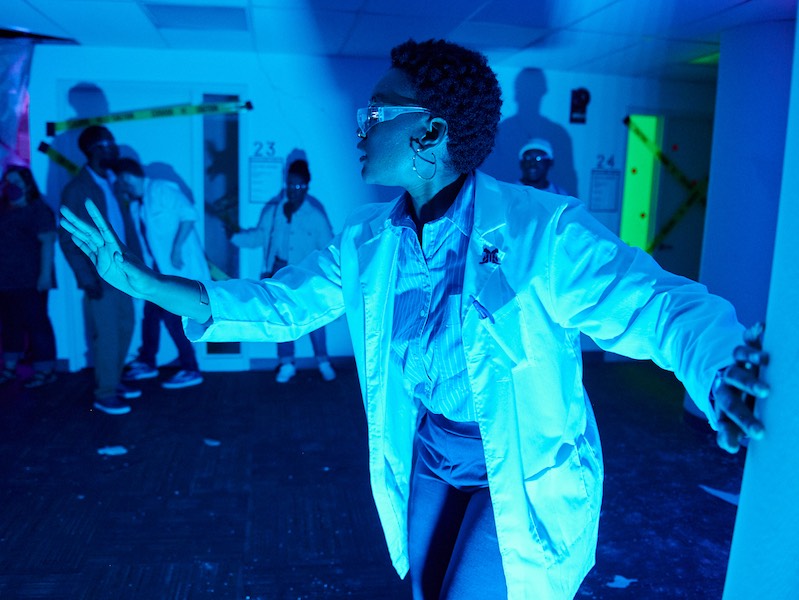
Culminating a seven-chapter cross-city adventure, Rorschach Theatre’s immersive Chemical Exile: Synthesis is a thrilling and heartfelt sci-fi adventure that explores new bonds and experiences born of great loss and immense change.

Chemical Exile questions the bounds of reality as the audience is introduced to the newest breakthrough of a scientific team at R2 Labs. The play exposes its audience, fellow individuals displaced across realities, to the scientists’ trials and failures at returning the displaced to their own realities, all while delving into each scientist’s background and story.

Throughout, the play skillfully introduces themes of loss and predestination that help ground its more fantastic elements. There is an undercurrent of the staggering grief and pain that come with drastically changing circumstances. The play handles these themes very tactfully (and creatively) by integrating them with the sci-fi elements of the story.

Chemical Exile also interestingly navigates the dynamics between fate, chance, and faith while also exploring how individuals may adapt to great changes.

The cast of Chemical Exile, although relatively small, is extremely powerful. The main scientists, Teddy (Arika Thames), Velouria (Jen Rabbitt Ring), and Kallik (Erik Harrison), are all incredibly charming and present unique personalities that help keep the audience engaged throughout their tour. Each of these scientists perfectly conveys their position and motivations through powerful and emotional performance.

Thames’ portrayal of Teddy is especially notable as her arc is arguably the emotional crux of the play. Passionate about her work, Teddy has a strong desire to return everyone to their respective realities. Thames portrays Teddy’s passion and desperation incredibly well, allowing the audience to become genuinely invested in her work as well as her personal motivations and journey.

The cast’s strength is further magnified by sheer amounts of emotional sincerity. Throughout its duration, Chemical Exiles explores a vast range of themes and complex feelings, all of which are treated with reverence and emotional weight. From moments of success to moments of panic and sorrow, the play transitions between highs and lows, emphasizing the immense amount of heart built into the script, as well as the considerable understanding these actors have for their characters and their motivations.

While steeped in existential questions of reality and navigating grief brought on by drastic change and loss, Chemical Exile never allows itself to become too grim and heavy.

Instead, the play fully embraces the sheer wackiness of science fiction and allows itself to maintain a consistent humorous tone that never undermines the sincerity of heavier scenes. In fact, moments of humor at the play’s climax enhance the sense of urgency and panic pushed by the narrative, resulting in a harmonious relationship between the humor and narrative and emotional strength of this play.

Although its core premise of crossing realities is nothing new to the world of fiction, the cast and team behind Chemical Exile inject immense creativity and spirit into this core idea to synthesize something new and captivating.

The immersive nature of the play works extremely well to capitalize on the play’s inherent creativity and charm. The audience is treated to a genuine tour of the labs and treated as if they were taking part in a genuine scientific demonstration. Excellent costumes and props work well to set the scene. And certain sections of the evening allow the audience to explore at their own leisure and experience the labs in individually unique ways.

The breathtaking set design (led by the team of Nadir Bey, Sarah Beth Hall, and Grace Trudeau) helps to truly transport the audience into the space and the play’s exploration of different realities. The team effectively capitalized upon the immense venue afforded by the Waterfront Centre, which allowed for a plethora of stunning visual choices. The immense care placed into the set design was also evident as each room felt unique and carefully designed but also seamlessly integrated into the atmosphere and story of Chemical Exile. A wide range of lighting and sound effects also helped each room and set piece come to life and convincingly transport the audience into the worlds and theories being explored.

Chemical Exile is an undeniably fun and unique experience. Perfectly executed emotional highs and lows all seamlessly woven together within a curious sci-fi premise make for a night full of wonder and genuine enjoyment for all audiences displaced across realities.

Running time: 90 minutes with no intermission

Chemical Exile: Synthesis plays to July 24, 2022, presented by Rorschach Theatre performing at R2 Labs at Waterfront Centre, 800 9th Street SW, Washington, DC.  Tickets ($45, $30 student and senior, $20 industry) are on sale online. Shows are on Thursdays, Fridays, Saturdays, and Sundays at 8 pm.

Wonder and humor thrive in ‘Native Gardens’ at Silver Spring Stage

By Ajani Jones

 This article was first published in DC Metro Theater Arts here.

Striking the perfect balance between humor and sincere reflection, Native Gardens serves as the ideal close to Silver Spring Stage’s season. Amid a year that marks a resurgence and revival for theater across the globe, this play does an excellent job of portraying the difficulties of transitioning and adapting in an ever-changing world.

Producer Maura Suilebhan and Director Matt Ripa lead the presentation of this wonderful play. Native Gardens gives a glimpse into the life of new and old residents of the DMV as it explores the unique dynamics between new and old residents. The play follows Pablo and Tania Del Valle (Chris Galindo and Alexandra Bailey) as they settle into their new neighborhood and navigate an interesting relationship with their new neighbors, established residents Virginia and Frank Butley (Sarah Holt and Scott Holden).

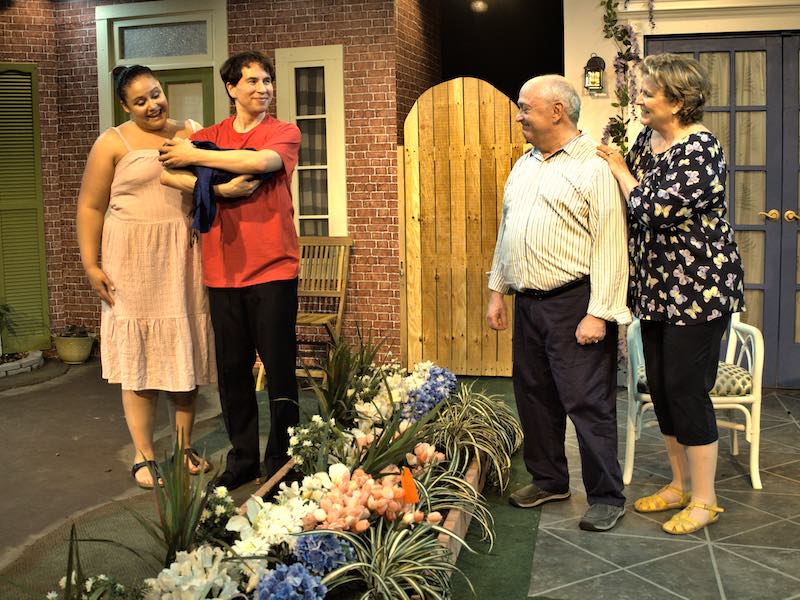
Alexandra Bailey (Tania Del Valle), Chris Galindo (Pablo Del Valle), Scott Holden (Frank Butley), and Sarah Holt (Virginia Butley) in ‘Native Gardens.’ Photo by Ira Levine.

As the play progresses, both couples must learn this new dynamic across a shared property line. A self-proclaimed “love letter to the DMV” by Playwright Karen Zacarías, Native Gardens is a story that capitalizes well on its core themes of diversity, home, and change. As the couples work through their many differences and explore their unique similarities, Zacarías highlights the social and cultural melting pot of the community, especially as new generations come into contact with the old.

Although relatively short at a mere 90-minute runtime, the play handles its undeniably important subject matter solidly. Every moment of Native Gardens feels purposeful and highly impactful, revealing keen attention to detail and appreciation for the real stories this play adapts.

Through its intentional and tactful treatment of its core themes of change and diversity in the DMV, Native Gardens remains topical three years after its debut. The play, in its reflective nature, thus conveys an awareness and attention to detail that is only improved upon by the incredible cast.

Through its explorations of these themes and important topics, Native Gardens also does an amazing job of balancing its tone with genuinely engaging and creative humor. At no point do the jokes feel out of place or forced; the play’s humor enhances its overall presentation and allows for moments of cheer that flow seamlessly into the play’s conclusion and complement the more serious moments rather than competing with them.

The play focuses on its four primary characters, the Del Valles and Butleys, the only speaking roles. This limited cast works extremely well in the show’s favor as the audience is allowed to connect deeply with each character. Bailey, Galindo, Holt, and Holden deliver powerful performances that faithfully portray a group of people doing their best to acclimate to their changing world, thus allowing the audience to become fully immersed in how their stories unfold.

Chris Galindo (Pablo Del Valle), Alexandra Bailey (Tania Del Valle), Sarah Holt (Virginia Butley), and Scott Holden (Frank Butley) in ‘Native Gardens.’ Photo by Ira Levine.

Even beyond their individually powerful performances, the cast of Native Gardens has almost palpable chemistry that elevates their characters further. The respective couples convincingly portray their love and appreciation for each other, but as they break out of their molds and begin to interact separately with the other couple, the true strength of the cast goes on full display. All four actors play well off one another and match one another’s energy in a delightful way that leaves the audience craving more of their one-on-one interactions.

The play takes place in a small space: the backyards of the neighboring houses. The set design, led by Leigh K. Rawls, is absolutely stunning, bringing a layer of wonder to the play while adding to the story with minor but significant prop changes. The small set also allows for focus on the characters and their stories rather than overwhelming them with over complicated design.

Scott Holden (Frank Butley) and Sarah Holt (Virginia Butley) in ‘Native Gardens.’ Photo by Ira Levine.

Matthew Datcher’s sound design brings another layer of wonder to the play. The sound effects, often used as curiously charming transitions between scenes, add subtly to the show in a way that does not detract from overall audience enjoyment but instead enhances it. Furthermore, the sound design acts as another element of nonverbal storytelling and works well throughout the play to encapsulate and fortify the wonderful story being told.

Native Gardens is a beautifully executed glimpse into the lives of many who call the DMV home. Despite its small scale, the play leaves a grand impact with its lovely story, gorgeous set, and well-executed humor.

Celebrating Women’s Fiction: Creatures of Passage by Morowa Yejide

By Thais Carrion

This article was first published in DC Trending here. 

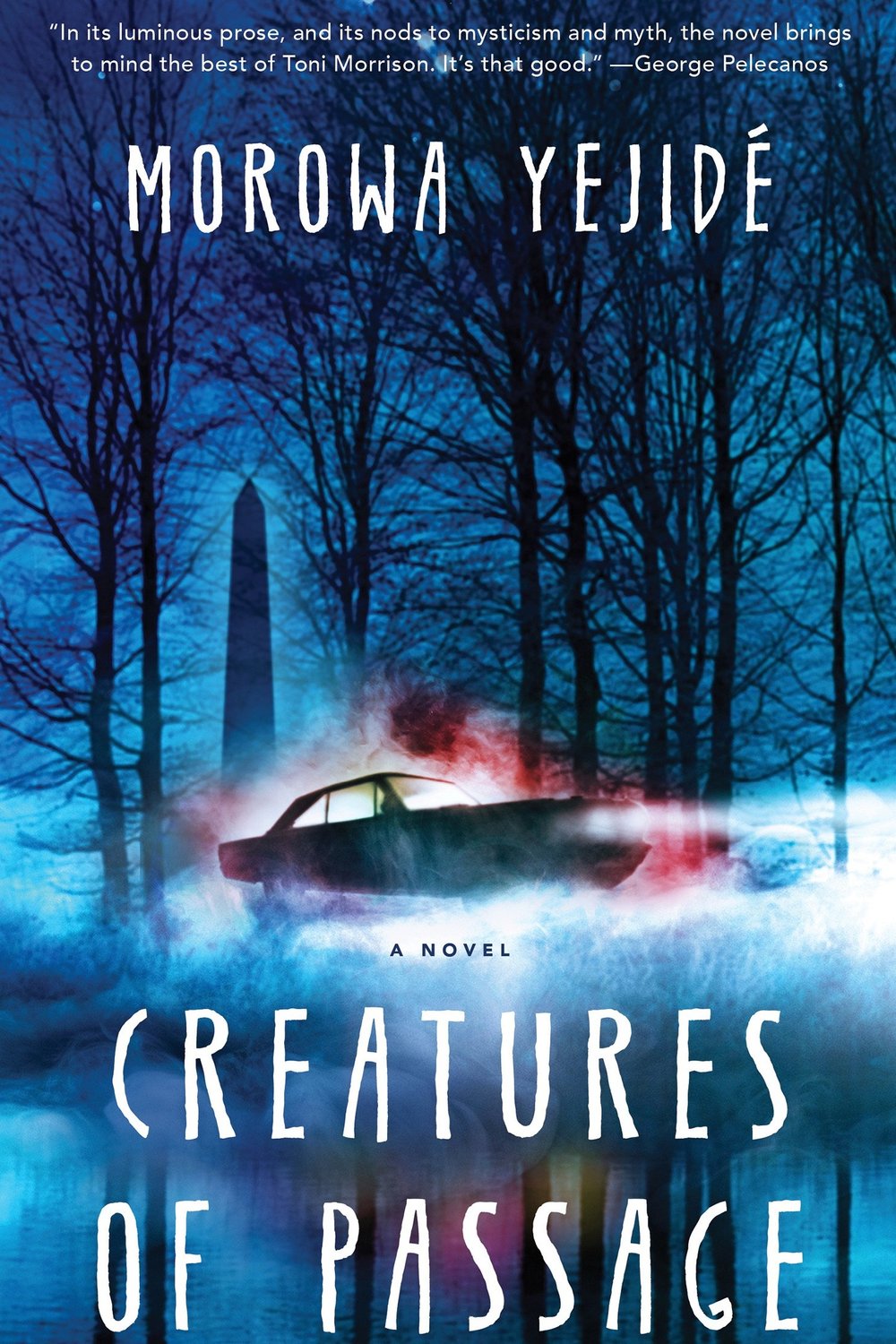
Creatures of Passage pays tribute to an unseen southeast DC, a magical, dark, humid space where the dead walk amongst the living and intuition rules the land. Blending Egyptian mythology and the strong black history of Anacostia, author Morowa Yejidè, gives us a world where there are no states or counties, instead, kingdoms and fiefdoms spread out along the East Coast.  A cast of characters find themselves inevitably drawn to the mystical realm of Anacostia, a place where “Dreams come true even when you don’t want them to.”  In an endlessly dark story, the tragedies faced by each character interconnect and join in a heart-racing climax, where many must finally confront their ghosts in order to move forward with their lives.

We first learn about Nephthys Kinwell — a mysterious driver with a half-finger and a supernatural sense for lost souls — when she is summoned by the wandering hearts of Anacostia’s residents. She never fails to show up in her haunted 1967, blue Plymouth Belvedere, which never breaks down, runs out of gas or gets pulled over despite her inebriated state of driving. She is a somber character, always on the move, so as not to feel the pain after losing her twin brother, Osiris. 

Nephthys, her nephew Dash, and his mother Amber Kinwell (the death witch of Anacostia) are simultaneously reviled and rendered indispensable residents of Anacostia. For all the fear and mysticism generated around the family, the Kinwells guide the wandering hearts of Anacostia through their painful journeys and individual tragedies.

Helplessness is center to the story and Yejide masterfully cultivates dramatic irony across every new scene and character. Jumping through timelines, the narrator never fails to include the developments of the future that render our character’s present conflicts and worries futile. Much like the nature of death and rebirth, futility and the promise of change play big roles in the undercurrents of the story as characters are swept up in their respective paths and ultimately forgotten by the future and the gentrification of Anacostia’s black history.

Yejide’s intensive use of dramatic irony is a nod to our own privileged lives.  Writing about places of privilege within the structures that govern so much of our daily lives is a topic Yejide navigates subtly, but clearly drawing a line between the reader and the realities of her characters.

The magical kingdom descriptions of the east coast and its neighboring states work to further separate the Anacostia of the ‘70s and our own understandings of the United States and its history.  Anacostia’s black heritage feels like an otherworldly, anachronistic place, one fully separate from the development and gentrification that has taken over the area today.

Yejidè is careful in telling her story with its histories and complex inner worlds. Much like a ride through the river Styx, Creatures of Passage starts off with a clear purpose, loses its way in the tragedy of the lost souls along the path, but finds purpose anew as tragedies are weaved in and move closer towards closure and release.

Yejidè’s odyssey confronting relevant current societal issues has set her apart as one of 16 nominees for the Women’s Prize for Fiction long list. Championing the voices of women writers on the global stage, the Women’s Prize for Fiction goes beyond a simple award by working with libraries, and writers, organizing reading groups, and events, and prioritizing free resources to honor the work of historically marginalized writers.

Local author explores varied responses to gentrification in her oral history of DC’s Shaw, LeDroit Park and Bloomingdale neighborhoods

By Dylan Klempner

 This article was first published in The DC Line here.

What does gentrification feel like? 

The answer is complex, it’s safe to say. Perspective matters. If you have been displaced or if the neighborhood you grew up in is no longer recognizable, maybe you feel anger and resentment. If you are a developer who made a profit from condominiums you sold, maybe you feel satisfied. If you’ve cashed out the equity in your home after seeing the area you used to consider run-down and crime-ridden become vibrant and safer, maybe you feel some mix of relief and pride — or if you’ve stayed, maybe you feel annoyed by the new residents who don’t bother to say “hi” when they pass you on the sidewalk. If you just moved into a gentrified area, maybe you feel fulfilled in having found a hip neighborhood with all the amenities you wanted. 

These and other complicated emotions are expressed in Shaw, LeDroit Park & Bloomingdale in Washington, D.C.: An Oral History by Shilpi Malinowski. Published last October, her book examines what it feels like to live in a gentrified community. Malinowski, who lives in the area she writes about, focuses on the thoughts and feelings of 13 neighbors, blending their narratives with her own. A reflective narrator and effective interviewer, she gets her neighbors to open up about their closely held reactions, emotions and beliefs. Together, the 14 of them consider gentrification’s impact by discussing a wide range of topics including displacement, crime, public education and politics.

In 2011, Malinowski and her husband bought a four-bedroom home that had been divided into two two-bedroom units. It was their first experience as homebuyers. As a condition of the sale, the prior owner — who also rented out several other properties in the neighborhood — stipulated that her downstairs tenant, a single mother, would not be evicted. The couple agreed to the terms, and the tenant remained until 2018. 

But another tenant — also a single mother — lived in the unit that the author and her husband eventually occupied. She was displaced. “I am still unsure of how I feel about that series of events,” writes Malinowski. She now understands that a key part of gentrification-related displacement occurs when owners sell their houses and evict their tenants. But she didn’t realize that at the time. The memory prompts a sequence of soul-searching questions: “Were we forgiven because we had at least maintained one unit of affordable rental housing in the neighborhood? Who was responsible? What would have been the most just series of events?” 

She is still trying to answer these questions, she writes, allowing that their decision to move to the Bloomingdale neighborhood was based on feelings of excitement about the area’s advantages. “We moved into a thumping neighborhood.” She lists its highlights, including the Sunday farmers market, busy sidewalks and Big Bear Cafe. 

Gentrification’s most devastating impacts are experienced by those least capable to deal with them, yet the thoughts and feelings of the displaced are largely missing from Malinowski’s book. It feels like an oversight. Did the author attempt to interview the single mother she and her husband displaced? Would hearing her voice now have helped the author answer her questions and deepen her understanding of her place in the neighborhood and her role in the gentrification process?

Greg Mason’s story of partial displacement provides the book’s best opportunity to portray the feelings associated with what Malinowski refers to as gentrification displacement. Mason, who is Black, was born in Shaw in 1956 and lived in the neighborhood for 50 years. He reminisces about its “family atmosphere,” when crime was low and he and the other children got 5-cent ice cream cones from Mr. Palmer’s and were offered free bags of day-old cupcakes and pies from the Wonder Bread Bakery on Georgia Avenue NW. In 2000, after experiencing a series of losses, including the deaths of his brother, father and mother, Mason received support from his neighbors — including the local drug dealers: “Everybody surrounded me. Everybody came together, you know. ‘We got to look out for Mason.’” 

But members of Mason’s family fought him in court for ownership of his home. After a five-year battle, Mason lost the property. “I didn’t have the money to buy them out,” he tells Malinowski. He lived in his SUV for a year. Now he lives “a few blocks east of his childhood home” while maintaining a constant presence in the neighborhood. Owing, it seems, to Mason’s fortitude and deeply held commitment to the property, subsequent owners of the house have allowed him to take care of the rose bushes his mother planted 70 years earlier. “When I come in here and work on the rose bushes, I’m at peace,” says Mason.  

Nick Grube and Christina Papanicolaou, who are white, currently own Mason’s childhood home, which they purchased in 2020 for $1.3 million. Malinowski writes that they have “a relationship with Mason and complex feelings about how they ended up in that home and what their responsibilities are.” Papanicolaou says that she and her husband are “hyperaware” that they are gentrifiers. As a result, she feels “self-conscious” as well as a sense of “guilt.” She says “gentrification is a lot like colonization.” After taking land and resources from local inhabitants, “you are depleting the culture of what was originally here.” Her solutions: “Be respectful to the people that live here and that are originally from here.” Grube, her husband, says growing up in Hawaii taught him about being respectful. Those who are oblivious to their surroundings are disrespectful, he says. “You’re using the place rather than being a part of it. You’re extracting.” Papanicolaou wants to do more for the community but comes across as overwhelmed and dissatisfied with the options she is aware of. “How can we give back in some kind of way — or at least shop with local businesses? And I don’t know, support local music or culture? I don’t know. Do we give mutual aid donations? I don’t know.”  

In a recurring topic throughout the book, Malinowski and her neighbors seek to understand diversity and integration in their community through discussions about their children’s education. The author writes that the diversity of her children’s school, Seaton Elementary, was a “huge plus.” Her husband is white, and she describes herself as a “relatively privileged South Asian American” used to navigating majority-white spaces as a racial minority. At the same time, with her parents having immigrated to the United States, she “feels huge amounts of tenderness, empathy and similarity with immigrants who are putting their kids in the public school system as a path to success.” 

Public education also appears to reveal the extent to which the community really is integrated. Seaton has racial and language diversity, and it is designated as Title 1, meaning more than 40% of the students are from low-income families. For most of the parents, there was more integration in the school than they had ever experienced, she writes. Yet the parents themselves tended to self-segregate: “People of the same race often clustered together.” 

Using a more scientific approach, Derek Hyra’s 2017 book Race, Class and Politics in the Cappuccino City reveals that beyond reduced instances of crime, few advantages ever reach low-income people who stay in gentrified areas. Hyra, an American University professor and founding director of its Metropolitan Policy Center, spoke with 60 residents and community stakeholders in the Shaw/U Street neighborhood between 2009 and 2014. He found that longtime residents often lose political positions and cultural roles, and they tend to feel they’ve lost their community. “Few deep, meaningful interactions occur across racial and income divisions,” writes Hyra, who is white. He calls the phenomenon “micro-segregation.” 

Particularly given the geographic overlap, it’s a bit surprising that Malinowski doesn’t mention Hyra’s work.

In Malinowski’s book, her African American neighbors describe their thoughts and feelings about diversity and integration. Longtime residents such as Leroy Thorpe and Michelle Carthen offer varied reactions to the changes they’ve experienced, including a sense of lost culture and political power. 

Thorpe served as an advisory neighborhood commissioner from 1986 to 2006, and a key tenet of his tenure was fulfilling his pledge to rid the area of open-air drug markets and crack houses. “And I did,” he says. As an ANC commissioner, he fought for the interests of the neighborhood’s Black residents. He grilled businesses that appeared before the neighborhood commission: “Are you going to provide jobs for the people?” Thorpe saw gentrification coming. One signal: As white people moved into the neighborhood, his share of the vote in ANC elections decreased. Mindful of the changes ahead and the likelihood of displacement, he bought a house in the neighborhood in 1998 and encouraged other Black people to do the same. “Property values are going to go up; you better get a house right now,” he told them. 

Thorpe told Malinowski that he sometimes feels out of place in his own neighborhood. White people often try to control the economics, politics and education of an area, he says. “I feel that the White folks around here look at me like, ‘What are you doing here?’” They don’t realize that the neighborhood is safer because of his work in shutting down the crack houses and open-air drug markets. Thorpe decries other unwelcome changes that came with gentrification. Black people lost their culture, he says. “There are no clubs.” The places where Black kids played are now dog parks. He also sees a segregated DC. White and Black people don’t hang out, he says, unless they are “high society, when these people are the head of a company or a politician, but there is no socialization.”

Carthen, who attended a local elementary school in the 1970s, says her oldest son was born during the city’s crack epidemic. In parenting her two boys, Carthen says she had “five pillars: I wanted them to get out of the city alive, drug-free, baby-free, disease-free and record-free.” Both of her sons went to college on scholarships. “It was hard because, in order to do that, you have to give up yourself — you have to give up your life.” Today, her boys, who grew up in the neighborhood, feel as though people look at them as if they don’t belong when they come to see her. While she says she is glad she stayed, she has mixed feelings about the neighborhood: “It doesn’t feel like a community anymore. It just feels like a place where we live.” 

Of all the people Malinowski interviewed, Gretchen Wharton has lived in this part of the District the longest. Born in 1946, she has called the neighborhood home ever since. Now retired, she is a member of the DC Commission on the Arts and Humanities and chairs the board of directors for Shaw Main Streets, a nonprofit whose mission is to revitalize business corridors in Shaw. She welcomes some of the changes that have occurred over the past 15 years, including seeing people feeling safe enough to walk the streets. “Community is what makes you feel good about where you live and what makes you want to stay there and make it grow,” she says. But she also sees evidence of DC’s racial divide: “The decision making/power play role has always been at the behest of Caucasians.”

Creating more equitable and just outcomes for longtime residents in gentrifying areas requires intentional policies that protect their ability to stay and thrive for years to come, according to Hyra. In his book, he recommends that communities preserve affordable housing and small businesses while also helping low- and moderate-income residents obtain living-wage jobs and retain positions in local governance. He further proposes that neighborhoods establish “third spaces” — places where people of mixed incomes can come together for shared activities. 

Through listening and recording her neighbors’ thoughts and feelings, Malinowski has created a literary “third space” of sorts. She writes of her hope that readers will “feel liberated to come up with their own understanding of life in our gentrified neighborhood.” Her volume of candid oral histories and personal narrative offers an opportunity for reflection and invites readers to consider their own views of gentrification, whether or not they live in Bloomingdale, LeDroit Park and Shaw.

Shaw, LeDroit Park & Bloomingdale in Washington, D.C.: An Oral History by Shilpi Malinowski (160 pages, $21.99) was published in October 2021 by The History Press as part of its American Heritage series.

This article was produced in conjunction with Day Eight’s February 2022 conference on “The Crisis in Book Review.” The DC Line worked with conference organizers on the New Book Reviewer Project, an initiative to grow the cohort of qualified local book reviewers. Dylan Klempner is one of eight writers assigned as part of the conference to write a review for The DC Line or the Washington Independent Review of Books.

Wealth Disrupts in The Other Ones

by Michael Sainte-Andress

This article was first published May 17, 2022 in DC Trending here.

I was unfamiliar with Dave Housley’s other work, so I didn’t know what to expect from his third novel, The Other Ones, published by Alan Squire Publishing. His other novels are Howard and Charles at the Factory  and This Darkness Got to Give. Housley is also one of the founding editors of Barrelhouse, a D.C.-based, national literary magazine, small press, and literary-based non-profit.

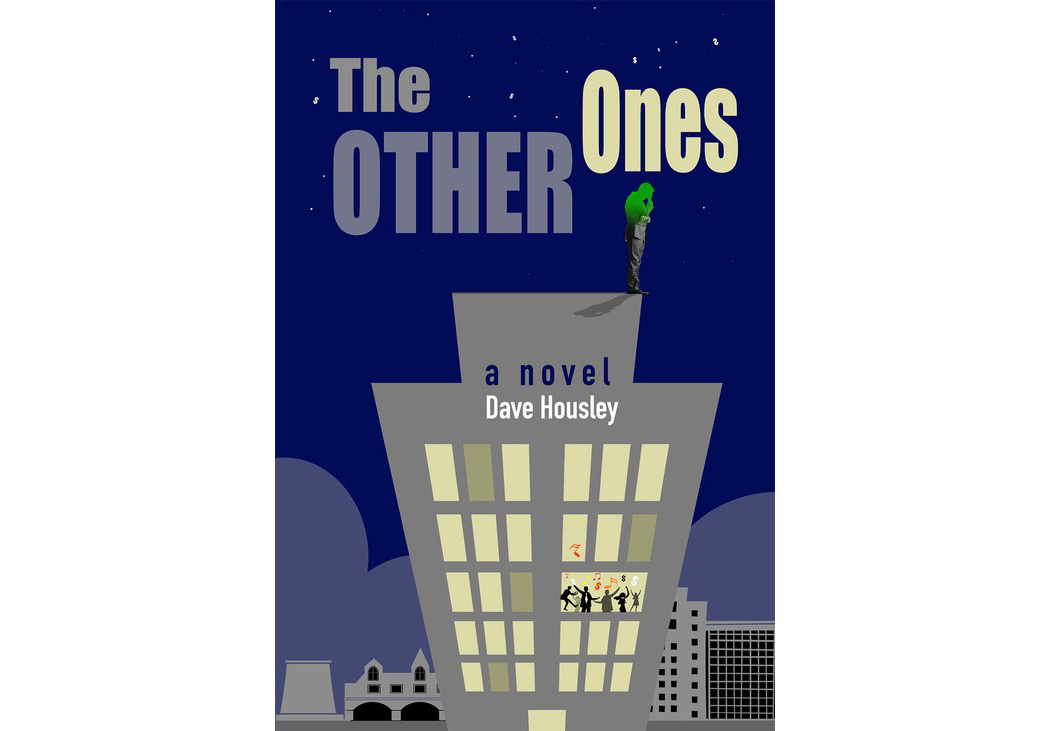
The Other Ones centers on 13 employees of an advertising firm, Keystone Special Marketing Solutions, winning the lottery and walking away with 8.8 million dollars each. The story is told from the perspectives of seven characters, beginning with a 63-year-old, 243-pound accountant named Yoder. As the book opens we are with him, five stories up and reacting to the situation by contemplating suicide:

“Yoder fights the tingle in his fingers and toes. He looks over the edge. The landscaping people are moving lawn mowers and edgers over from the parking lot and the sound of their Spanish drifts up from five stories below. He holds his foot over the edge and butterflies swarm in his stomach. He looks at his belly, protruding like half a basketball is stuffed into his shirt. He looks straight ahead. He takes the step.”

Yoder recurs periodically as an invisible  presence in the homes of some of the lottery winners observing how they are now living and occasionally using his powers as a specter to create havoc.

The story introduces us to a host of interesting characters including Lawson, the company’s assistant director, an ambitious company man who is resentful of the lottery winners. We meet more of the employees: there’s Jennifer Chastain, a hard-working young woman who cringes at the thought that, “Those jackasses won the fucking lottery?” There is Craver, a slacker marketing associate, who isn’t sure if he played the lottery that week or not, followed by Andre, a young Black system administrator who is considered an up and coming player in the company and thinks playing the lottery is stupid. 

The story is not told as a straightforward narrative, but rather in an episodic manner from the points of view of those seven characters. This format is engrossing and could be more interesting if their reflections had been more consistent and revelatory, and if they’d each contributed more to the overall storyline. Instead we see splintered, incomplete depictions of situations that do not necessarily connect to an ongoing scenario. Housley gives bits and pieces of events that occur, without providing an understandable context.

One has to assume the connection that some of the characters have without any verification. For instance, are Sarah and Lawson a couple or just business partners? What is Chad’s and Nicole’s (the consultants brought in to restore the company morale) particular interest in Andre? Do they see themselves as his mentors, and what about him makes them believe he’s such a potentially successful young man?

“Craver is considering finally getting out of the car when the email vibrates into his phone. Cowens? What the fuck would Cowens be emailing him for? He has a moment of dumb animal thrill–a quickening in his pulse, everything goes blurry and he closes his eyes. They have  reviewed everything and determined that he did play. He was right. He’s a millionaire.”

Although the episodic storytelling was a bit problematic for me, it still comes across compellingly, and I wager it would be appealing to many readers. The questions it raises are thought-provoking and provide an interesting insight into the workings of people’s minds and responses to certain circumstances. 

A subtle thread throughout the novel shows the ways money—whether earned at the workplace or won in the lottery’s windfall—destroys lives. The Other Ones invites readers to an unfortunately believable and emotionally complex world, revolving around the ways that money can rule our lives. The depression we witness at the story’s opening contrasts purposely with the hypothetically joyful premise of winning the lottery. Across the stories of interconnected characters, Housley invites readers to consider and judge the ways money can disrupt and frame modern relationships.

A joyful and thrilling ‘On Your Feet!’ comes to life in Spanish at GALA

By Ajani Jones

This article was first published in DC Metro Theater Arts.

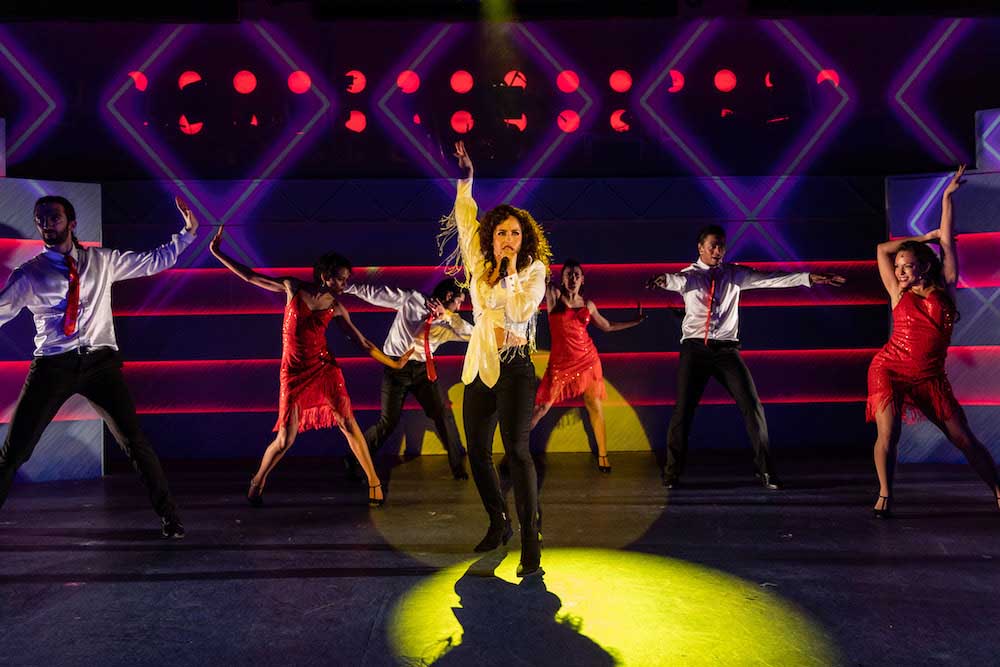
A surge of barely contained excitement washed over the audience as those first few iconic notes of “Rhythm Is Gonna Get You” blared to life. When Gaby Albo took the stage, it was as if we were watching Gloria Estefan, the legend herself, perform. Albo’s electrifying presence filled the room as her energetic performance perfectly set the tone for what would be the next two hours of captivating performances and cathartic storytelling.

On Your Feet! La historia de Emilio y Gloria Estefan !En Español! captures the awe-inspiring legacy of Gloria and Emilio Estefan. GALA Hispanic Theatre’s completely Spanish rendition of the 2018 Broadway musical, directed and choreographed by Luis Salgado, managed to perfectly recount the couple’s hard-fought rise to fame as their band, the Miami Sound Machine, became the first Latin-inspired band to cross over to mainstream pop success in the United States.

The musical wastes no time captivating its audience. The opening scene encapsulates the brilliance of the entire show as Albo’s stunning vocals and dazzling stage presence are immediately on full display. Her performance as the magnificent Gloria Estefan was a wonder throughout the entire show. Albo perfectly portrayed the star’s thrilling journey to fame, seamlessly capturing her charisma and determination as well as her otherworldly stage presence and killer voice.

As the scene transitions into a short exchange between Gloria, Emilio (Samuel Garnica), and their son Nayib (Winsley de Jesús), the sheer chemistry among the cast is highly apparent. The three easily bounce off one another, resulting in a convincing and heartwarming portrayal of the love they have for one another, a kind of overwhelming chemistry that would continue to shine through as the show went on.

The supporting cast of On Your Feet! also delivered equally strong and compelling performances. Fran Tapia and Madelin Marchant, who played Gloria’s mother and Grandmother, Gloria Fajardo and Consuelo respectively, worked excellently together in their portrayal of the mother figures in Gloria Estefan’s life. While their characters were strong complements to the story of the primary focus of the show, Gloria and Emilio Estefan, they were also able to undeniably hold their own as fully fleshed-out characters for the audience.

In her showstopping performance of “Mi Tierra,” Tapia delivered her lines with immeasurable fervor and grace. She stunned the audience with her breathtaking vocal performance and stage presence, while also maintaining their complete interest in the backstory of her own character. Like her, many of the other cast members delivered wonderfully charismatic and vocally thrilling performances that kept the audience invested and served to fortify the strength of the show and its emotional impact.

Due to the undeniable strength of its cast, the show does an excellent job of showcasing the highs and lows of Gloria Estefan’s rise to fame. In its entirety, On Your Feet! is a rather joyful experience filled with countless moments of laughter and cheer. The audience cannot help but celebrate alongside Gloria and Emilio as they are finally able to carve their way onto the U.S. music scene. However, alongside these cathartic and joyous moments also come low moments of conflict and despair. Whether it be Gloria’s conflict with her mother or the journey toward recovery following her accident, the cast maintains their strong portrayals of their characters.

While the musical was performed almost entirely in Spanish (with screens on either side of the stage providing English subtitles for non-Spanish speakers in the audience), the sheer power and emotional weight of every scene and musical number were not lost. Each cast member gave it their all, resulting in poignant performances that transcended any potential language barriers. The undeniable power of the cast’s performances left the audience, even non-Spanish speakers like me, hanging onto every word, purely captivated by the world created on the stage.

The performances of the cast and the compelling narrative of On Your Feet! were definitely high points of the night. However, these elements were complemented, and arguably enhanced, by the captivating dance and musical performances throughout the show’s duration.

Walter “Bobby” McCoy’s musical direction was exceptional as the musical elements of the show, paired with the wonderful sound design of Matthew Rowe, were immaculately crafted. The sheer amount of care and time that went into the music behind each scene was clear as each note paired perfectly with the action on stage. Salgado’s choreography was fluid and energetic, adding an additional layer of life to the already electrifying musical performances.

In tandem with the musical and performance elements of the show, the light and staging design of On Your Feet! also added to the show’s interest. The lights (Christopher Annas-Lee) and projections (Patrick Lord) transport you into each scene, enhancing that electric feeling of every musical number and allowing the audience to feel as if they were actually watching Gloria Estefan perform. Jeannette Christensen’s dazzling costumes added flair.

On Your Feet! was a brilliant glimpse into the journey of Gloria and Emilio Estefan. The great care that went into the show’s production really shined through as it delivered a heartwarming story, captivating performances, and electrifying beats that would leave the audience dancing along as the cast gave their final bows.

Running Time: Two and a half hours, plus a 20-minute intermission.

On Your Feet! en español plays through June 5, 2022, at GALA Hispanic Theatre – 3333 14th Street NW, in Washington, DC. For tickets ($35–$65), call the box office at (202) 234-7174 or go online. In Spanish with English surtitles.