ArtsCentric’s ‘The Last Five Years’ is a hypnotizing thrill to watch

By Gabriella Soto

This article was first published in DC Theater Arts here.

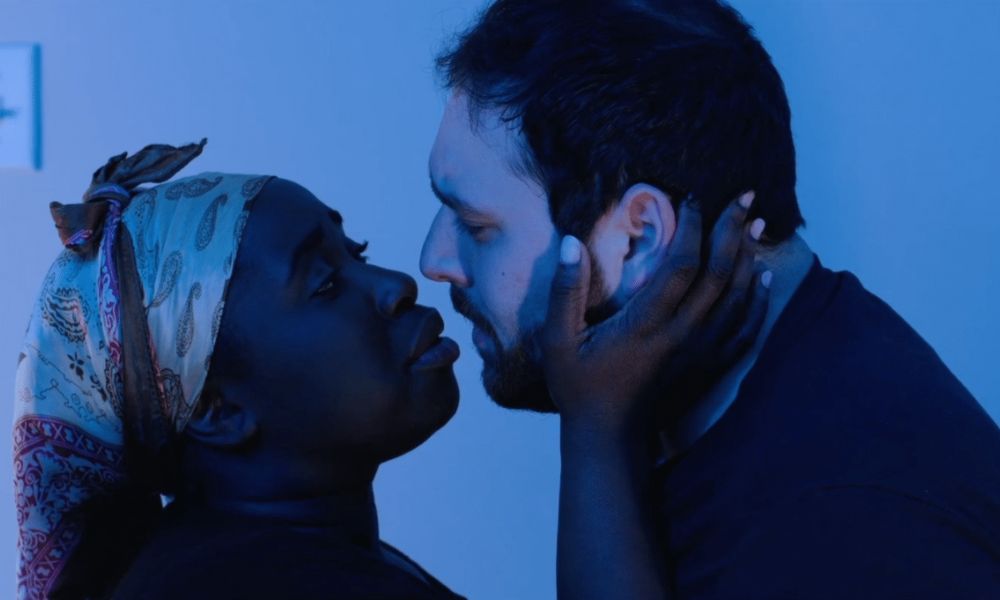
ArtsCentric has streamed their first feature-length film production, Jason Robert Brown’s musical The Last Five Years, starring Ryan Burke and Awa Sal Secka in transformative performances that subvert and surpass expectations. Director Kevin S. McAllister takes an unconventional cinematic look at the story with the help of Musical Director Cedric D. Lyles and dynamic choreography from Shalyce Hemby. The plot follows a young couple through their five-year relationship in specific moments that jump through time and eventually come full circle in a heartbreaking conclusion. To anyone who has ever fallen in love, stayed in love, and learned the sacrifices it takes to make love last, this one’s for you. 

The show opens on a distraught Cathy played by Secka, in her gut-wrenching rendition of “Still Hurting.” The song follows her, alone in her darkened apartment, as she mourns the loss of her relationship with her husband, Jamie. Throughout the scene are swift cutaways to clips of the couple from memories past, then the film jumps into the next big number, “Shiksa Goddess.” Here audiences are introduced to the other main character, Jamie, through the animated vocal stylings of Ryan Burke. This quick shift in tone is a thrilling wake-up call to a happier time, sweeping audiences into different scenes as a true live musical would. Through masterful casting and direction, ArtsCentric has achieved a compelling theater experience with all the depth, diversity, and raw talent that could be expected of a Hollywood production.

The story is shot in a way that gives audiences multiple insights into the characters’ love story every step of the way as we view both sides through the perspectives sung by Jamie and Cathy in each of their respective songs. Cathy’s perspective is reflective, traveling backward in time, while Jamie’s moves forward, to a future Cathy already knows. Their monologues are delivered through lively musical numbers that carry the plot along at a steady pace with stellar performances from both actors, showcasing Secka’s wide range and belting abilities along with Burke’s impressive vocals, which bear an uncanny resemblance to Jeremy Jordan’s in the original cast recording. The talent and magnetic chemistry these two actors bring to their characters on screen is a hypnotizing thrill to watch. 

Expressed in their story is the age-old battle between romance and career: How long can a partnership that’s supposed to be equal thrive when one person is flying high and the other is down on their luck? And what sacrifices are necessary to create our own version of happiness? Cathy is a struggling actress and Jamie is a successful author. As enticing as it is to watch these characters fall in love, we witness the harsh realities of the balancing act between managing a career, whether successful or failing, over your relationship. Feeling as though you should shrink yourself down, or that you will never reach up to the level your partner is at, remains the overarching conflict between them.   

Both Cathy and Jamie are unfulfilled in some aspect of their lives. Their story of trying to make their marriage work, while in the midst of a major power imbalance, is a valid portrayal of why some things just aren’t meant to be. They both require the other to be something they are not. Jamie expects Cathy to play the “supporting wife” to his overwhelming success as a published young author while her own career hangs by a thread. Jamie has more expectations, obligations, and people relying on him than ever before, and yet he feels he is never able to truly enjoy his speedy rise to the top due to his wife’s struggle to flourish and overcome the constant setbacks in her own career. 

Meanwhile, we witness Cathy feel constantly overlooked, brushed aside, and forgotten. She brings Jamie down by her own self-doubt, insecurities, and jealousy sprung from living in his shadow. Jamie brings her down by becoming so engrossed in his newfound fame and fortune that he is no longer able to be the attentive, faithful man she married. Both characters are similarly pursuing their artistic dreams, but at varying stages, showing a clear picture of what it means to be in different places at different times, and how this can affect those who come into our lives..

Director Kevin McAllister makes conscious efforts throughout to put his own spin on the piece with diverse casting and cinematography that pulls viewers in and keeps its audience thoroughly invested. An example is the creative visuals added to “The Schmuel Song.” Sung by Ryan Burke, it shows Jamie’s attempt to cheer up Cathy with a lighthearted holiday story. Here McAllister adds his own unique interpretation of the number by including in the scene cartoon footage of the characters Jamie is singing about. McAllister’s bold choice to have audiences not only hear the story but see it unfold on screen adds an entirely new element to the number and allows audiences to experience the story of Schmuel along with the characters telling it.

McAllister skillfully utilizes meticulous camera work as a lens to show the inner thoughts of the main characters in their quiet moments, revealing a level of depth in their psyche beyond what they tell us in song. A key moment of this is when Cathy comes home from her audition, having just performed “Climbing Uphill.” In one of the few moments of spoken dialogue in the show, Jamie recites to Cathy some of the story he is currently writing, and although she remains silent, we are able to get into the pain and hurt in her mind. We are jolted back and forth through quick flashbacks of her previous performance, where she sings about trying to make it as an actress and the grueling process of constant rejection, struggling to support herself while living in Jamie’s shadow. In between these flashbacks are frequent cuts to closeups of her face in the present scene, showing only the expression in her eyes. It is telling in this moment that there is no closeup on her mouth, because she feels voiceless, only sharing her deepest thoughts with us through a look in her eyes, and the imagery running circles in her mind.

ArtsCentric’s adaptation of The Last Five Years meets the challenge of converting a musical into film, beautifully transforming the story using the fundamentals of cinema, and proves that with a clear vision and team of dedicated talent, true art can be made.

ArtsCentric’s filmed production of The Last Five Years streamed on-demand from February 18 to March 3, 2022.

DC-area art therapists explore ‘Resilience Through Art’ in online exhibit

by Dylan Klempner

This article was first published in The DC Line here.

As the COVID-19 pandemic continues to drive demand for mental health services, a DC-based group of art therapists is participating in an online exhibit that highlights the potential for cultivating resilience through art making. 

According to the Kaiser Family Foundation, 35.9% of adults in the District reported symptoms of anxiety and/or depressive disorder in a survey conducted from Sept. 29 to Oct. 11, 2021. This figure is somewhat higher than the 31.6% of adults nationwide who reported these symptoms.

As the need for mental health support has grown, therapists themselves have also reported symptoms of burnout. Some concerned about increased demand on already-strained mental health professionals are labeling this “another pandemic mental health crisis” and are calling for changes in the nation’s mental health system, including added support for therapists.  

Amid these trends, art therapists in the greater Washington, DC, area are using an online art exhibit to build community and share personal examples of art’s therapeutic potential. 

Works by 25 art therapists are part of “Resilience Through Art in 2020 – 2021,” an online exhibit available on the website of the Potomac Art Therapy Association (PATA), a professional organization serving the Washington area. The group is a chapter of the national American Art Therapy Association (AATA) based in Alexandria, Virginia. 

An untitled work by Tyler Strusowski, president of the Potomac Art Therapy Association’s board, is part of the exhibit of works by 25 art therapists. (Photo courtesy of Tyler Strusowski)

Tyler Strusowski, president of PATA’s board, is one of the art therapists whose work is in the show. 

Prior to the pandemic, he had been working as an art therapist and artist-in-residence at the McClendon Center, which provides mental health services in DC and operates an art studio for its clients.

Tyler Strusowski

A month into the spring 2020 lockdowns, the DC-based art therapist remembers craving the art making he was missing. “When I was working at the McClendon Center, art was in my life, every day,” said Strusowski. “When we went into lockdown, it wasn’t.” 

Inspired by the tulips and poppies blooming in his Northeast DC neighborhood, Strusowski bought a large canvas and began collecting collage materials. 

While working on his piece at home, Strusowski learned that a client he had become close to had died. As he dealt with his feelings about her death, art making served a therapeutic role, he said. “I was mourning her through that process.” 

Art therapy defined

Research has confirmed the effectiveness of art therapy, a mental health profession that specifically integrates psychotherapy theories and practices with the intentional selection of art materials, according to Jordan Potash, associate professor in the Art Therapy Program at George Washington University. 

“With an art therapist, a substantial amount of time is going to be spent actually creating artwork,” said Potash.  

Making art during an art therapy session can help clients relax, a welcome contrast to how they might respond in a different context, said Tally Tripp, associate professor and founding director of the George Washington University Art Therapy Clinic in Alexandria, Virginia. 

“It doesn’t have quite the same stress involved in the purely verbal therapeutic relationship,” she said. 

Tripp said that some clients, especially those who have dealt with trauma, may have difficulty accessing words and emotions. Art making offers tools she can use as their therapist.

“We can work with clay or experiment with different kinds of media, and that’s going to promote a healing that is really strengths based,” Tripp said.

Tracy Councill, program director and co-founder of the DC-based nonprofit Tracy’s Kids, created prayer flags for the exhibit. (Photo courtesy of Tracy Councill)

Art therapy can help people cultivate resilience because it is an “active and engaged practice” that provides a sense of control, said Tracy Councill, program director and co-founder of the DC-based nonprofit Tracy’s Kids

“It puts you in a position of control. And that can be very meaningful to people in therapy,” she said. 

Like other mental health professionals, art therapists must undergo academic and clinical training before obtaining credentials to practice, said Potash. 

The Art Therapy Credentials Board, a group based in Greensboro, North Carolina, offers testing that leads to a national credential for art therapists. Practitioners may also need to pursue additional licensure in their home state. More than a dozen states, including Maryland and Delaware, have passed laws granting licensure specifically for art therapists, and DC recently followed suit.

“Licensure laws, in general, are there to protect the public,” said Potash, who serves as chair of PATA’s licensure committee. “Only somebody who has the unique education and qualifications of an art therapist will be able to call themselves an art therapist.” 

The Professional Art Therapist Licensure Amendment Act was signed into law in DC by Mayor Muriel Bowser in April 2020. The law, passed by the DC Council at PATA’s behest, lists qualifications and standards to practice as a professional art therapist in the District. 

Art therapy and resilience 

Councill said many art therapists use their personal art practices to process their own experiences. “In my work, there is a lot of sadness and loss, right, because I work with a lot of kids with serious illnesses.”

Tracy Councill

Though she rarely makes art directly about losing a patient or someone close to her, Councill has a “need to be creatively engaged. I need to have an arena in which I feel that sense of agency and that ability to respond and be resilient.”  

That’s the line of thinking that led Kelly Jacobs, PATA’s vice president of communications, to come up with the idea for the online art show. 

She said that as the shutdowns took hold, she tried to think of creative ways in which members could connect and share their artistic experiences without requiring a Zoom call. Together, she and her colleagues settled on the idea for the show’s title, which focuses on the idea of resilience. 

Jacobs said she heard from art therapists in the early days of the pandemic about the stress they were under, the challenges they faced, and the adaptations they made. 

“It was hard, but there was so much creativity that was happening. And that all seemed to just kind of relate to this idea of resilience,” said Jacobs. “Adapting, being creative, growing from the experience.”

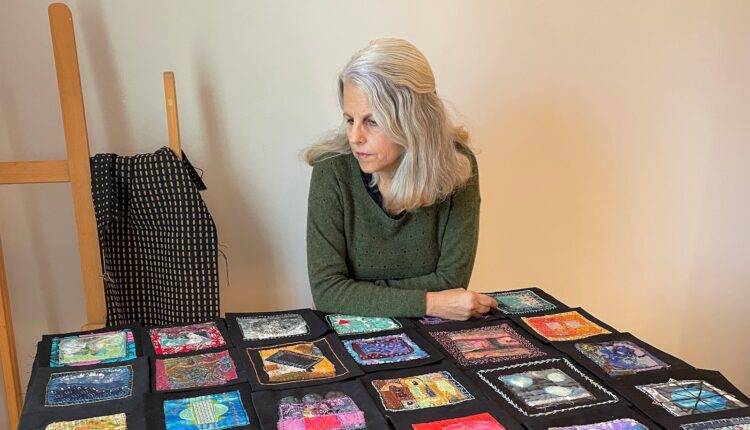
For the artwork she submitted to the PATA art show, Tripp used a technique known as slow stitching, which emphasizes the use of needle and thread for art making rather than for their more practical purposes, such as mending. Tripp said the practice is good for stress reduction. “It was just a way to be focused and relaxed.”

Tally Tripp submitted her stitching project for the online exhibit. (Photo by Mark Morrow)


A half-century of art therapy in DC 

The history of art therapy locally goes back at least a half-century. In 1971, Bernard Levy and Elinor Ulman co-founded George Washington University’s Art Therapy Program, one of the nation’s first. 

The DC area has also been home to leading art therapy programs including Creative Forces: NEA Military Healing Arts Network, a partnership of the National Endowment for the Arts and the Department of Defense that began in 2004. 

Tracy’s Kids, a medical art therapy program for children dealing with cancer, had its start at Georgetown Lombardi Comprehensive Cancer Center. The nonprofit now also supports seven other art therapy clinics at pediatric cancer hospitals, including Children’s National Hospital. 

Art therapy and the political sphere 

Art therapy has long enjoyed bipartisan backing from politicians and their families. 

Just a few months after the Sept. 11, 2001, terrorist attacks, Hillary Rodham Clinton – then a newly elected New York senator – read a Congressional Record statement supporting art therapy as a mental health field. 

Marcelle Leahy, wife of Vermont Sen. Patrick Leahy, is a Tracy’s Kids board member, while Karen Pence, former Tracy’s Kids board member and former second lady, has played, perhaps, the most visible role in raising awareness about the field. 

Shortly after the inauguration of President Donald Trump in 2017, Pence announced that art therapy would be her signature cause. 

But many art therapists challenged the AATA’s willingness to embrace the second lady as an ally. In protest, more than 1,700 joined a Facebook group known as Art Therapists for Human Rights. 

“We demand that AATA respond to Karen Pence’s stated commitment to our field by asking her to publicly take action for the rights of … all people who are in danger as a result of the policies of the current administration,” reads a statement on the group’s page describing its mission during the Trump administration. 

Pence’s interest in art therapy prompted a lot of conversations among art therapists about government policies and other factors that impact their clients, Potash said. 

“Systemic racism takes a toll on clients and limits their ability to access services in ways that they can’t overcome on their own,” said Potash. In the years since Pence’s endorsement, he added, AATA has reviewed its policies and practices and looked “at how to make changes in the interest of equity and inclusion.” 

Art therapy and social justice

Potash uses art therapy to facilitate intergroup dialogue. Art therapists, he said, can play a meaningful role in supporting social justice and community development.

Art can help people visualize systemic injustices, said Potash. “But just showing them might not be enough.”

Art therapists, he explained, can help untrained audiences who may not have the skills to see meaning in a work of art — a role particularly valuable when it comes to getting a deeper understanding of artwork about injustices. 

“Art therapists can help to lead meaningful opportunities for viewers to really get a sense of what it is the artists are trying to convey,” he said. 

As a result of art therapists’ training in psychotherapy and group dynamics, they can also help people use art to communicate about their differences and come up with new policies and programs.

“Art therapists can also — using our skills in groups and whatnot — create art making opportunities where people come together to create art and to try to reimagine ways in which the world could be.” 

Participants at a workshop held as part of George Washington University’s Martin Luther King Jr. Day of Service were asked to create images of a personal experience that defined their social. cultural or political outlook. (Photo courtesy of Jordan Potash and Alberta Gyimah-Boadi)

Prior to the pandemic, Potash and a colleague, art therapist Alberta Gyimah-Boadi, led a series of intergroup dialogue workshops that incorporated art making at GW during its Martin Luther King Jr. Day of Service, as well as at public libraries in the District and in Virginia, they said. 

“We ask people to come and create art [based] on an experience from their life that has led them to their current political views,” said Potash. “The goal of this is to refocus people not so much on political debate, but that people’s perspectives come from somewhere.” 

Gyimah-Boadi said she and Potash were inspired by King’s teachings that encourage people to work together to fix a flawed system. The two of them asked participants to use art making to focus on one another’s stories rather than on their individual views.  

“People may see the issue differently,” said Gyimah-Boadi. “But at the bottom of it, there’s still an issue.” 

For PATA’s virtual show, several art therapists submitted artwork focused on social justice. 

Councill contributed three pieces titled “Prayer Flag Portraits” that depict the faces of George Floyd, Breonna Taylor and Ahmaud Arbery, whose deaths prompted massive Black Lives Matter protests around the world during the spring and summer of 2020. 

Councill, who attended some of the protests, said that the prayer flags are a form of personal expression. “They’re still hanging on the front of my house.” 

She also brought the art to work at the Georgetown Lombardi Comprehensive Cancer Center, the site of one of the Tracy’s Kids art therapy clinics. Many of the children being treated there are African American, she said. 

“I wanted to make it very, very clear to the kids and families that I work with, that I want to do everything I could to be present to them,” Councill said.

“The kids also made their own prayer flags about things that they were worried about during that time,” she said. Some made art about the protests, violence and the pandemic. 

For Strusowski, art making works therapeutically for him in multiple ways. “It becomes my way of processing things that happen and developing insights as to what my feelings actually are,” he said.

He described insights that arose during the spring of 2020 while he worked on his piece for the online exhibit. Through the art making process, Strusowski said he came to realize that despite being close to a client who died, his understanding of her life was limited. 

“I didn’t live their life. And I didn’t have the things that happened to her, happen to me,” Strusowski said. “And that’s kind of where I started to come to peace with the fact that I would never see her again.” 

Lisa Friday Gets Personal in Trans Am

by Gabriella Soto

This article was first published in Tagg Magazine here.

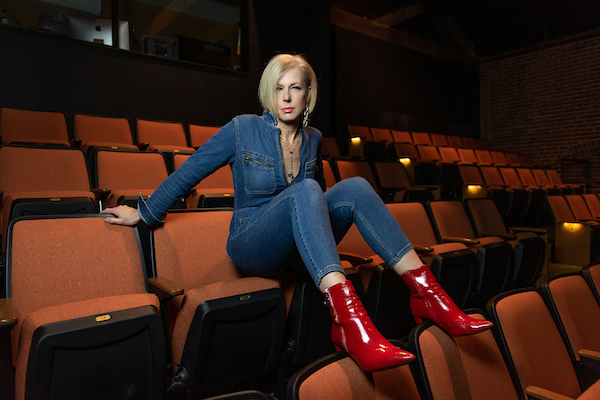
Lisa Friday takes the stage in Trans Am with nothing more than her acoustic guitar and her story. Told through songs fresh from the vault of original music she’s written over the last 20 years, Friday invites viewers to join her on a rock and roll trip down memory lane. The live, one-woman musical depicts her own transgender experience, raw and real.

Friday’s decision to create and star in her own life story arose as a product of her own self-reflection in the wake of COVID-19. After the cancellation of Keegan Theatre’s Hedwig and the Angry Inch, in which she was asked to play Hedwig, Friday took time to reflect on current events and injustices taking place. She believed that what was important to show at this time wasn’t flashy outward spectacles, but honest depictions of the realities people face in life. Thus, Trans Am was born.

Originally performed for a virtual audience, widespread success of her remote production prompted her to bring the show to life on stage. “The Keegan asked me to be part of their 25th anniversary season and we all decided we weren’t going to change a thing. We were just going to go with it exactly how it is,” Friday explains.

She describes her story as a means of understanding our common human desire for self-actualization. When discussing where this self-actualization comes from, Friday explains that “to go through a gender transition can be a very isolating experience. It takes so much self-examination and so much clarity about who you are to get through that.” Through this process, she realized that “everything in our world is informing us that there are binary laws to gender norms, that we have to fit in to certain categories and certain places. And as you transition, you’re going to have to walk through every single one of those places. To get through that and survive, that takes a level of self-actualization that a lot of people are never forced to go through.”

Friday shares that despite her happy childhood, there was no room for her to truly find this in the conservative environment she was raised in. She admits, “we may not realize our authentic selves are probably not welcome in.” Throughout her show, Friday details how her connection to music allowed her to find new places to express herself.

Through Trans Am, Friday hopes that audiences resonate with the realities of this human experience. “Being trans doesn’t make me something other, it actually makes me very human.” Her goal is that people get to see transitioning as a real-world human experience and adds for anyone struggling with their own personal journey, “We need love and support in our lives, we need to receive and give that in order to fully realize who we are.

Quicksilver resumes some in-person arts activities for seniors after months of physical isolation

by Dylan Klempner

This article was first published The DC Line here.

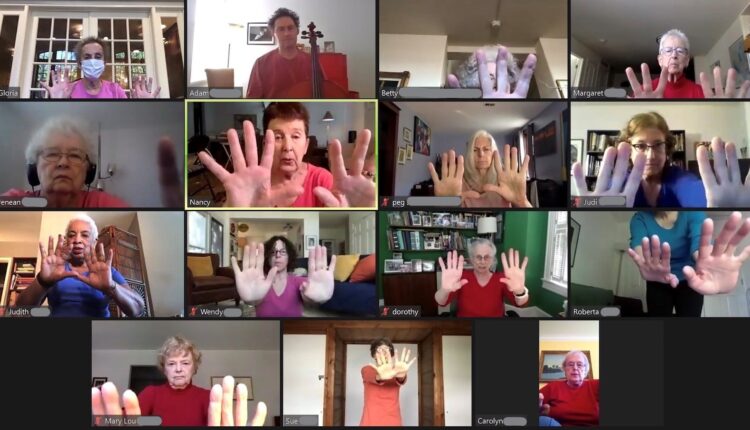
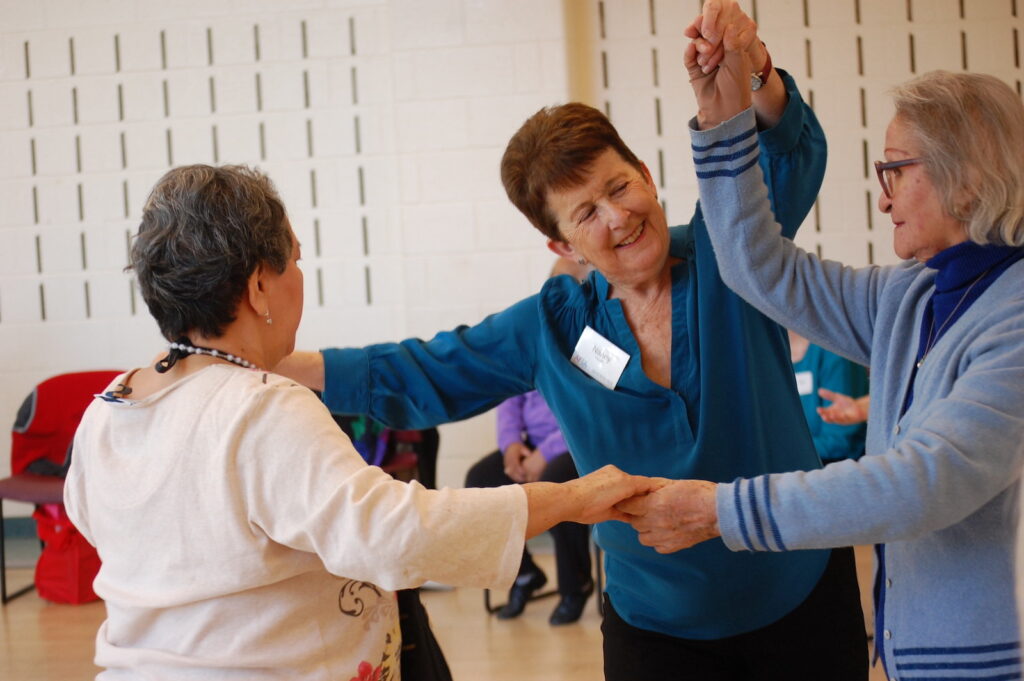
At a time when the world has been preoccupied with the health of seniors, dancer and choreographer Nancy Havlik has continued teaching an unlikely approach to the physical and mental well-being of people over the age of 65 — dance. 

“We were meant to move. It’s part of our DNA,” said Havlik, who has led Quicksilver, a group of improvisational senior dancers, for the past 25 years. 

The program is sponsored by Arts for the Aging, a Rockville, Maryland-based nonprofit founded in 1988 by scientist, arts patron and sculptor Lolo Sarnoff that offers multidisciplinary arts programs for seniors with a wide range of physical and cognitive abilities. In addition to Quicksilver’s dance classes, Arts for the Aging also offers storytelling, singing, drawing, painting and photography classes. The organization also employs 25 “teaching artists,” including visual artists who exhibit nationally, opera singers who perform at the Kennedy Center, and professional dancers such as Havlik.

“Everyone has a different entry point to art, and if we can cover a lot of those areas and ways of reaching people, you’re more likely to spark that connection,” program director Sarah House said in a recent interview. 

Seniors throughout the Washington area can participate in Arts for the Aging programs — primarily online until a full in-person schedule resumes — through partnering community and residential care settings, including adult day centers, community centers, assisted living communities, nursing homes and senior villages. 

In the District these include Iona Senior Services, East River Family Strengthening Collaborative’s Deaf and Hard of Hearing Senior Program, Genevieve N. Johnson Senior Center, and Kingdom Care Senior Village. Other offerings are presented in conjunction with The Phillips Collection and the Smithsonian Institution’s “See Me” program. 

Quicksilver dancers lead a pre-pandemic workshop with participants at Long Branch Community Center in Silver Spring, Maryland. (Photo by Stephanie Williams Images courtesy of Arts for the Aging)

Havlik says she happened to launch Quicksilver just as DC-based choreographer Liz Lerman was disbanding Dancers of the Third Age. A number of older dancers from that company joined her group, whose members typically have a weekly rehearsal in addition to their work with seniors. When the pandemic kept participants out of rehearsal spaces and senior centers, a core collection of members continued to meet online.  

 “[Improvisational dance] is a skill set,” Havlik said. “And you learn it by practicing it together.”

Beginning in March 2021, the members of Quicksilver — vaccinated and wearing masks for the first few sessions — bundled up for outdoor in-person rehearsals on a basketball court at the Chevy Chase Community Center. Occasionally the sessions were displaced by a pickleball group. But Havlik said it was still great to see fellow dancers and share space with them again.

On July 19, Arts for the Aging held its first in-person activity since the start of the pandemic. House, who attended the event at the Genevieve Johnson Senior Center on Blagden Avenue NW, said visual artist Marcie Wolf-Hubbard showed seniors and staff how to use drawing materials to replicate nature-inspired stained glass. 

Janine Tursini, Arts for the Aging’s director and CEO, said the organization will continue offering virtual and hybrid options for the time being. Quicksilver began in-person rehearsals (masked and socially distanced) in September, but for safety reasons has not yet facilitated dance workshops with Arts for the Aging’s client sites. Overall, four of the organization’s 24 clients are currently able to host in-person programs.

Research in the field of creative aging suggests regular participation in the arts can have health benefits, according to Tursini. But she is careful to point out that, while the creative activities her artists facilitate can be therapeutic, they should not be considered therapy. Nor are they entertainment, although some may find them entertaining. 

“They’re all about participation,” Tursini said. Teaching artists often stand at the center of a circle, encouraging group members “to dance with one another, talk to each other, imagine with each other.”

Arts for the Aging also trains other artists to use their model when working with seniors. When The Washington Chorus contacted Tursini, its singers were already performing in nursing homes and assisted living communities, but the group contracted with Arts for the Aging to help develop performers’ participatory skills. 

During the training, Quicksilver dancers divided chorus members into small groups and taught them “movement phrases” that they could do along with their songs. For example, Havlik noticed that the singers were already rocking from side to side while they performed. “You can get your group of frail seniors to rock with you,” she recalled telling the trainees. 

The Washington Chorus training was cut short by the pandemic, but the nonprofit plans to continue training artists who wish to work with seniors, in part through a collaboration with the DC Commission on the Arts and Humanities. 

Havlik says the trainings help artists feel more confident about working with seniors. “We kind of take what they already have, and just affirm it,” she said.

Improvisational dance is an example of a multidisciplinary art form in which virtually anyone can participate. Focused movement isn’t just for trained dancers or trained athletes, says Havlik. Inviting people who may be inactive — whether due to illness or limited mobility — to move can appear to wake them up. “You see their essence come out,” Havlik said  

She recalls seeing the simple gestures of a man taking a class at the Downtown Cluster’s Geriatric Day Care Center before the pandemic. His health had been deteriorating, and he could hardly move. During a dance with Quicksilver, the man began tapping his knee with his fingers. 

“And then he had a little shake of his arm. And then his shoulder on the other side would wiggle a little bit,” Havlik said. “It was close to the end of his life, but he was still in the group.”

BETTY’s Back for a Holly Jollypocalypse

by Gabriella Soto

This article was first published in Tagg Magazine here.

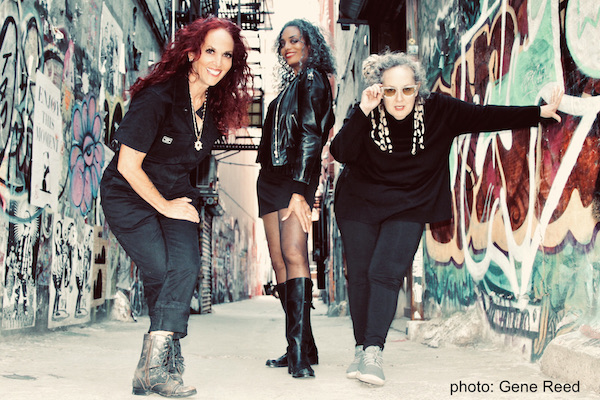
In their much-anticipated return to the stage, BETTY recently announced their holiday concert tour. The iconic queer band is back with live performances this holiday season for their “Holly Jollypocalypse.” Trio, Alyson Palmer and sisters Amy & Elizabeth Ziff will be kicking off their performances in Washington, D.C. and closing out their rockin’ festivities in New Hope, PA.

Over the last 35 years, BETTY has released a total of ten albums along with prominent features of their music on radio, film, and tv. Including their iconic tune, “The Way That We Live,” which featured as the running theme song for Showtime’s The L Word. After three decades together, this strong-willed trio has only grown stronger. They credit their long running success with years of lasting friendship and commitment to one another, and the LGBTQ community. She also adds that their loyal fanbase provided them the drive and engagement to keep at it. “We really keep going because of the fans.” The story of how they met can be found on episode one of their podcast BETTY: Girlband, the Podcast.

In the wake of Covid-19—no longer able to do live performances—the unparalleled dedication these women have for one another and their music shined through. While writing individually, the group remained in touch every day. Elizabeth even admitting to walking miles in the snow to just to get to her sister in upstate New York. It was during this time, that the group was able to transition from sharing their songs with live crowds, to reaching audiences online, with the release of several music videos and taking part in live benefits via Zoom.

Now, live and in-person, the group is thrilled to get back to their fans, aiming to bring together all walks of life and inspire fun-filled comradery throughout the tour. Audiences can expect to hear some great music and hopefully, meet some great people this holiday season.

For more information about BETTY’s upcoming holiday shows, visit https://www.hellobetty.com/shows/. 

Ballet dancers showcase recently renovated Martin Luther King Jr. Memorial Library in new video

By IIena Peng

This article was first published in The DC Line here.

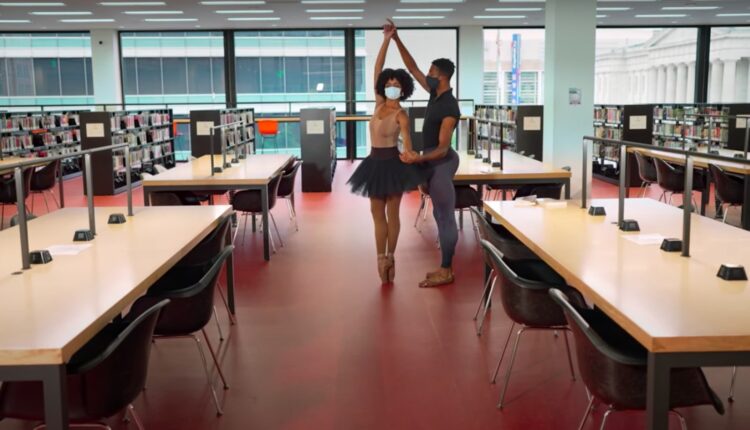
Derek Brockington and Alexandra Hutchinson dance in the grand reading room of the recently renovated Martin Luther King Jr. Memorial Library. The roof of the room is decorated with a textile art installation by Zenobia Bailey. (Screenshot from “Library Reimagined: A Tour in Dance”)

On the last Sunday that Martin Luther King Jr. Memorial Library was closed to the public, two professional ballet dancers whirled through the historic building’s newly renovated space.

The dancers, Alexandra Hutchinson and Derek Brockington, are featured doing lifts in the grand reading room and jumping through the rooftop garden in a new video, “Library Reimagined: A Tour in Dance.” The video showcases the revamped library, which hosted a public celebration late last month to mark the first anniversary of the completion of a four-year renovation that cost more than $211 million.

“We’ve been involved for years and years in renovating the MLK Library, a historic property, and it just needed to be exposed to everyone for all of the new improvements that have been made,” said Robin Diener, the president of MLK Library Friends and a member of the DC Public Library’s MLK Renovation Advisory Panel. “I didn’t know why, but the idea of ballet or dancing or something in the various spaces just seemed to me completely natural.”

The library, located downtown at 901 G St. NW, has been gradually reopening with limited public access since September 2020 due to the pandemic. The day the video was filmed, Sept. 5, was the last Sunday before DC’s central library resumed Sunday and holiday hours.

Hutchinson and Brockington are members of Dance Theatre of Harlem, a company founded by Arthur Mitchell, the New York City Ballet’s first Black principal dancer. In the summer of 2020, the duo produced the video “Dancing Through Harlem,” which caught Diener’s attention. Having known Hutchinson since she was a ballet student, Diener reached out to ask whether she would be interested in dancing through DC’s renovated library. 

Hutchinson, a Southwest DC native who grew up frequenting the MLK and Southwest libraries, readily agreed. 

“I was really excited to be able to tell a story with our bodies. As dancers, we love being storytellers,” Hutchinson said. “And so I think it’s perfect to go with the library.

Working together in New York City, Hutchinson and Brockington began choreographing a piece to music by composer and conductor William Grant Still (1895-1978). Hutchinson said they wanted to incorporate Black artists in their piece. Music by Still — who was the first African American artist to conduct a major symphony orchestra and have a symphony performed by an American professional orchestra — was a “driving force” for the choreography in those early stages, Hutchinson said.

Though Hutchinson and Brockington choreographed most of the piece in New York City, their physical presence in the library on the day of the video shoot inspired elements of their storytelling. In one scene, Brockington hands Hutchinson a library card, which she clutches to her heart. Sitting in a nook, Hutchinson reads a book about famed Sierra Leonean American ballet dancer Michaela DePrince — a current Boston Ballet second soloist and a Dance Theatre of Harlem alumna.

Alexandra Hutchinson reads a book about Michaela DePrince, a Black ballerina and an alumna of the Dance Theatre of Harlem. (Screenshot from “Library Reimagined: A Tour in Dance”)“Little improvisations would come out of just being there, and so we got an element of magic in the filming,” Brockington said. “You’re not really sure how all of this is possible, but when you’re a little kid in a library, sometimes it does feel like that.”

As Hutchinson reads the book about DePrince, Brockington hands her a pair of pointe shoes. The next scene in the video shows Hutchinson lacing up the ribbons on her shoes, wearing a tutu. Hand in hand, the pair walks up the library’s new spiral staircase. 

Hutchinson’s narrative arc in the video — reading a book and then transforming into a ballerina — represents a library’s “limitless possibilities,” said DC Public Library events program coordinator Ryan Williams. Hutchinson’s return to the MLK Library, where she used to study whenever she performed at the nearby Warner Theatre with the Washington School of Ballet, is a real-life example of how libraries are linked to upbringings and growth.

“It’s almost like a Madame Butterfly moment where she ascends those stairs,” Williams said. “That ascension is very much what we want all of our customers to do, no matter where they are in their lives.”

Hutchinson said the scene was “whimsical,” since a librarian ordinarily wouldn’t have pointe shoes available to lend out. But with all the library’s new gadgets and improvements — including a 3-D printer, power tools and a ballet barre — Diener quips that maybe pointe shoes aren’t too far off.

“In the past, they wouldn’t have necessarily had power tools or a ballet barre — but we do have those things,” Diener said. “Toe shoes are probably coming.”

David Weiner, who filmed the video, said it is purely a celebration of the completed space following years of discussion regarding the building’s renovation, a process that began formally in 2011

“This was an opportunity to be something that was purely positive — just something that was just good feelings,” said Weiner, who first began working with Diener and the Friends of MLK Library in the 1990s on the issue of adult literacy. “That’s how I thought about it. And clearly, in the choreography, in the dance, is just the spirit of joy.”

Virtual exhibits transform traditional museum experience with longer exhibition times, interactive elements

By Roy Gao

This article was first published in The DC Line here. It was developed within Day Eight’s week-long, 2021 summer arts journalism institute.

With just the movement of a computer mouse, a silver pitcher covered with two winged camels and foliate patterns is viewable from all angles and at various scales. This Central Asian artifact, made in the late seventh or early eighth century A.D., is just one of numerous 3D items that visitors can access through a National Museum of Asian Art virtual exhibition. The museum, part of the Smithsonian Institution, is far from alone in having launched virtual exhibits at a time when the pandemic kept museums and galleries from fully reopening.

Even as DC art institutions like the National Museum of African Art and the Hirshhorn Museum and Sculpture Gallery have gradually reopened their doors to the public, not everyone is ready to head downtown, particularly with the rise in COVID-19 cases due to the spread of the delta variant. Luckily, the city’s museums have adapted over the past year to offer an equally valuable experience through online exhibitions. Antonietta Catanzariti, assistant curator for the ancient Near East at the National Museum of Asian Art, notes that visitation to their website has doubled in the past year, and remains high even as the museum and others have reopened.

That’s hardly surprising. “Virtual exhibitions are similar to physical exhibitions, often capitalizing on the web’s capacity for a personalized experience in which the user directs their own journey,” wrote Ngaire Blankenberg in her 2014 book Manual of Museum Exhibitions. (Blankenberg, formerly a cultural consultant, became director of the Smithsonian’s National Museum of African Art in July.)

Here are examples of what you can find online from three DC museums: 


National Museum of Asian Art (formerly the Freer Gallery of Art and Arthur M. Sackler Gallery)

The Sogdians: Influencers on the Silk Roads, curated by the National Museum of Asian Art, has been open since 2019. With no specified end date, this timeframe is rare for physical exhibitions, which are usually open for weeks or months. 

Kimon Keramidas, New York University professor of digital humanities and a curator of the show, said digital exhibitions can usually last for five to six years before advances in technology lead to complications. Even then, however, they can still be updated and recovered.

Digital exhibitions also allow for the display of artifacts that might not otherwise have been available. The curators of the Sogdians exhibition, for instance, decided to go digital due to challenging geopolitical circumstances, according to Keramidas: The trade embargoes that followed Russia’s invasion of Crimea in 2014 prevented important collections from loaning objects.

The exhibition is packed with about 700 pieces of material, including 3D models, images, custom maps, drone footage and more. The exhibit’s subject matter is similarly rich in diversity. 

Julian Raby, director emeritus of the museum, calls the Sogdians an “underestimated” people. They were an ethnic group that lived in the first millennium A.D., occupying a vast terrain of Eurasia and significantly shaping Silk Roads culture and commerce. As merchants, craftsmen and entertainers, the Sogdians lived and traveled everywhere from China to the lands of the Byzantine Empire. 

In one section of the virtual exhibition, the visitor follows a historical trade route and sees a moving map, photographs of the terrain, and text describing each location. Unlike maps on gallery walls that could be easily overlooked, here the geographic tour takes center stage in the experience. 

“There is a sense of immediate rapport that could be quite powerful,” Raby said in an interview.


Hirshhorn Museum and Sculpture Gallery

Hirshhorn Museum’s Lost in Place: Voyages in Video debuted in May 2021 as a direct response to the pandemic, which the exhibition text states had “greatly diminished our radius of movement — collapsing home, office, and school into a single location — and recalibrated our sense of personal boundaries.” Drawn from the Hirshhorn’s permanent collection, the digital exhibition brought together 11 videos by contemporary artists from around the world. They were each made available for viewing in sequential and overlapping four-week spans, with the last one accessible through Aug. 20.

One of the videos, Laure Prouvost’s Swallow, inundates the viewer’s eyes and ears with a sensual intimacy that is almost unsettling. While following a group of nude bathers in a stream, Prouvost’s camera fades in and out of extreme close-ups on body parts, flapping fish, and crushed berries. This all occurs while recurrent sounds of breathing and shots of an open mouth span the entirety of the video’s run. After a year of Zoom-room socializations, such sudden closeness with bodies and nature is especially striking.

Purchase Fund, 2008 (Photo courtesy of Hirshhorn Museum and Sculpture Garden)

Among the other featured videos were Pierre Huyghe’s One Million Kingdoms, starring a digital avatar traversing a lunar landscape generated by her voice; the artist collective Superflex’s Flooded McDonald’s, a meditation on the fast-food restaurant chain’s material footprint that depicts a kitchen slowly filled with 20,000 gallons of water; Carlos Amorales’ Dark Mirror, featuring animations of wolves, bears, falling airplanes, and other images evocative of danger; and Guido van der Werve’s Nummer Negen (#9): The Day I Didn’t Turn with the World, a time lapse of the geographic North Pole, where the artist stood for 24 hours facing away from the sun.

National Museum of Women in the Arts (NMWA)

The NMWA’s online exhibitions, which are running indefinitely, mimic carefully crafted walking tours. They employ sequences of web pages that are as immersive as museum displays, which viewers navigate with their mouse and arrow keys.

The first online exhibition curated by the museum is the ongoing show A Global Icon: Mary in Context, which launched in 2015. The featured sculptures and paintings of the Virgin Mary come from Europe as well as Japan, Ethiopia, Mexico and more. With each page turn, the web window can zoom into a detail of the work or present an explanatory video that highlights the various contexts in which the biblical figure Mary appears.

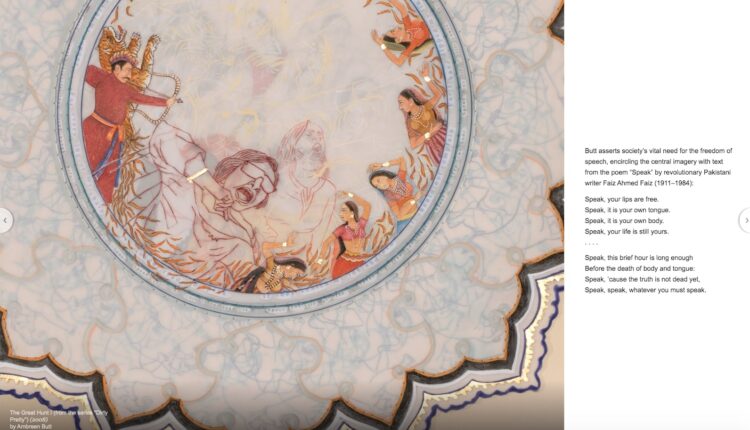
The same kind of seamless passage from content to content characterizes NMWA’s newer exhibitions, like Ambreen Butt — Mark My Words, which launched last year and interlaces videos of her work process with displays of her paintings, prints and collages.

In June 2020, the museum redesigned its website to host its online exhibitions as part of an ongoing effort to enhance its digital platform. Laura Hoffman, the director of digital engagement, explained that the pandemic had prompted discussions in the field about what a museum experience without physical access ought to look like. 

With NMWA undergoing a major two-year renovation as of Aug. 9, Hoffman said the pandemic provided a useful — and timely — opportunity to explore the museum’s digital capabilities leading up to its temporary closure.

“The pandemic almost felt like a test run for all the digital possibilities there are,” Hoffman said.

Roy Gao was born in Boston, MA, but grew up in Pittsburgh, PA and in Beijing, China. Before college, he lived in and studied in both the United States and China. Roy received his bachelor’s degree in 2021, from the University of Pittsburgh, with a double major in Art History and Philosophy. For the fall, he has been admitted to the Master’s program in Modern and Contemporary Art History at the School of the Art Institute of Chicago. In 2020, Roy was a top-ranked applicant for the Fine Foundation Fellowship at the Carnegie Museum of Art (before the fellowship was cancelled due to COVID-19). He was the curator of “Footsteps” at the China Millennium Monument in 2019, and co-curator of “This Is Not Ideal: Gender Myths and Their Transformation” held at the University Art Gallery of the University of Pittsburgh in 2018.