Browsing Category

Visual Arts

Comedy series Rebecca and Becca in Space addresses isolation in the age of covid

By Julian Oquendo

This article was first published May 22, 2020 in DC Theatre Scene here.

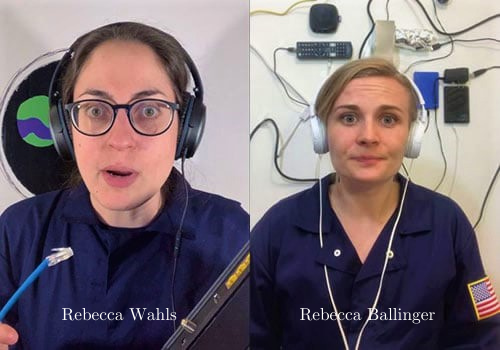
In the early days of regional stay-at-home orders, theatre artists Rebecca Ballinger and Rebecca Wahls were not ones to waste any time. They secured the equipment they would need: some quick decorations and the FaceTime app on their phones, and produced a series of very funny shorts.

A few weeks later, their 9 episode mini-series, Rebecca and Becca in Space, is available on YouTube for a quick binge (most episodes are under 5 minutes), another example of how local artists continue to produce work during the crisis.

The web series, set in 2033, features two astronauts stranded in space after the government pulls the plug on their research program. With no means of returning to Earth and isolated on their respective space stations, they do what any resilient astronauts would do: they live-steam their games of truth or dare.

“My favorite joke is when Rebecca’s character thinks everybody can shove their fist in their mouths,” Ballinger says during an interview with DC Theatre Scene, “and realizes it’s not true.”

“Watch till the end of the credits,” Wahls adds.

The script, written by both Ballinger and Wahls, started in 2019 and revisited this year, began from a simple premise.

“We wrote a number of sketches,” Wahls says. “Then we did a brainstorm exercise where we wrote a list of everything  we wanted to be when we grew up. And we both had ‘ASTRONAUT’ at the top of our list.”

The series is one of a number of projects funded by George Mason University’s College of Visual and Performing Arts’ Mason Arts At Home. Their program has been offering a series of live-streamed and recorded performances since early April.

For Ballinger and Wahls, the importance of producing the series helped add a much needed routine to their new normal.

“Honestly, those two hours really helped because we started filming this, like right when everything was shutting down and the stress was super high,” Ballinger says. “I could go sit on the floor of my closet [and film] for two hours every night. It really helped ground me in the normal of rehearsing and there was a structure.”

Ballinger and Wahls also hosted a live Q & A session, in character, after their show premiered. Ballinger recounts one of the submitted questions relating on how to deal with isolation in space.

“The most important lesson I have learned in space… It can be really hard to be by yourself all the time,” Wahls answered during the livestream, “If you can create ways to connect with other people, that can make all the difference. Even if you feel alone, you’re not alone.”

The series ends on a positive note, their “Christmas Special” (spoilers) suggesting a return home for the astronauts.

“When we were talking about this, before the pandemic happened, we were [considering] if at the end of this season we find out that we’re stuck forever? And then the next season, we’re like really dealing with an existential crisis,” Ballinger shares.

“We ended up knowing people didn’t want that right now. People want help. And so that’s why we wrote a Christmas special to wrap up the season, just to kind of give a little bit of light at the end of the tunnel to these characters.”

Rebecca Wahls is currently pursuing her MFA in directing at Carnegie Mellon University. Rebecca Ballinger remains in the DC area, and looks forward to her next performance with Monumental Theatre.

DUPONT CIRCLE GALLERY showcases Abstract works + recycled materials

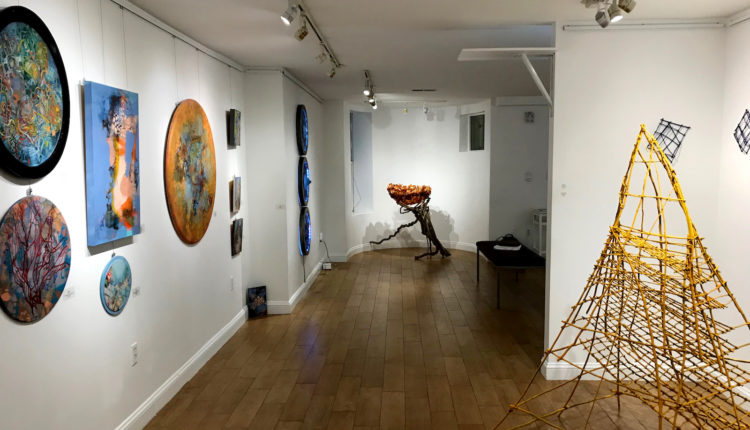
A gallery hallway featuring mixed media paintings and sculptures.

By Athena Naylor

This article was first published January 23, 2020 in The DC Line here.

Two exhibits on display this month at Dupont Circle’s Studio Gallery respond imaginatively to environmental themes, but the featured artists do so through wildly different approaches to aesthetic and ecological concerns.

The Jan. 3 receptions for Lois Kampinsky’s solo show On the Nature of Things and the group exhibition ReClaimed ReUsed RePurposed: Sustainable Art for the Planet were part of the new year’s inaugural First Friday Dupont event, a self-guided art walk around greater Dupont Circle that features stops at several galleries in the neighborhood. A closing reception is set for Saturday afternoon.

Titled after the only known work of the Roman poet Lucretius, On the Nature of Things posits that the natural world has been well-documented already but that, as Kampinsky says in her artist statement, “maybe it’s time to take a playful look, while [the natural world is] still here.” This sense of fun (though seemingly in the face of distress) manifests itself in the vibrant patterns in her paintings from the past few years, which comprise the majority of the exhibit.

Kampinsky’s strengths as an artist shine most in her abstract work. In her “Winglike” series of six 24-inch-by-19-inch gouache paintings, Kampinsky creates compositions that, though inspired by wings, ultimately read as non-representational. Interwoven streaks of color along with triangular shapes could just as easily remind viewers of plants, fish or geological forms. The natural world appears as a stepping-off point for Kampinsky’s more conspicuous artistic preoccupation, the visual relationships between shape and color.

Perhaps this is why her more literal portraits of animals do not feel quite as alive as her abstract paintings. In the large painting “Rabbit,” the flat profile of the titular animal is presented with little personality. The white and faint pale blues of the rabbit’s fur against the painting’s orange, twig-like background do not appeal as much as a color study as Kampinsky’s busier compositions. It is telling that the most visually interesting aspect of another large representational painting, “Bird on Nest,” is, in fact, the nest painted in abstract, tangled streaks of yellows, purples and greens. 

Representational subjects function best in Kampinsky’s paintings when animals are presented in large groups, like in her “Jungle Birds” series, where clusters of colorful birds fill up canvases and create a visual pattern. A similar effect occurs in the large canvas “Purple Flowers,” in which a cluster of flowers crowds the composition and appears almost alien nestled in an indistinct dark, moody atmosphere. Kampinsky’s large painting “Bugs” circles back to her self-proclaimed penchant for playfulness with a composition that situates the viewer at ground level among a tangle of vegetation rendered in neon colors and angular shapes. The titular animals peek out from the shadows, rendered in a nearly cartoonish way that leaves their classification uncertain — truly they can only be specified as “bugs.”

Kampinsky’s paintings display the artist’s love of nature in a traditional manner, with the natural world providing a springboard for aesthetic exploration in the familiar medium of painting. This is not the case in the lower level of Studio Gallery, where the production process of pieces included in ReClaimed ReUsed RePurposed more directly engages environmental concerns of sustainability.

As indicated by the title, the artworks in ReClaimed ReUsed RePurposed all explore, to varying degrees, the idea of recycling materials. While Kampinsky introduces playfulness in her paintings through color and shape, the artworks downstairs spark delight in both their aesthetic appeal and their use of unpredictable materials. 

One of the first pieces viewers encounter in the basement gallery is Gloria Chapa’s sculpture “CASCARAS (One of 5 Baptismal Fonts)” from 2019. Perched on a twisted base of vines, a large basin seems to shine orange under the gallery lights. With a closer look, one realizes what is contributing to the piece’s translucent glow: The basin is made entirely of onion skins held together by resin. As an inventive reimagination of a commonly overlooked material, Chapa’s installation excels.

Other striking pieces include Erwin Timmers’ contribution “Site Map 2.0,” constructed in 2019 from recycled glass along with reclaimed wood and steel. Timmers casts common detritus like bottle caps, soda cans and foam peanuts into gridded patterns within square glass molds. These glass panels protrude from the wall on steel rods connected to a black, backlit circular mount whose rim illustrates the jagged edge of a continuous skyline. The resulting aesthetic is sleek and urban. Through his artwork, Timmers examines how society consumes and discards resources, prompting the viewer to consider not only the end product of the artwork but its origin and process.

Other artists repurpose industrial materials as well. Sculptor Liz Lescault’s small steel pieces use recycled metal to create intuitive, biomorphic forms. Pat Goslee — who, like Kampinsky, primarily paints — creates her compositions on found objects, mainly discarded tabletops. The results are circular artworks — tondo paintings, to be specific — made of threads of color that feel like anxious vortexes. These entropic compositions reflect the artist’s view of her work as a chance to portray emotion, particularly of worry surrounding environmental distress and disaster. 

The pieces of Julia Bloom bring the exhibit back to the realm of natural materials with stick towers inspired by the architecture of nests and thickets and scaffolding. While these free-standing sculptures reference nature through their materials, they are ultimately transformed into something new through the addition of bright primary colors.

Paper artist Jessica Beels, acknowledging that art itself can generate waste, creates collages from the leftover scraps of her past projects. In her compositions, she repurposes paper fragments and creates new handmade paper using discarded denim and other found materials like junk mail, invasive plants and even plastic bags, again calling attention to consumption and the potential of what’s often overlooked or discarded.

If there is one outlier in ReUsed ReClaimed RePurposed, it would be Robin Bell, whose pieces fill the back room of the basement gallery. A video artist known for his site-specific projections installed around DC, Bell takes a more conceptual approach to the question of reuse. (You may remember that Bell was in the news last March when his collaborator was arrested while setting up an installation at the Rayburn House Office Building.)

In effect, Bell recycles his old work. His pieces at Studio Gallery either incorporate elements from earlier installations or are previously created works presented exactly as they were when first made in order to examine how differing temporal and spatial contexts may affect an artwork’s reception and meaning. 

Bell’s contribution to the exhibit stands out because it relies on video components whereas the works by other artists are more concerned with tangible materials. His installations also noticeably push environmental and political anxiety to the forefront.

The year 2020 has already witnessed increasing levels of environmental catastrophe — from the ongoing Australian wildfires to the recent earthquake in Puerto Rico — and the world will continue to face the dangers of rising global temperatures and augmented natural disasters. The fanciful paintings of Kampinsky and the inventive installations in ReClaimed ReUsed RePurposed touch on these concerns, but often relegate the sense of dread surrounding environmental issues to the periphery in works that initially present as aesthetically appealing and fun. In contrast, a work like Bell’s “Death comes from the top, resistance comes from the bottom,” dated 2019/2020, forces viewers to confront current circumstances and, literally, themselves. 

In “Death comes from the top,” the viewer stands in front of a full-length mirror over which hangs a small TV screen. The monitor plays a looped video in which the camera zooms out to reveal a kitschy metallic skull wearing a red cap with the phrase “THIS IS NOT NORMAL” stitched to the front. The politically charged message paired with the skull comprises a contemporary memento mori easily applicable to current environmental circumstances. The inclusion of a mirror that makes viewers face themselves then provokes the question of what we can and should do in these atypical times. The question can expand to encompass the entire gallery: During alarming times, in what ways may artists react or resist?

THE 29Rooms festival Features interactive Art and Social Media opportunity

By Julian Oquendo

This article was first published in The DC Line here.

Whether it’s a social scene to get to know a stranger, or a space for internal reflection, 29Rooms: Expand Your Realityoffers just the right backdrop. This inspired, eclectic and culturally conscious festival — featuring interactive workshops, installations, performances and more — invites guests to engage with the work of approximately a dozen female artists from DC and across the nation. 

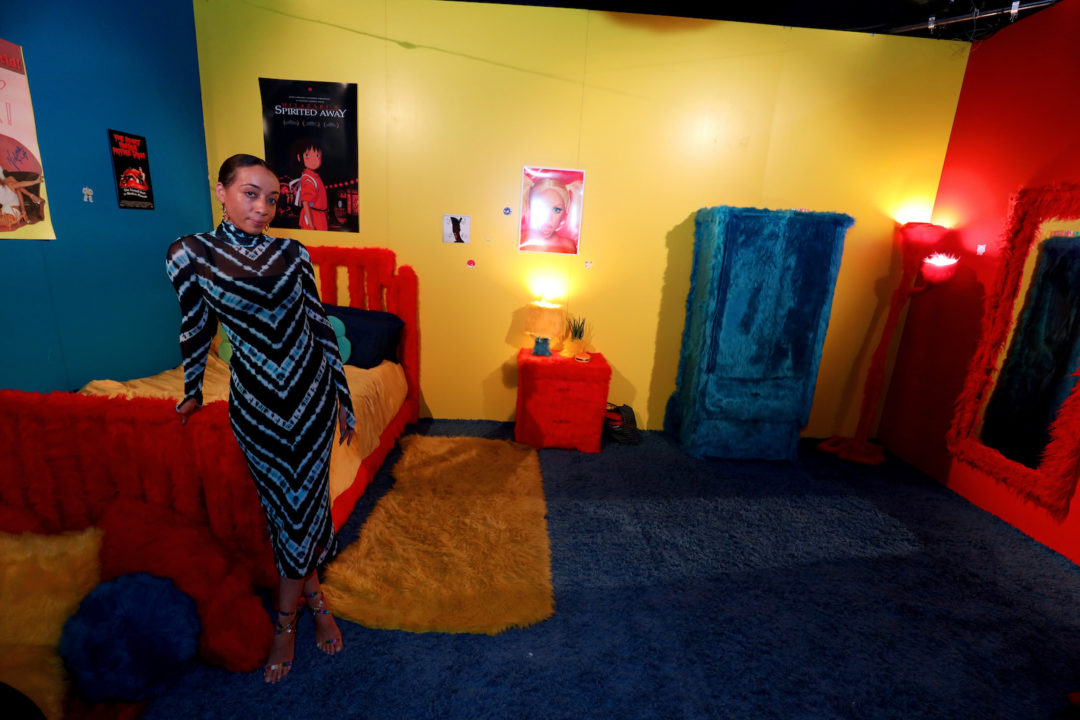
The DC Armory in Southeast is hosting the touring festival — which opened Friday and features multiple art stations, or “rooms” of Instagram-worthy installations — through Sunday, Oct. 27. With some minor variation to the art installations, the tour highlights local artists for some of its pieces.

Refinery29, the digital media company behind this event, has an audience of young women in mind, but the event offers a celebratory environment likely to appeal to anyone who enjoys a curated selfie. 

This is the first year the festival is making a stop in the District, having made its previous appearances in Los Angeles and New York. Since the event’s launch in 2015, reviews have focused on the social messages behind the art, and, of course, its photogenic appeal. Organizers encourage guests to pull out their phones and share pictures of themselves engaging with the art on social media. Each room’s introductory placard provides a brief description of the installation, along with a number of suggested Instagram hashtags to promote the work. 

And each room offers a slightly different message or theme. 

“Some of our rooms have very simple prompts … asking for [the] audience to engage [in order] to power the room and bring them to life,” says Olivia-Jene Fagon, who oversees 29Rooms as creative director of events and experiential at Refinery29.

In one of the rooms — centered around A Conversation With Your Inner Child byBarcelona-based movement artist Carlota Guerrero — attendees are asked to write out messages to their inner child on pink Post-It notes that line the walls. In the middle of the room is Guerrero’s statue of an adult reaching out to a child. 

Another set of rooms forces strangers to interact. A Blind Date With Destiny requires exhibitgoers to sit across from one another with a wall between them, leaving only the other person’s hands visible; after receiving a quick tutorial, the participants are asked to perform amateur palm readings. On the opposite side of the Armory, the room 29 Questions features prompt cards that help guests get to know each other.  

Most rooms try to share a powerful social message. A Long Line of Queendom is a monument and tribute to the experience of black women, both as individuals and as a group. Messages such as “Say her name” and “My hair ain’t up for debate” are written on the walls of the room. A golden carpet leads up to an altar. 

Of course, the biggest draw for some attendees is the “Instagram-able” feel of the festival. A room called No Filter plays with light to enable you to “experience creative lighting methods … to see yourself,” making it an excellent and easily transformed space for taking a selfie.

Other rooms, such as those set up by 29Rooms corporate partners, are really just promoting a brand. Prudential Financial, for example, put together an “escape room” activity that prompts a group to complete challenges and build toward financial wellness. The ACLU, the event’s nonprofit partner, has a “Values Stand that resembles a New York City bodega and promotes the American values and rights the organization protects. 

The rooms that were curated by individual artists will likely be the biggest draw for local patrons, and deservedly so. Trap Bob — a DC-based visual artist, illustrator and animator as well as creative director for the women-centric collective GIRLAAA — designed the images for a staircase installation, one of a number of contributed pieces for The Art Park in this year’s festival. 

Installation-based artist Yvette Mayorga, another contributor to The Art Park, presents a playful work with a subversive, solemn message that highlights issues of immigration. Using a cake frosting-like material, child-like coloring, industrial materials and the American board game Candy Land, Mayorga has created a conceptual framework that juxtaposes the border areas of the U.S. and Mexico. This piece travels along with the rest of the tour. 

“It was a great opportunity to think about my paintings in a 3D form across the country,” Chicago-based Mayorga says. “That’s super exciting to me — to have elements that have become synonymous in my work come to life and travel across the country.” 

The chance to reach audiences across the country is also part of the excitement for Trap Bob.

“[Refinery29] really allowed me to experiment,” she said. “I was able to brand the staircase with my designs and have this message that would go to all these different places and resonate with so many people.”

Trap Bob also notes that she has seen how social media has contributed to her installation’s value. “It’s amazing that people are not only taking pictures but [also] relating to the theme. I’ve had people with these captions and tagging me and stuff. … I feel like I just got to know hundreds of thousands of people over the past couple of months.”

Unsettled: The Journey of Cheyenne and Mari

Written by Hannah Berk

This article was first published in Tagg Magazine here.

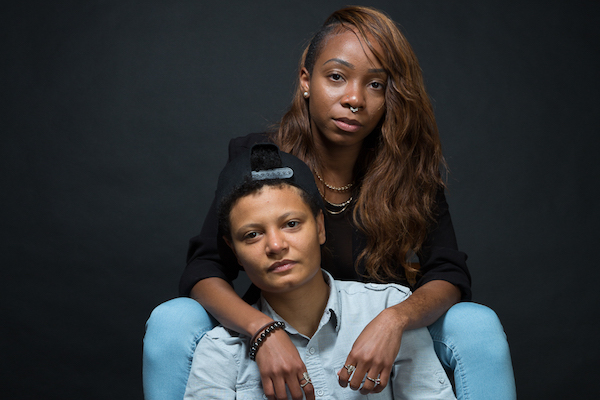
Cheyenne Adriano and Mari N’Timansieme were looking for a place where they could be themselves, and still be safe. That simple demand has led them on a journey that has bounced them back and forth across borders and entangled them in immigration bureaucracy for seven years and counting.

Gender-nonconforming from a young age, Mari grew up facing a barrage of abuse in Luanda, Angola. “I’m a target right away,” she says. “I don’t even have to open my mouth, they can just look at me…I couldn’t even leave my house without knowing I could be attacked.” In their time living together, Cheyenne and Mari never felt safe in their home. Neighbors cut their power and killed their dog; police joined in the swarm of street harassment that rose to meet them. The final straw came when one neighbor devoted himself to stalking the couple at all hours, threatening to burn their house down in the night. After years of dodging and withstanding attacks, they knew better than to disregard a threat against their lives.

When the couple first decided to leave Luanda in 2012, homosexual conduct was still criminalized under the country’s colonial penal code. Legal discrimination meant that Cheyenne and Mari bore abuse from family, neighbors, and strangers alike with no institutional support to turn to.

Cheyenne and Mari planned to build a life together in Cape Town. The only country on the continent to legalize same-sex marriage and home to significant anti-discrimination legislation, South Africa is a common destination for African LGBTQ asylum seekers. However, Cheyenne and Mari didn’t find the support they anticipated. The government had shut down Cape Town’s Refugee Reception Office shortly before their arrival, leaving asylum seekers to travel long distances to submit their applications. Unauthorized to work, living in a shelter, and with no discernible progress toward legal status, the couple returned to Luanda after two years and began planning their journey toward a new destination: the United States.

Arriving on student visas, the couple began a long immigration process they are still undergoing. It took them about six months just to get a hearing, another six months to get a work permit. While they waited, they struggled to stay afloat in San Francisco, consistently ranked the most expensive city to live in the U.S., and the one with the country’s widest wealth gap. But navigating the legal system took more than a financial toll. “The bureaucracy of seeking asylum is psychologically challenging,” Mari says. “You go to bed thinking, what if I have to go back? What’s my plan B?”

While heralded as a progressive hub and LGBTQ haven, San Francisco had its ups and downs for Cheyenne and Mari. They found that community didn’t come easy. “In our culture,” Mari explains, “it’s so easy to make friends. In the U.S., it’s different. People are so into that routine of exchange. They will network with you because they want something from you.” They’ve faced extra challenges as a result of their intersecting identities. “In our LGBT community,” Mari says, “there’s still racism, and there’s still xenophobia. We have been discriminated against for being Black, a foreigner. You’ll go to a job interview and when they realize you have an accent, they’ll find a reason not to hire you.” But there have been bright spots, too. In 2015, the couple married, after years of waiting for the chance. They have relocated to Las Vegas, where they work in the tech industry and are recording new songs; Cheyenne writes and sings under her artist name, KingCyborg, while Mari produces the music. And while they still hear comments in the streets, they felt more comfortable being themselves in public. “Whatever else,” says Mari, “that’s freedom.”

Cheyenne and Mari’s story, alongside those of Subhi Nahas from Syria and Junior Mayema from the Democratic Republic of Congo, is featured in the new documentary “Unsettled” from director Tom Shepard. The film follows the four asylum seekers and refugees as they arrive in San Francisco and work to build new lives. Cheyenne hopes the documentary will help audiences understand why people come to the U.S. to seek refuge, the great contributions they bring with them, and what they have to go through once they get here. “We want people to see what the immigration, the asylum process is really like,” she says. Screenings are scheduled across the country and internationally.

In January, the Angolan parliament voted to adopt a new penal code for the first time since the country gained independence in 1975. This code abandons the anti-LGBT provision, and bans discrimation based on sexual orientation. Carlos Fernandes, director of Iris Angola Association (Associação Íris Angola), says that it remains to be seen how it will be put into practice.

The first and only LGBTQ rights organization to be officially registered with the Angolan government, Iris Angola works in the areas of health, LGBTQ support and empowerment, and community education. Part of the problem, Fernandes says, is that “many people in this area don’t know what it is to be LGBT.” Even when knowledge is higher, people may be more tolerant in public, but “everything changes when you are at home. We face various problems as a result of the family. They are the first to discriminate against LGBT people in Angola.”

Mari describes the legislation as “definite progress.” “Right now,” she says, “LGBT people know there is a community where they can go for guidance and support…but it’s still not going to change society’s mindset. It takes decades—maybe centuries—to do that.”

With ‘Bridges and Alleys,’ local artist offers intimate, sometimes moody look at DC beyond the monuments

by Athena Naylor

This article was first published on The DC Line and can be read on their website here.

Artistic portrayals of Washington frequently draw from one or more of the city’s distinguishing landmarks to convey a sense of place, whether that involves highlighting skylines sculpted by the Washington Monument and the Capitol Dome or illustrating vistas of the National Mall and Lincoln Memorial that evoke the nation’s popular imagination. At Artist’s Proof Gallery in Georgetown, however, an ongoing exhibition of drawings and paintings titled Bridges and Alleys: A Collection of Works by DC-based artist Scott Ivey offers an alternative vision of DC removed from nationally recognizable landmarks. The exhibit provides a more intimate, quotidian portrait of the city — one that’s frankly relatable to local residents.

The strength of the 14 paintings and drawings on display in Bridges and Alleys derives from Ivey’s personal connection to DC. Ivey was born in North Carolina and first came to Washington as a student, receiving training from Montgomery College in Takoma Park and the Corcoran School of Art in DC before eventually getting his Bachelor of Fine Arts degree from the Maryland Institute College of Art (MICA) in 1987. Since that time, Ivey has lived in DC and focused his practice on painterly urban landscapes. Currently residing in Georgetown, Ivey pays homage through his works to DC neighborhoods such as Shaw, Dupont Circle, Adams Morgan, Southwest and downtown.

Ivey’s views of DC seem simultaneously immediate and meditative, specific and dreamlike. Rather than searching for scenes to illustrate, Ivey allows images to find him, often finding inspiration while running errands and or taking neighborhood strolls. His charcoal drawings achieve a ghostly effect reminiscent of old photographs, composed of faint lines and overexposed expanses of white contrasted with indistinct swaths of shadow. His 1988 drawing Rainy Scene is particularly enigmatic, with houses on an unnamed street depicted through abstract, atmospheric shapes. 

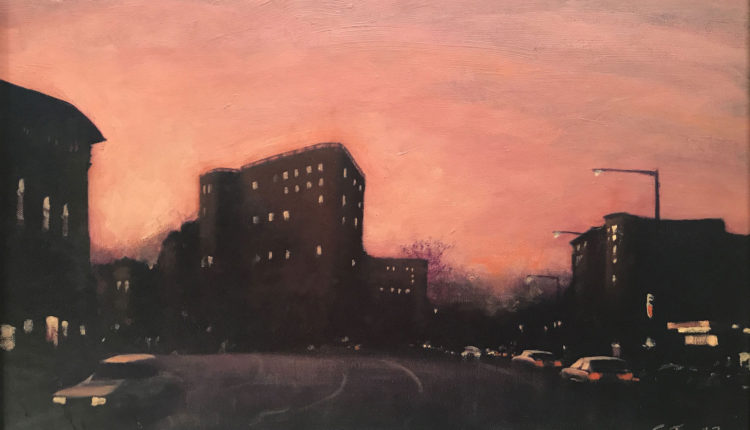
Ivey’s oil paintings appear preoccupied by light and often highlight a less obvious characteristic specific to DC’s urban landscape: the sweeping views of sky afforded by the city’s building-height restrictions. The paintings 19th Street (2000) and Rosslyn (2003) particularly focus on this aspect of the urban landscape: The former shows the hazy atmosphere above a cloudy day in DC, the latter illustrates the Northern Virginia skyline from a great distance, dwarfed by a morning sky striped with sun-kissed clouds. 

The seeming specificity of light in Ivey’s works stems from his practice of drafting on-site studies of scenes. These preliminary sketches are translated into final pieces through years of gradual, meditative work. Rather than portraying distinct moments in time, Ivey’s landscapes transform into portraits of feeling and memory encapsulated by place. “I intentionally start with a dark background, slowly introducing light into the painting; the scenes slowly reveal themselves in the emerging light,” Ivey says in a bio on his website. 

The often moody and melancholic nature of Ivey’s work also points to his artistic influences, including American realist Edward Hopper. In a manner similar to Hopper’s paintings, Ivey’s depictions of DC are of a strangely deserted city, devoid of pedestrians. Often, the only signs of life come from shadowy cars or blurred headlights on streets and bridges. Hopper’s influence is clear from Ivey’s online bio, which ends with the famous Hopper quote, “If you could say it in words there would be no reason to paint.”

Ivey will be speaking about his process and practice on Wednesday, Aug. 14, during an evening workshop at Artist’s Proof Gallery. Bridges and Alleys will remain open to the public through Aug. 24, providing time for visitors to stop by and consider how the artist’s depictions of DC coincide or diverge from their own personal experiences of the city.

“Bridges and Alleys: A Collection of Works by Washington DC Artist Scott Ivey” opened at Artist’s Proof Gallery and Art Consultancy on July 17 and will close on Aug. 24. Located at 1533 Wisconsin Ave. NW, Artist’s Proof is open Tuesday through Saturday from 10 a.m. to 6 p.m.

Redefining Soft: Making Space for Masculine of Center Community Healing

by Hannah Berk

This article was first published by TAGG Magazine and can be read on that site here.

What happens when a community comes together to reclaim a word that has been weaponized against them? The two-day event Redefining Soft aims to offer an example that emphasizes healing and affirmation. Participants will challenge one another’s concept of softness and explore their own relationships to the word as masculine of center women (MOC), trans masculine, and gender non-conforming individuals.

Robin Williams created Redefining Soft in response to a series of conversations she found herself having MOC friends, acquaintances, and former partners who expressed a need for emotional support that was rarely afforded to them. “They felt targeted a lot when it came to being vulnerable or emotional as they weren’t given the space to express that with their femme-identifying partners,” Williams explains.

Realizing this kind of space was lacking even in her own relationships, she wanted to create one that would be openly accessible and would kickstart conversations that participants could carry forward with one another and with the people in their lives. Femme-identifying herself, she partnered with additional individuals and organizations such as BlackGirlMasculine and bklyn boihood to shape and facilitate the event in close partnership with members of the community Redefining Soft serves.

Now in its second annual iteration, the event is making its Washington, D.C. debut August 17-18. Participants will be offered an array of avenues for reflection and self-expression. The agenda includes creative writing and journaling exercises, guided meditation, Reiki healing, a visual art workshop, and a panel discussion on sex and relationships. Throughout, participants will have the chance to process in pairs, small groups, and large gatherings, as well as individually. A meet and greet happy hour is also included on August 17 at XX+ Crostino.

Building community, says Williams, is a central purpose of Redefining Soft. “One thing that I love about the events so far is that people have left with new friendships and new bonds and things said out loud that they’ve never said before.

The event has grown in numbers and in sponsorship since its inaugural convening in New York last year, and Williams has big plans for the future. She is partnering with LGBTQ financial literacy specialist Kenneth Davis to establish a non-profit, a step that would allow greater expansion and sustainability.

Whatever its scale, the goals of Redefining Soft remain the same: reclaiming the power of softness, building community among MOC folks, and sparking conversations that will open up new depths of interpersonal understanding beyond the weekend.

“It’s my goal that, if nothing else, people walk away from the event asking themselves and the people in their relationships tougher questions, and actually holding space for the answers,” Williams explains. The reflective weekend is designed to support participants in discovering and defining for themselves the power that lies in vulnerability.

Anthony Bowen YMCA gallery enters its second year with vibrant mixed-media exhibit evoking the Caribbean islands

by Athena Naylor

This article was first published on The DC Line and can be read on their website here.

The Shaw neighborhood’s Anthony Bowen YMCA, the organization’s first African American branch in the world, has an extensive track record of social engagement spanning its 166-year history. With Gallery Y, an exhibition space that debuted last year, the Anthony Bowen YMCA aims to further its mission to foster diverse local voices within the creative community.

Gallery Y, which acts as an open community space accessible both through the lobby of the YMCA and the adjacent Sweetgreen restaurant, currently displays 28 pieces by artist-in-residence Tracy Monsanto. Her show A Journey in Mixed Media opened June 7 in conjunction with National Caribbean Heritage Month, a celebration dedicated to honoring the history and diversity of the Caribbean islands and the numerous cultural contributions of Caribbean Americans.

Monsanto — a Caribbean American artist who grew up in Trinidad and now lives and works in Tampa, Florida — specializes in vibrant mixed-media pieces. While A Journey in Mixed Media features some stylized figurative work, Monsanto’s creative process shines most in her non-figural abstract pieces, which illustrate the artist’s interest in intuitively exploring relationships among color, texture and material. 

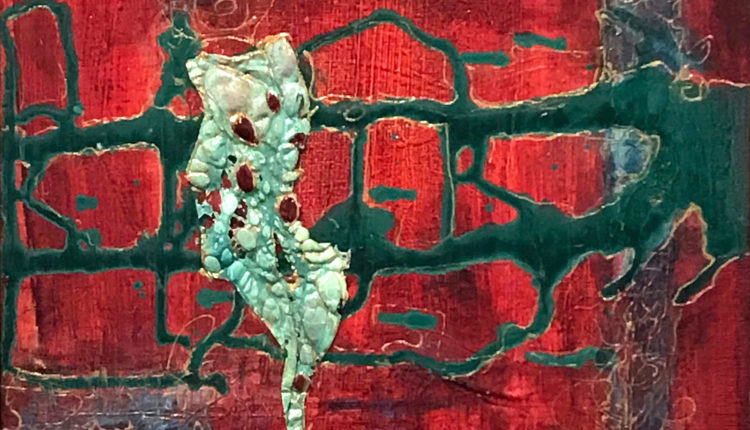
Monsanto’s larger works, like her 2019 “Time to Refresh,” highlight collaged materials of hand-painted papers and found objects, while smaller pieces like her 2016 composition “Night Dreams” feature mark-making suggestive of personal artistic motifs. Monsanto’s “Love Holds Us Together II,” completed in 2019, features the artist’s use of thick paint with glaze, a process that results in an almost enamel-like effect. In this piece, the technique results in an organic green form on the canvas that feels almost geographic, a fitting association since Monsanto derives much of her inspiration from nature.

The exhibit’s opening marked the one-year anniversary of Gallery Y. Diane Taitt, executive director of the Anthony Bowen YMCA, developed the gallery space and artist residency in order to foster community engagement and collaboration in the Shaw neighborhood and beyond. 

In its first year, Gallery Y launched three shows, starting with its inaugural artist-in-residence, Marielle Barrow. Barrow, a Caribbean-born visual artist, social entrepreneur and arts management consultant, earned her doctorate in cultural studies at George Mason University. Her show also coincided with Caribbean Heritage Month and examined cultural associations among place, space and belonging. The gallery hosted the launch of Barrow’s book Sacred Spaces: A Sense of Place, co-written with Antonius Roberts, and her residency included a Caribbean American Heritage event. Barrow continues to engage with her Caribbean heritage through the arts journal she founded, Caribbean Intransit.

Last September, Gallery Y presented its second exhibit — Seven Centuries, which featured Leslie Anne Hansley’s paintings inspired by African masks along with the photography of Maryland-based photojournalist Donovan Marks. More recently, the Rev. Sandra Butler-Truesdale, another Gallery Y artist-in-residence and the president and founder of DC Legendary Musicians, organized an “Art Meets Music” event in May that celebrated the DC jazz scene. 

With Tracy Monsanto’s A Journey in Mixed Media, Gallery Y is kicking off its second year of exhibitions. 

Through Gallery Y, the Anthony Bowen YMCA is building on a history of cultivating creativity in the community. Established by religious leader and educator Anthony Bowen in 1853, the organization found its first permanent home at 1816 12th St. NW in 1912, seven years after it was officially recognized as a branch of the YMCA of Washington. It was there that Langston Hughes wrote poetry when he was working as a busboy, Thurgood Marshall devised legal strategies, and legendary Georgetown University basketball coach John Thompson Jr. practiced his game. The YMCA branch was formally named after Bowen in 1972, and in 1988 it moved to its new location on W Street NW, which was renovated in 2013. 

Gallery Y looks toward a future of continued community engagement with new projects, including its first National Endowment for the Arts grant and a partnership with local curator Beth Ferraro of the creative consulting project The Art Island.

The YMCA’s Taitt expressed excitement for Gallery Y’s role as a “vibrant cultural community node.” She says the gallery is always on the lookout for new partnerships, funding and volunteers to sustain its mission. Details on the space’s programming and opportunities are available on its website

Located in the Anthony Bowen YMCA at 1325 W St. NW, Gallery Y is open daily from 9 a.m. to 6 p.m. A Journey in Mixed Media opened June 7 and will be on display through Aug. 2. All exhibited artworks are for sale.