Timely ‘The H Twins’ from Pinky Swear and Nu Sass echoes Nazi eugenics

By Mary Holiman

First published March 25, 2026 in DC Theater Arts, here.

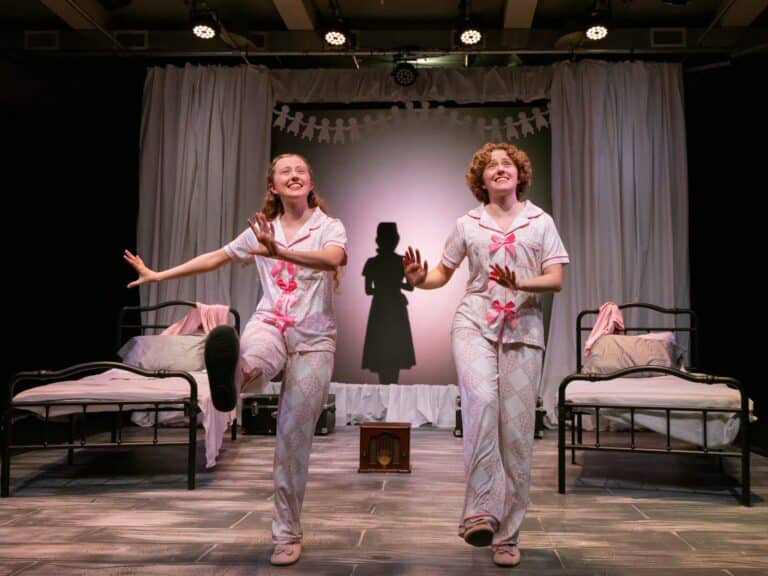
Picture it. The year is 1943 in Nazi Germany. It’s the middle of World War II, and a brutal Holocaust that deemed millions inferior. From Jewish to Romani and the disabled, over a million and a half people were displaced and sent to concentration camps, where most died. “Uncle M” (played by John Stange, a stand-in for Nazi doctor and “angel of death” Dr. Josef Mengele) is conducting experiments on twins, Hilda and Helga, in hopes of developing the perfect “specimens” for a superior white race. 

It’s an era that seems far away and long ago, and yet, in today’s growing tension between the haves and the have-nots, the rich and the poor, the able-bodied and the disabled, the heterosexual vs. the queer, many of the same ideologies and beliefs remain. 

This is what makes The H Twins, written by Hope Campbell Gundlah and directed by Karen Lange, so timely, thought-provoking, and profound. Even the production company, Pinky Swear Productions, feels intentional as it’s a women-focused company that works to uplift the female-identifying writers, actresses, and directors who help these shows come alive. While historical fiction, The H Twins is rooted in the history of these events and the reality that we shouldn’t and can’t forget. While the play is humorous and witty, don’t be fooled by the jazzy musical numbers (sound design by Lex Allenbaugh) and seemingly light-hearted commentary from the titular blonde-haired, blue-eyed identical twins, who begin to question their own upbringing after secretly watching popular American movies. The serious themes — eugenics, white supremacy, nationalism, and ableism — are almost painfully woven throughout the play, challenging the audience to sit with the discomfort. (The occasional misplaced usage of African American English [e.g., “let me cook] stands out in the script because after all, it is the 1940s in Nazi Germany — no one was saying that yet.)

The small, intimate setting makes the characters come alive, even several that the audience doesn’t physically see. The relatively simple set by scenic design consultants Simone Schneeberg and Tess Cameron Gundlah leaves no room for distraction from special effects or a busy production, with just two beds, one on each side, framing the floor to represent the “orphanage” the twins call home. With only their bodies illuminated like stick figures, projecting their shadows to the audience via intentional lighting courtesy of E-hui, the presence of Uncle M, Nurse A (Carolyn Kashner), and Nurse B (Nicole Ruthmarie) is felt in how Hilda and Helga interact with them, and their influence. 

Not only is Hope Campbell Gundlah the playwright behind The H Twins, but she also plays one of the main roles, Hilda, alongside her twin sister, Tess Cameron Gundlah, who plays Helga. Talk about a commitment to the bit. Clad in matching pajamas, their offstage sisterhood is transparent as they feed off each other’s energy, especially in moments when they break the fourth wall, suspending disbelief to engage the audience directly by asking questions and seeking commentary. 

Art is often a vehicle where creatives explore, interpret, and make meaning of reality, and The H Twins is no different. As the show progressed — and maybe it’s my training as a communication and media student — I found myself making connections between the play and real life: beauty standards, propaganda, and my own experiences as a racial and gender minority. I even paid attention to the reverence for vaudeville, which has many origins, including minstrel shows, which notoriously featured primarily white actors in blackface, portraying racial stereotypes of African Americans. Functioning as educational entertainment, The H Twins turns a horrific time in history into a digestible performance that leaves a lasting impression.

HERstory: Women Artists Make Their Mark With Pantyhose, Scrap Materials, and More

by Mary Holiman

First published March 24, 2026 in DC Trending substack here.

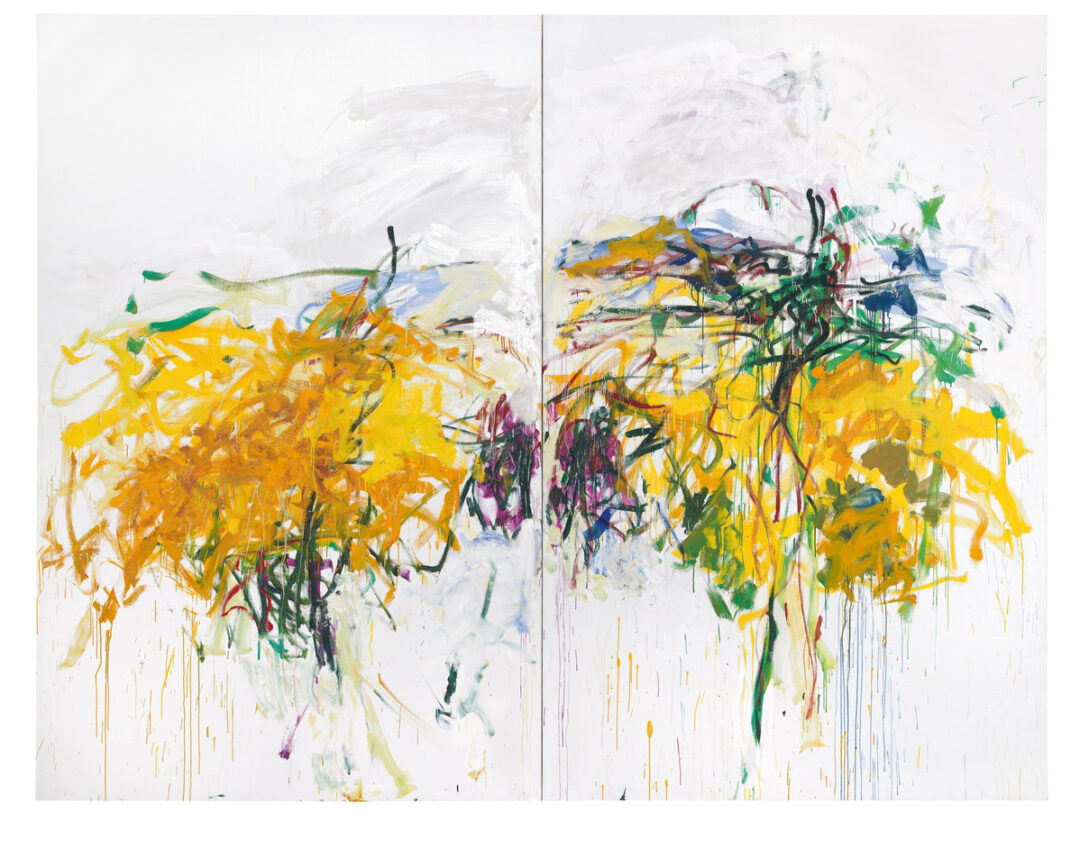
Making Their Mark: Works from the Shah Garg Collection at the National Museum of Women in the Arts (NMWA) is a kaleidoscope of textiles, paintings, sculptures, and mixed-media works that celebrate our humanity and imperfections. Drawn from the personal collection of Komal Shah and her husband, Gaurav Garg, co-founder and managing partner of Wing Venture Capital in Silicon Valley, the exhibition centers on abstract art and explores themes of representation, identity, and power through women’s eyes.

Abstract art emerged in the 20th century as a movement with various styles, relying on shapes, colors, forms, and gestural marks rather than depicting reality. Featured in the exhibit, artists use everyday materials such as women’s pantyhose and leftover paper from a hole puncher to push the limits of abstraction, all while reclaiming their autonomy, embracing their bodies, and defying negative beliefs about women aging. Contributors such as Kay WalkingStick, Joan Semmel, and Samia Halaby are in their eighties and nineties. Despite decades of obscurity and a lack of institutional recognition, the exhibit is a testament to women’s craft, creativity, and resilience, affirming that through it all, women continue to create with conviction and confidence, telling our own stories on a canvas.

“Many of the artists who moved me most were women of my generation who were actively reinventing abstraction. – Komal Shah”

This statement draws attention to what seems like a deliberate choice — bringing the exhibition to the nation’s capital at a moment when funding for diversity, equity, and inclusion initiatives, safe spaces, and the organizations that support them is being stripped away. The National Museum of Women in the Arts (NMWA) holds a singular distinction: it is the first and largest museum in the world solely dedicated to women, housing over 6000 pieces from more than 1,500 artists – among them Indigenous, African, and Palestinian voices.

In a 1989 study of the Metropolitan Museum of Art by the Guerrilla Girls, it was found that women produced fewer than 5% of the works featured in Modern Art galleries, while a staggering 85% of the nudes were female. Since then, although these figures have changed, the disparity remains.

So, in many ways, the NMWA stands as a direct rebuke to these institutions. It’s that kind of gender inequality seen in the art world, as well as in her own career in a male-dominated field, that first inspired tech-aficionado-turned-art-collector Komal Shah.

Komal Shah, born and raised in Ahmedabad, India, initially found her bearings in the technology industry after discovering computer programming at a young age. It’s a career she held for nearly 20 years after completing her master’s degree from Stanford University in computer science/engineering, and an MBA from the Haas School of Business at UC Berkeley, which led to jobs at Oracle, Netscape, and Yahoo! before she set her sights on philanthropy and the transformative power of art. Building her collection deliberately after stepping away from the world of computers and engineering, her passion has accumulated into nearly 400 and counting pieces of art from the likes of Elizabeth Murray, Trude Guermonprez, Rina Banerjee, Jennifer Bartlett, Laura Owens, Carol Bove, Carrie Moyer, Phyllida Barlow, Jaune Quick-to-See Smith, and Cecily Brown, establishing her as one of the most influential collectors in California. She also currently serves on the Board of Trustees of the San Francisco Museum of Modern Art and previously served on the Board of Trustees of the Asian Art Museum. She also serves on the acquisitions committees of the Hammer Museum, the Studio Museum in Harlem, and MoMA, underscoring her reach and influence well beyond the Bay Area. It is through this same spirit of advocacy that Shah co-founded the Making Their Mark Foundation, which highlights women artists through scholarship, support, and public engagement.

The Making Their Mark: Works from the Shah Garg Collection will be on display at the National Museum of Women in the Arts from February 27th to July 26th. Admission is $16 for adults, and $13 for D.C. residents, visitors 65+, students, educators, active-duty military, veterans, and those with a Native/Tribal affiliation. For visitors 21 and under, with disabilities, and/or SNAP/EBT holders, admission is free. The museum is also free to all guests and visitors on the first Sunday and second Wednesday of each month.

Review of The Neighborhood by Nianshen Song

By Eileen Miller

First published in Washington Independent Review of Books Feb 19, 2026 here

Few authors would make the choice to disparage the subject of their book in its opening pages, but in declaring the neighborhood of Xita, “a place of little significance” in the introduction of The Neighborhood: Space, State, and Daily Life in a Manchurian City, Nianshen Song does just that. This is not the declaration of a scholar frustrated by years of wasted fieldwork, however, but rather a point critical to the central theme of the work.

The neighborhood in question is Xita (written as 西塔 in Chinese and pronounced “she-ta”), located in Shenyang, capital of the northeast Chinese province of Liaoning. It is of such minor significance, Song notes in his epilogue, that even some of Shenyang’s residents have little impression of it.

Yet through close analysis of a diverse array of primary sources, he recounts the surprisingly numerous instances in which the broader history of East Asia came through this neighborhood and profoundly shaped its development. Though seemingly inconsequential, Xita — covering just half a square mile — doubles as an unlikely mirror of China’s own transformation over three-and-a-half centuries.

The Neighborhood begins with the convergence of religion, politics, and ethnicity. In 1644, to enhance their connection to the Mongol-majority Inner Asia territories, the Qing emperor strategically chose to patronize Tibetan Buddhism, the dominant religion of the Mongols. From this alliance, Xita got its name, a reference to the West Stupa, a mound-like tower built on the site of a Buddhist temple on the outskirts of what is today Shenyang. From here, Song delves into the priest-patron relationship between the Qing state and the Tibetan Buddhist lamas and how this unique relationship influenced the lamas’ daily lives.

With the fall of the Qing Dynasty and transition into the Republican Period, the alliance between the Qing and the Tibetan Buddhists unraveled, and the population of the latter in the region declined. Through these developments, Song strengthens his case for Xita’s mirroring of Chinese history writ large.

As this history moves forward, Song keeps his focus anchored on the West Stupa temple. The next period was profoundly shaped by Japanese imperialism, and Xita was no exception, experiencing the turmoil of imperial competition through the rival Russian, Japanese, and Chinese railroads that cut through it. After a train station was built near the West Stupa, the neighborhood underwent urban development and witnessed an influx of Japanese tourism. As the Japanese Empire sought to justify its role as the dominant power in Asia, it turned to the neighborhood’s Tibetan Buddhist roots — and symbols of that identity like the West Stupa — to tie Japan to the rest of Asia and promote the imperial narrative of a pan-Asian network led by Japan.

In later chapters, Song’s retelling of history remains rooted in Xita and the West Stupa temple, revealing just how many of the developments of contemporary Chinese history echoed in this small neighborhood. His recounting of Xita’s transformation into an ethnic Korean enclave reflected the wider history of the Korean diaspora in East Asia, as well as the ups and downs of China’s economic transition. He enriches his historiography with interviews from several ethnic Korean residents of Xita, showing how the past shaped not just the neighborhood but the daily lives of its inhabitants.

As the neighborhood took on various roles and identities — serving as a symbol for the ties between Tibetan Buddhism and the Qing government; site of imperialist competition; home for ethnic Koreans in an era of turbulence; thriving commercial center in a rust-belt town; a model for multiethnic harmony — so did East Asia and China undergo these changes.

Meticulously researched, The Neighborhood draws upon a rich array of sources to provide a roving picture of a place across 350 years. Its impressive bibliography includes, among other things, résumés of Buddhist lamas, 20th-century travel guides, travelogues by Japanese writers, postcard images of the West Stupa across time, and firsthand interviews with ethnic Korean residents. This combination of sources allows Song to keep his focus tethered to Xita while exploring the city through various lenses, from religion, imperialism, and tourism to commerce and migration.The Neighborhood is remarkable for its sustained focus on a single small place, just as Xita and the West Stupa for which it was named are remarkable for the layers of history that cross through them. Though Xita is unlikely to be mentioned in many contemporary travel guides, Song’s book successfully makes the case for dedicating academic attention to this “place of little significance,” and maybe taking a trip there, too. 

Review of The Ryukyu Islands: A New History by Gregory Smits

By Eileen Miller

This article was first published in Washington Independent Review of Books January 20, 2026, here

“New” is a word rarely affixed to the idea of “history.” But while the content of history remains unchanged, contemporary understanding of it can certainly shift. Gregory Smits’ The Ryukyu Islands: A New History from the Stone Age to the Present encapsulates this idea. Beginning its narrative nearly 35,000 years ago, the book traces the history of the Ryukyus, a chain of roughly 160 islands stretching from Japan to Taiwan, from the pre-modern era to the present.

This is familiar territory to Smits, who teaches courses on history and Asian Studies at Penn State and has written three other books on the subject. The Ryukyu Islands is his most comprehensive yet, drawing upon a wealth of primary and secondary sources, combating misconceptions, and introducing fresh ideas about the islands’ past.

The book is divided into four parts, covering the peoples and societies who lived on the islands during the pre-state era; the rise and development of the islands’ first centralized state, the Shuri Empire; the fall of the Shuri and its annexation by Meiji Japan; and the Ryukyus in the modern era. Each section begins with a brief introduction that includes a list of additional sources relevant to the topics covered.

Smits traces the dawn of Ryukyuan history from the late Paleolithic Era. In tackling one of many misconceptions he addresses throughout the book, he notes that it was not the people populating the islands during that era, but rather settlers moving south from Japan in the 11th and 12th centuries, who are the ancestors of contemporary Ryukyuans.

Trade is a major theme here, with the islands’ strategic locale — a pivotal factor in shaping their history — giving them access to China, Japan, and Korea. This location also made them the ideal outpost for wakō, pirates of Japanese, Korean, mixed Japanese and Korean, and (later) Chinese heritage.

The islands became more formally incorporated into regional dynamics in the 1370s as wakō began to participate in the tribute trade with Ming Dynasty China. This, Smits argues, was a tactic used by the Ming to domesticate the marauding wakō and maintain access to the international trade ostensibly forbidden by Ming law. Although this period saw the emergence of “trade kings” in the Ryukyus, they were not traditional kings. Instead, the title served as a license to participate in the tribute trade.

In the early 1500s, the Ryukyu Islands were unified for the first time under Shō Shin, the descendant of a prominent trade king. Smits describes this period of the islands’ history — the Shuri Empire — as comprising a centralized kingdom with a maritime empire. The Shuri Empire lost its independence in 1609, however, after a war with Tokugawa Japan’s Satsuma Domain resulted in the Ryukyus falling under Satsuma control.

One compelling concept that Smits contributes to contemporary understanding of Ryukyuan history is the idea of the Ryukyu Kingdom of the early 17th to late 19th century as a “theatrical state.” After absorption into Satsuma rule, the Shuri — whose direct administration was now restricted to the southern Ryukyus — continued the tribute trade with Ming China while feigning independence. Ryukyuan officials presented a fictive version of the Ryukyus, hiding their cultural ties to Japan, performing Chinese culture, and even changing surnames to appear less Japanese.

This dynamic benefited Tokugawa Japan, which lacked diplomatic ties to China, and the Satsuma, who reaped the commercial benefits of trade. It also benefited the Shuri: Only an “independent” Ryukyu Kingdom could trade with China, making the trade relationship the sole reason the kingdom could retain limited autonomy.

Smits’ thorough chronicle continues up to the year 2024. He covers the annexation of the Ryukyus by Meiji Japan and their subsequent transformation into Japan’s Okinawa Province. After that, he discusses World War II and the horrific toll the Battle of Okinawa wrought on civilians. He continues on to American military occupation, the reversion to Japanese control, and the ongoing presence of U.S. military bases on Okinawa.

Many other themes are deftly explained, as well, including the suffering of the common people and the role broader geopolitical shifts played in shaping the Ryukyus. Smits’ frequent references to these recurrent themes give the book a solid sense of organization, tying eras separated by centuries together into a cohesive narrative. Still, contemporary understanding of Ryukyuan history is far from complete, a point Smits makes multiple times. While “new” is an adjective that only lasts so long when describing history, this work can proudly claim it.

Meet RenRiot: A band reshaping DC’s rock landscape

By Rasheeda Campbell

This article was first published January 15, 2026 in The DC Line, here

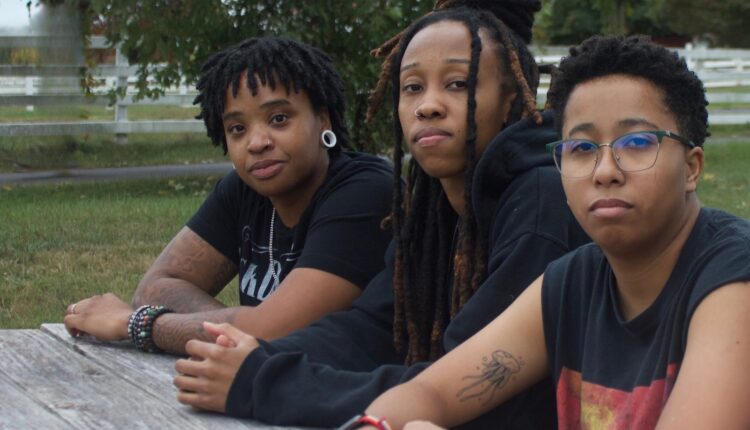
On a recent Friday night, passionate rebellious screams, high-energy drumming and raw guitar riffs echoed outside of O’Shaughnessy’s Pub in Alexandria. It was the bar’s Band Nite, themed “Punk in the Alley,” and inside the small, intimate space — where the stage practically merged with the floor — local DC rock band RenRiot delivered a high-octane performance. The Black queer trio consists of vocalist and guitarist Ren (she/her, 26), drummer Solana (they/them, 26), and bassist Dre (she/her, 32).

To get a good sense of the band’s energy: The crowd was already hyped just from their warmup. Once the actual set began, RenRiot moved seamlessly between dreamy, ethereal songs and angsty, hardcore tracks. They commanded the stage with ease, interacting with the crowd between songs, stepping into the audience mid-performance, openly voicing their thoughts on fascism and the Trump administration, and sparking a mosh pit. All of those signs point to a band that knows how to put on one hell of a show. 

Expect similar vibes on Jan. 16 when they’ll perform on a triple bill at Pie Shop on H Street NE. The same infectious spirit is also going into their ongoing work on a debut album after the release of their demo EP called Momentum last August. 

Whether on stage or in the studio, RenRiot embodies the truth that punk — and rock as a whole — is far from dead in DC, especially among Black bands. That said, the scene remains limited, with far fewer intersectional rock groups than one might hope.

Thankfully, RenRiot is contributing to a Black queer rock and alternative band revival by taking up space — and creating it — for musicians like them to shine in the area. To learn more about the band’s origins, its members and their take on DC’s rock landscape, we reached out for a Q&A via email. The following has been edited for clarity and readability.

Could you briefly explain the origin story of RenRiot and how the band formed?

RenRiot was originally my [Ren’s] solo project. In December 2024, I released To Feel Like I Exist under my name but it felt entirely too personal. I felt like I had something to say, but solo didn’t feel like the way. In March 2025, I had a birthday showcase where I performed a few of my originals that I had written over the past few months, accompanied by my friends Myia [who performs as Myia Aura] and Dez [who performs as Willowtree]. It was at this event that I was encouraged to continue sharing these songs, which drove me to reach out to friends that I used to jam with in 2023 and ultimately brought me, Solana, and Dre together to form the band RenRiot.

How long have the members known each other?

About two years.

What is the meaning behind the name “RenRiot,” and how did it come about?

RenRiot was originally Ren’s solo stage name. Ren’s last name is Wright so RenRiot was a play on her own name. Since then it’s just stuck.

What is the band’s overall mission or goal?

RenRiot’s overall goal is to be a reminder of the beauty of intersectionality. It is so rare to see folks that look like us in the rock scene. But the fact is that if three of us can come together to form this band in a place as small as DC, there are so many people just like us in the world who can do the same thing. Blackness, queerness, alternative culture, and womanhood are often segregated experiences and it’s important to us to remind people that all of these identities can live within individuals and so much beauty can come from it.

What drew you to creating music within the punk/grunge/alternative rock genres?

This genre is something that we are all passionate about and grew up on. This music is a big part of all of our lives, and it feels very natural for us to create it.

What does a typical rehearsal look like?

Our rehearsals are 50% focused, 50% fun. There is never a rehearsal where somebody isn’t bursting into laughter about something somebody else said or did. However, we spend a lot of time rehearsing our sets, refining our music, or developing new songs.

What’s your favorite song to perform live as a group?

Our newest song, April Mourning, is our favorite to perform live! It truly allows all of us the opportunity to let loose.

Do you have a favorite venue in DC that you’ve performed at so far?

Pie Shop is an elite venue! Incredible green room, spectacular pie, and great community. We’re excited to head back there in January with Mac N’ Toss and Petrichor.

What inspired RenRiot’s demo EP Momentum?

Momentum is an amalgamation of my [Ren’s] experiences in my mid-20s. It tells the story of my inner thoughts and outer world. Music has always been my audio journal, and the demo EP is just that.

What projects are you currently working on?

Right now we are really brainstorming how to arrange our debut album. The initial idea of Momentum was meant to be a consecutive story of Ren’s experiences, but so much musical evolution and life experiences have happened since Momentum was originally created that a lot of those songs no longer make sense for RenRiot the band. We are so lucky to have people who are willing to listen to our stories and engage with our music and we want to honor that and tell these stories the right way.

How would you describe the current rock scene in DC? Is there anything you feel is missing compared to other regions?

We are all from the mid-Atlantic region and are still new to the scene, so we recognize that we may have blind spots. But from our view, DC lacks a true DIY feel for the rock scene at times. The house venues are incredible, but in general the community spaces are not super accessible. For example, The Garage is truly an iconic spot as it’s a reminder of how things used to be but it is notably not close to DC nor accessible without a car. Additionally, it feels like there isn’t enough room for community-curated opportunities, which is more of a reflection of the city than the scene maybe. Growing up I remember hearing at school that everyone was going to meet in the woods or at a skatepark to hear some local bands. Now everything feels more curated and venue-specific with noise ordinances, social media, service fees on tickets, and old music spots shutting down.

What has your experience been like finding opportunities to perform in the DC area? Do you find it challenging or relatively easy, and why?

Finding opportunities to perform in the DC area has been relatively easy for us as we are often invited to support or play shows so the booking is not often on us. However, it is noteworthy that we intentionally engage with the local music scene so it feels a bit easier to end up on bills and book shows. We also come into bookings with a plan and the humility to be realistic about what we can bring to the table — which is good music and vibes.

Do you feel the DC rock scene is inclusive, or do you think there’s still progress to be

made?

The DC rock scene is not as inclusive as it wants to believe it is and that’s OK because we’re here to support. There feels like a significant lack of intersectionality between race, gender, sexual orientation, age, etc. DC in general feels segregated in a lot of ways, though, so it is not surprising that this would bleed into the DC rock scene. Even being a queer band, we have felt some distance from other queer folks because we’re Black. To be clear, we’re not describing any sort of intentional isolation because some of the onus also falls on us; it’s more so the phenomenon of walking into a space and no one (besides other Black queer folks) makes an effort to speak with us — in the same way that a server subconsciously hands the man at the table the check.

Do you think there is a substantial amount of diversity among local DC bands?

We are often the only Black people on the bill.

Who or what are some of the band’s biggest musical influences?

Paramore, Flyleaf, Balance and Composure, Rage Against the Machine, and Chevelle.

What do you hope to see evolve within the DC rock scene in the future?

We hope to see more intersectionality. We believe this can happen through intentional action, which involves us becoming more visible and continuing to show up and uplift the scene. Also, DC has a habit of putting out its own genre of music across the decades, and it would be really exciting to see a new DC sound break out!

Are there any upcoming performances readers should mark their calendars for next year?

We’re super excited for our upcoming show at Quarry House Tavern on Feb. 7! This will be a release show, and we can’t wait to share the space with our community. Check our Instagram @renriot.wav, TikTok @renriotband, or BandsInTown @RenRiot for details.

Keegan Theater’s Irish Carol is Good Craic

by Rasheeda Campbell

This article was first published December 26, 2025 in the DC Line, here

With the holiday season in full swing, there’s truly no better way to hold onto the Christmas spirit while also supporting local theater in DC than by attending a performance of An Irish Carol at The Keegan Theatre. This beloved production has become a seasonal tradition for the company, marking its 15th annual staging this year. That alone speaks volumes about its lasting impact and popularity among DC theatergoers. Audiences return year after year not just for the familiar story, but also for the warmth, humor and heart that this unique adaptation consistently delivers.

An Irish Carol is a creative and refreshing twist on Charles Dickens’ classic 1843 story. Written by Matthew J. Keenan and first produced in 2011, the play reimagines the well-known story in a contemporary Irish setting while maintaining the emotional core that has made A Christmas Carol timeless. The story takes place on Christmas Eve in a Dublin pub. It’s owned by David, a wealthy, stubborn and emotionally guarded man who serves as the play’s Ebenezer Scrooge. Rather than relying on the familiar structure of ghostly visits, Keenan’s version eliminates the visitation of literal ghosts and instead grounds the story in realism, memory and human connection — making it feel especially relevant to modern audiences.

David is forced to confront his past, present and future through conversations, confrontations and moments of reflection sparked by the people around him — his employees, friends and family. Over the course of the night, the pub becomes a space not just for drinking and banter, but also for reckoning, vulnerability and emotional honesty. This choice makes the story feel more intimate and relatable, as David’s journey mirrors the internal battles many people face: regret over lost love, fear of loneliness, and the struggle between self-protection and openness.

At its core, An Irish Carol explores many of the same themes as Dickens’ original story — love, greed, redemption and the cost of emotional isolation — but it also expands on them in meaningful ways. The play thoughtfully incorporates discussions of immigration, disability awareness and economic hardship, grounding the story in real-world issues that resonate deeply today. These elements never feel forced or preachy. Instead, they are woven naturally into the characters’ lives and experiences. It adds emotional weight to the production and invites audience members to see themselves reflected on stage, making the story feel not just seasonal but necessary.

While the script itself is strong, it is the cast that truly brings this production to life. Directed by Mark A. Rhea, the entire ensemble delivers a polished and engaging performance, offering moments of genuine laughter alongside scenes of emotional intensity. Their use of Irish and Polish accents, combined with culturally specific mannerisms, is impressive and immersive, making it easy to forget you’re sitting in a small theater in DC rather than a pub in Dublin. The chemistry among the cast members is evident, and their interactions feel natural, which enhances the authenticity of the story.

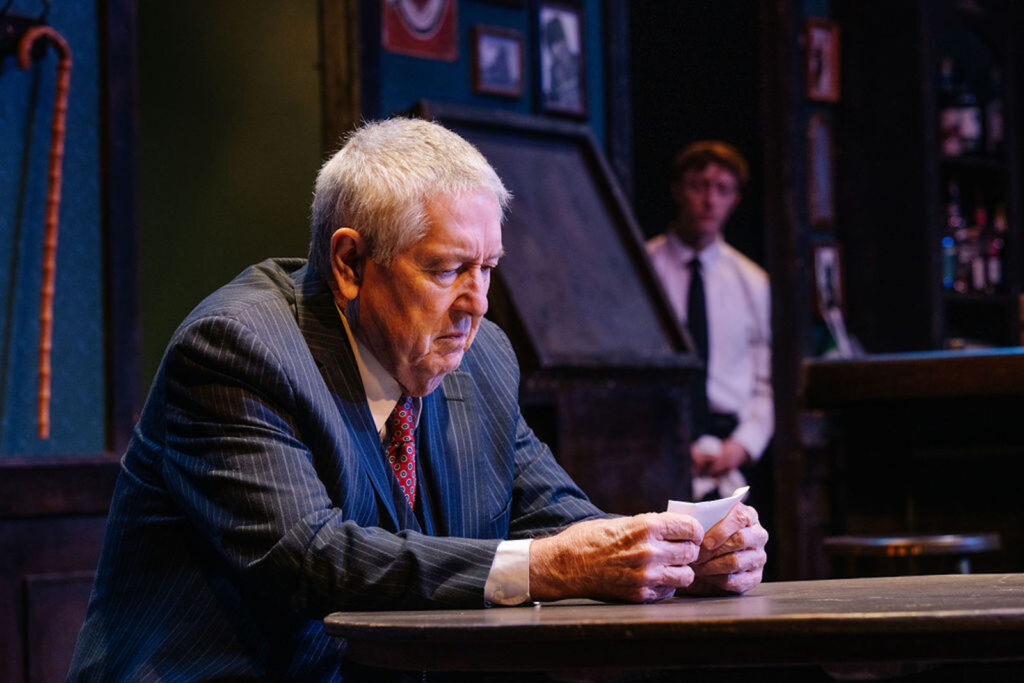
Several performances stand out in particular. From the moment the play begins, David, portrayed by Kevin Adams, commands the stage. He storms in with an undeniable presence, immediately establishing his character as gruff, intimidating and emotionally closed off. Aspects of Adams’ physical acting such as his posture, sharp movements and expressive reactions allow the audience to understand David before he even speaks. As the story unfolds, Adams skillfully reveals the vulnerability beneath David’s harsh exterior, especially as memories of a past love resurface. Watching his character slowly unravel and reconnect with his humanity is one of the most satisfying aspects of the production.

Timothy H. Lynch delivers a standout performance as Frank, a pub regular who serves as both comic relief and emotional grounding force. Frank is loud, inappropriate and often hilariously drunk, delivering unexpected one-liners that consistently earn laughs from the audience. Yet beneath the raunchy humor is a deep sense of loyalty and genuine care for David. Lynch strikes a perfect balance between absurdity and sincerity, making Frank feel like the kind of person who might annoy you endlessly but would show up without hesitation when you need him most. He can best be described as the “raunchy grandpa who cares,” and he quickly becomes one of the most endearing characters in the show.

An unexpected focal point is Bartek, the hardworking and compassionate bartender from Poland. Bartek serves as the play’s counterpart to Bob Cratchit, and he’s portrayed with warmth, humility and quiet strength by Drew Sharpe and understudy Ben Ribler. This key role highlights the struggles faced by immigrants and working-class individuals, while also emphasizing resilience and kindness. He’s a character the audience can’t help but root for, and his interactions with David are some of the most emotionally impactful moments in the play.

Beyond the acting, the production’s technical elements deserve significant praise. Although The Keegan Theatre is an intimate space, the set design feels anything but small. The detailed re-creation of an Irish pub is visually rich and thoughtfully designed, complete with wooden textures, bar fixtures, and cozy lighting that instantly sets the mood. The set not only establishes the setting but also enhances the storytelling, reinforcing the idea that this pub is a second home for many of the characters. Combined with effective lighting and sound design, the atmosphere feels warm, lively and authentic.

An Irish Carol is a heartfelt, hilarious and deeply human production that offers a fresh take on a beloved holiday classic. It manages to honor Dickens’ original message while adapting it for a modern audience, proving that stories of redemption and connection never lose their relevance. Whether you’re a longtime fan of A Christmas Carol or simply looking for a meaningful way to celebrate the season, this production is well worth your time.

The Keegan Theatre’s An Irish Carol runs through Dec. 31 at The Keegan Theatre, 1742 Church St. NW, with three year-end performances added in a recent extension. The show runs approximately 90 minutes with no intermission. Tickets are available at keegantheatre.com.

The Superfair DC: Where Art Isn’t Just For the Elite & People Feel Seen

by Mary Holiman

This article was first published in DC Trending substack December 14, 2025, here.

For many, when we think of art fairs and galleries, the likes of Miami’s Art Basel or the Armory Show in New York come to mind.

You see, although art has long been a critical part of various cultures- from cave drawings to paintings and sculptures, there’s a common criticism that art, the making, creating, and even the buying, is for the elite, the upper echelon of society. And in the era of AI, it’s more imperative now than ever that we remember art’s organic origins, and color outside the lines, all over again.

In comes The Superfair, formerly known as the Superfine Art Fair, a leading platform for independent, contemporary artists and creatives since 2018, with its start right here at DC’s own Union Market. The Superfair held this year at Gallery Place (November 7th – 9th) isn’t just any art festival, but a movement, one that redefines how art is experienced by empowering independent artists, elevating the collector’s experience, and encouraging authentic relationships between the artist and the ones who support them. If you’re interested, the next Superfair will be taking a trip to the Lone Star state in Austin, Texas from February 20-22nd, 2026, with other stops in the San Francisco Bay and the city that never sleeps – New York City!

Admittedly, when I was first approached with the opportunity to review the event, I was unsure of what to expect. I’d never attended something of this size and caliber before, and truthfully, I never really gave much thought to the idea of collecting art, intimidated by the prestige and the cost.

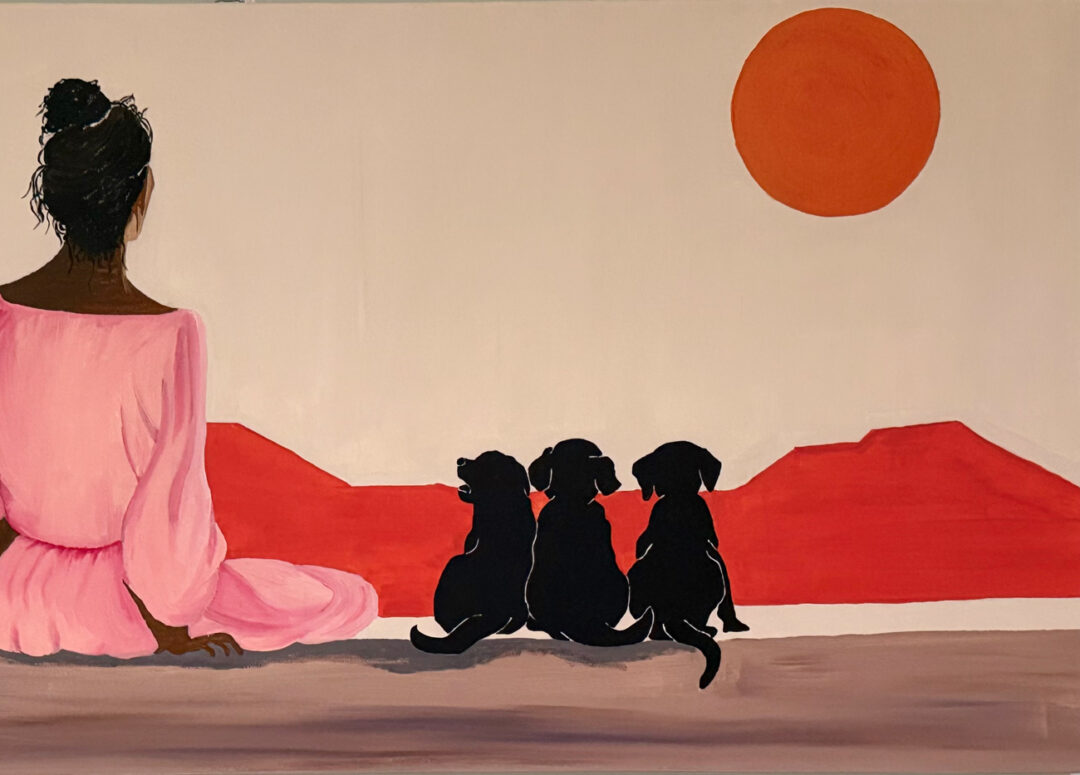
But, as soon as I stepped in, I was transported to another world – one full of bold colors, traditional African fabric, and pop art, just to name a few. Each piece of artwork tells a story, some a reflection of the past, others in honor and remembrance, and one that combined a teacher’s love for science and art.

Perhaps, it’s this ability to take everyday objects and commonplace things and turn them into elaborate works of art, the embodiment of a picture book from start to finish, that made The Superfair this past weekend so unique, warm, inviting, and in the words of curator and fair manager Sharone Halevy, “immersive.”

But, more than anything, it also felt like an ode to local flavor and a tribute to identity. Because isn’t that what’s makes the capitol city so great, with a diverse list of artists, some near, and others far, some with a professional background, or family lineage?

Yet, despite these differences and traits that made us stand out from each other, and despite the variety in mediums, styles, and techniques, we all ended up at the same place, bonding over shared experiences, lifestyles, or, in my case, even the same name.And maybe, just maybe, that’s the beauty of The Superfair, aside from the awe-inspiring canvases and creativity displayed, bringing people together. Even if it’s only for a little while, and reminding us that in times of crisis, disjointed pieces can still make a pretty picture.