Folger Theatre solves one of Shakespeare’s ‘problem plays’ — at least in part

By D. R. Lewis

This article was originally published in The DC Line, here.

For the unacclimated, an advertisement for William Shakespeare’s The Winter’s Tale might conjure images of holiday stories that are often seen on stage this time of year. But DC audiences will find a twisting, tangled yarn spun of jealous royals, blood-thirsty bears and folksy shepherds rather than holly sprigs and spirits of Christmases past, present and future. Playing through Dec. 17 in an admirable production, Folger Theatre reasserts The Winter’s Tale as one of Shakespeare’s “problem plays” and begs audience members to open their imaginations to the playwright’s most extraordinary dramatic whims.

The Winter’s Tale begins in the court of Sicilian king Leontes (Hadi Tabbal), who misinterprets a moment of friendship between his pregnant wife Hermione (Antoinette Crowe-Legacy) and visiting Bohemian king Polixenes (Drew Kopas). Growing jealous, Leontes instructs an aide to kill Polixenes, imprisons Hermione, and orders the abandonment of newborn child Perdita. While Polixenes manages to escape, Hermione ambiguously withers away and the baby is left to die in Bohemia. Only after the Oracle of Delphos exonerates Hermione does Leontes see the foolishness in his jealousy, prompting him to commit to atoning for his reckless behavior. Years later, Perdita (Kayleandra White) — having been rescued and raised by a shepherd — falls in love with Bohemian prince Florizel (Jonathan Del Palmer). Their love, along with the epiphany that Perdita is the Sicilian princess, not only brings the kingdoms together in friendship once again, but also facilitates Hermione’s resurrection (or, perhaps, the revelation that she’s been alive all along).

What begins as a deeply dramatic descent of a jealous king, complete with death and banishment, eventually gives way to a joyous romp of mistaken identity and inevitable romance. Such tonal transition has marked The Winter’s Tale with the scholarly “problem play” label, and presents a significant challenge for producing companies to hold the audience’s attention through the shifting vibe. Sure, for some, Shakespeare’s “genius” status leaves him immune to criticism. But The Winter’s Play is too full of dissatisfying dramatic wrinkles to make for anything other than an inconsistent night in the theater. When compared to the rest of the canon, The Winter’s Tale reveals itself as simply a lesser play. Please don’t shake your fist (spear?) at me.

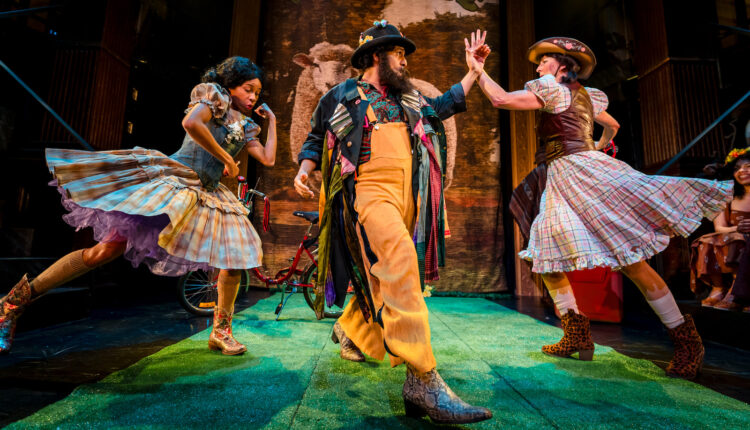
Regardless, director Tamilla Woodard does her best to rise to the challenge — and by and large delivers. Rather than trying to force a smooth gradient between the play’s initial drama and the subsequent comedy, she leans on her ensemble of actors and creative team to draw stark stylistic differences between the two halves of her production. Raul Abrego Jr.’s bilevel set, which fits snugly onto the Folger’s small stage, alternates effectively between the chic, angular modernism in the play’s Sicilian scenes and the country cowboy flair of more rural Bohemia. Sarah Cubbage’s costumes correspond accordingly, with charcoal suits and businesswear for the royal Sicilians and cowboy hats and chaps for their rural Bohemian counterparts. Max Doolittle’s lighting design appropriately sets the mood, especially in the darkness of the forest where Perdita was to be abandoned and the sunny sheep-shearing festival that is the centerpiece of the production’s second half. These strong style choices effectively signal to the audience that the dramatic landscape has changed, helping to ease the emotional whiplash.

But not all of the choices are as successful. The Winter’s Tale has the distinction of owning the prototypical bloodthirsty bear, who pursues and mauls Antigonus (Stephen Patrick Martin) as he deposits the helpless Perdita in the woods. Woodard’s production opts to evoke the bear solely through lighting effects and projection, rather than with an actor in a bear costume. It came as something of a surprise that, with the bold stylization of both the serious first act and whimsical second act, the most droll element of the play was given but three flashes of light in this production. Given the ensemble’s liberal use of the middle aisle and other areas of the house to immerse the audience, the omission of the bear’s physical representation left this reviewer wondering why it went understated.

But this downplayed sequence is soon forgotten in the wake of strong performances across the cast. As Hermione, Crowe-Legacy is a stately and sincere queen, making Leontes’ rejection of her all the more baffling and heartbreaking. Kate Eastwood Norris is both entertaining as a dancing Bohemian and deeply moving as a devoted Paulina (her delivery of one of the play’s most memorable lines, “it is a heretic that makes the fire, not she which burns in it,” inspires chills). And as the mischievous Autolycus, Reza Salazar enchants the audience with call-and-response and expert delivery of the character’s extended missives.

Despite its quirks, The Winter’s Tale offers a warm welcome for audiences returning to the Folger Shakespeare Library, which has undergone significant renovations since March 2020. The building’s ground floor entrance and lobby area are done over in concrete that evokes cool modernism and the iconic Brutalism visible in parts of downtown Washington. But upon ascending to the upper level and entering into the wood and stone Tudor theater, patrons may feel instantly transported across centuries and locales from Washington to Elizabethan London — or perhaps, for the time being at least, from Sicily to Bohemia. In this new building that embraces the contrasting styles of the historical and the modern, The Winter’s Tale, with its own stark contrasts, may be just the right choice for the Folger’s fresh start.
Grief tests Black women’s friendship in ‘Long Time Since Yesterday’ at Howard

by Whit Davis

This article was originally published in DC Theater Arts, here.

What happens when life doesn’t turn out as planned? What happens when the promise of always being friends is fractured? Why does it take grief to make us realize what we have? Long Time Since Yesterday by P.J. Gibson, directed by theater student Naynna Hollins, explores these questions through the friendship between six Black women brought back together by a tragic death. The Howard Players revitalize a lesser-known but essential play for their Next Up! Play Festival featuring student-led productions that spotlight the developing artists of the Department of Theatre at Howard University in the Al Freeman Jr. Environmental Theatre Space.

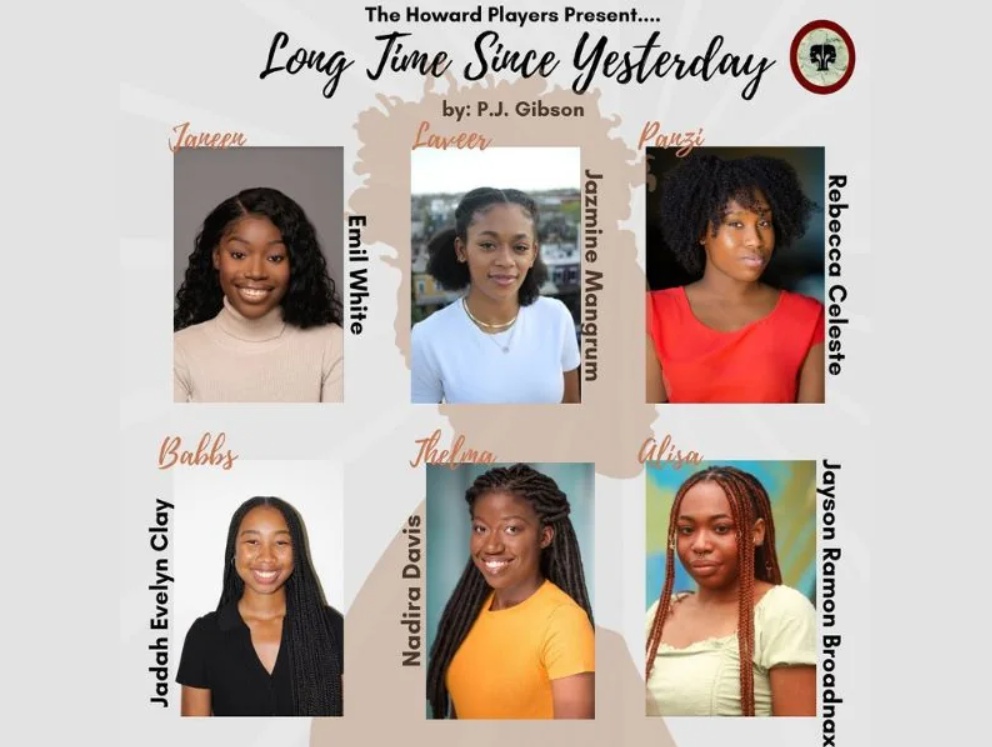
The death of Jeneen (Emil White) reunites college classmates Laveer (senior Jazmine Manfrum), Babbs (Jadah Evelyn Clay), Thelma (Nadira Davis), Panzi (Rebecca Celeste), and Alisa (senior Jayson Roman Broadnax). We find the group gathered together in the home Jeneen shared with her husband. As they reminisce and reflect on who she was or who they thought she was, her suicide unearths deeply held hurts as Babbs admits that she has felt at her lowest despite possessing beauty that people associate with happiness and desirability. She drinks and pacifies herself with jokes and humor, which acts as the thread line through a heartwrenching story. Like Jeneen, Babbs is lonely. Thelma feels ugly despite her achievements. Alisa believes her braggadocious verbosity about her husband and her success cover up her lost sense of self. Panzi is too busy projecting her anger at Laveer to hold space for her feelings about being misunderstood. And Laveer boasts of being a free-spirited artist who is without rooted connections.

Through flashbacks, we learn that the friendship was the strongest between Laveer and Jeneen, but after graduation, a conflict between Laveer and Panzi caused a rift between Jeneen and Laveer. A friendship they both promised would last forever is torn apart. Years later the death of Jeneen’s father brings them back together, back to their promise. The interwoven flashbacks reveal secrets between Jeneen and Panzi, and Jeneen and her husband. The transitions between the flashbacks and the present have perfect timing and are clearly defined so that the story never loses its rhythm, and the audience easily follows the timeline. When the lights dim on the cast, we know we enter a flashback as the spotlight hovers above Jeneen to give her a ghost-like presence.

Who was Jeneen? This question becomes a focal point as each friend except Panzi believes her to be innocent, shy, and childlike. They made little room for her to be big, imperfect, sad, and a 30-something-year-old woman with needs. In an intimate conversation with Laveer, Jeneen reveals the haunting of judgmental voices in her head. She may have lived a life she never truly wanted, while her friends are left to grapple with this truth.

The tension as thick as fog on a crisp fall morning fills the home between Laveer and Panzi until it drowns everyone, and the only way to make it to the surface is to swallow the bitterness of truth. This climatic moment reveals secrets that were ultimately too heavy for Jeneen to live with. These secrets are too heavy for even the living to deal with.

The cast does a fantastic job wrestling with themes of grief, love, and identity in an intimately set black box theater with minimal set design and carefully placed props like a couch and a bookshelf. White’s performance seems to pull from a personal place deep within as she honors Jeneen’s pain. She captures the rollercoaster of emotions felt by Jeneen, moving from joy to despair. Her tears and facial expressions can easily be another character in the story. Celeste’s presence is powerful. With each line she recites, they land eloquently and with ease. She becomes Panzi. Clay has remarkable comedic timing as Babbs. A play this heavy needs humor, and she delivers. The entire cast surrenders to the story.

The Howard Players productions are invaluable because they provide an opportunity for students to explore their talents and gifts. They share them with a community that believes in pursuing art as serious, rigorous, and meaningful work. To be nurtured in a space that values Black stories, Black storytellers, and Black spaces prepares these artists for a career where they may be the only ones. But they will not shrink; they will bloom.

Transgender Massage Therapists Share Tips On How to Find LGBTQ+ Friendly Services

By Abby Stuckrath

This article was originally published in Tagg Magazine, here.

LGBTQ+ massage therapists are creating new spaces for queer and transgender patients to feel not just accepted but seen. As practitioners work to craft gender-affirming spaces, there are multiple tactics that LBGTQ+ clients can use to ensure adequate care. 

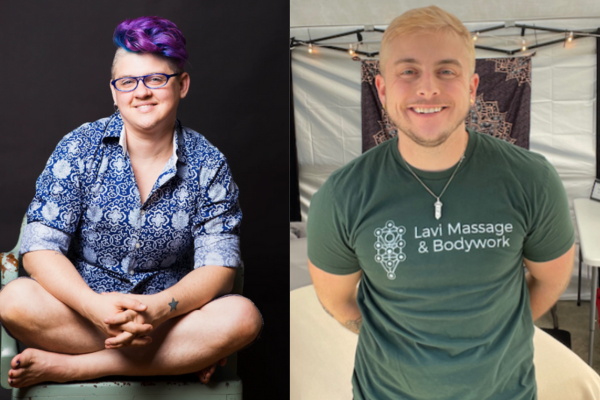
Frances Reed, a massage therapist and educator in Washington, D.C. is teaching a new generation of LGBTQ+ inclusive practitioners, as well as leading medical research behind chest binding health. 

Washington D.C. is the only state or district that requires LGBTQ+ competency training for massage therapy licensure, says Reed. Anyone not living in the D.C., is left with the burden of educating therapists on transgender and queer care. 

Reed teaches that long-term binder compression can cause upper chest and back pain, as well as other serious health issues such as shortness of breath and loss of sensation in arms or fingers. Massaging the chest area can help mitigate chronic pain and significantly increase quality of life for binding individuals. 

To make sure that transmasc and genderqueer folks are receiving adequate care, Reed suggests bringing their binders to the session. 

“Some massage therapists don’t know what a binder really is,” says Reed. “So they imagine something that is not usually accurate, and that will affect how they might go about treating pain that you’re having from binding.” 

Thomas Lavi, a transgender massage therapist based in Oakland, California, says those recovering from postoperative top surgery, must discuss their physical limitations or recovery methods with their therapists. 

“Often your range of motion is limited to the parallel with your shoulder, you wouldn’t wanna stretch someone up above their head,” says Lavi. 

Again, Lavi stresses that many practitioners won’t be familiar with these limitations, so patients must be prepared to educate them on the main protocols of post-operative care. 

For those unable to access an LGBTQ+ specialist, Lavi says there are three things to do and look for when looking for an inclusive therapist: check their vibe, check their license, and make sure they respect draping and clothing techniques. 

“You have the autonomy to wear anything that you want and any trained massage therapist should be able to work with articles of clothing,” says Lavi. “That’s totally okay. It shouldn’t affect the impact of the massage and if they tell you that it does, they’re lying and you shouldn’t work with them.”

Reed says that gender affirming therapy offices don’t just accept transgender existence but make transgender clients feel seen and heard.

“When spaces understand what it is to be trans in the world socially, what it is to be in a transitioning body, are comfortable talking about bodies in language that de-emphasizes gender; you’ve actually created an actively affirming space, not just a space without discrimination or harassment,” shares Reed. 

For those concerned about cost, Reed says that transgender and queer therapists often offer a sliding scale or scholarship system. 

“It’s hard to be really focused on queer and trans community and not see the economic disparity that exists and so most of us tend to respond to that with some kind of financial model that allows for support of people who can’t afford the full rate,” says Reed. 

Since many massage therapists lack in-depth knowledge of transgender and queer care, Lavi and Reed suggest finding an LGBTQ+ massage specialist. 

“We’re having to teach our doctors what it is to be trans, what it means and what we need and that’s why it’s so special to have a trans therapist who can take that load from you,” says Lavi.

Mosaic Theater Company’s ‘Confederates’ spans 150 years of time and experience

By D.R. Lewis  

This article was originally published in The DC Line, here.

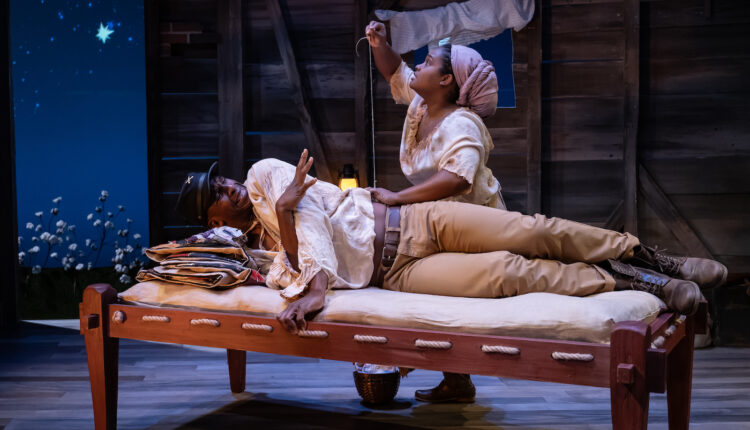
From the moment one walks into the Atlas Performing Arts Center for Dominique Morisseau’s Confederates, it is clear that the audience is about to be transported. In this new production by Mosaic Theater Company, sparse patches of artificial grass lead from the theater’s entrance, to the bleacher-style seating that surrounds the stage, and into scenic designer Nadir Bey’s massive set. A wooden platform consisting of a modern-day college professor’s office and the rustic accouterments of a 19th-century plantation cabin dominates the stage, surrounded by a field of puffy cotton shrubs. The set evokes not only a strong sense of two places but also a contrast between a distinct past and present — a clear signal that the narrative will traverse time during the play’s 90 minutes.

The sharp imagery doesn’t end with the abundant bulbs of pillowy cotton. College professor Sandra (Nikkole Salter) soon steps onstage to welcome the audience and detail her credentials as a Black academic. She says she has long been unafraid to confront depictions of slavery and summons an early photograph of an enslaved woman nursing a white child. The striking image is amplified when Sandra reveals that an unidentified individual has taped a printed copy of it to her office door, with Sandra’s face photoshopped over that of the woman. As she sets out to determine who did this, she simultaneously faces the scorn of her students as well as colleagues on various counts: Malik (Joel Ashur), a Black male student who insists she favors women; Candice (Caro Dubberly), a white student who works for Sandra and struggles to hide her passive racism behind her well-meaning progressivism; and Jade (Tamieka Chavis), an untenured professor who feels Sandra hasn’t done enough to help her Black colleagues obtain the same level of professional success.

Juxtaposed with Sandra’s scenes are those set on a Southern plantation during the Civil War. They center on Sara (Deidre Staples), an enslaved woman far more clever than many who live on the same plantation, including her enslaver’s daughter, Missy Sue (Dubberly); Sara’s brother Abner (Ashur); and potential comrade Luanne (Chavis). Unable to conceive a child, Sara makes a home for herself in a cabin on the plantation, watching after her brother and others. When Missy Sue returns from the North, where her philandering husband has abandoned her, she adopts newfound abolitionist values and a lust for her old “friend.” Sara decides to capitalize on the moment and seize her freedom by whatever means necessary.

In chronicling the experiences of these two women, Morisseau digs into the compounding pressures and contradictory expectations that some segments of society place upon Black women, who must also navigate ever-shifting racial and gender dynamics. For instance, Sandra is accused of coddling her white students yet also giving more of her time to Malik than others. And when Sandra faces quiet social backlash for wearing a Black Lives Matter T-shirt to class, Jade accuses her of not being supportive enough of Black students and colleagues. Despite being exceptionally talented, educated, intelligent and successful, Sandra is met at all turns by others’ broken expectations of her — though none recognize her humanity enough to ask about her personal struggles, which include a failed marriage and difficulty conceiving a child. 

Likewise, Sara spends most of her life performing manual labor despite her intellect and wit. As a child she was beaten for learning more quickly than Missy Sue how to read, and for asking to sleep in the plantation house. And although she is braver and more resourceful than her brother Abner, she is left behind when he joins the military. 

Both Sara and Sandra are objectified for their race by the white women who purport to admire them, challenged professionally by women who have a similar social standing, and disrespected by the men who rely on them. In parallel scenes, Morisseau seems to assert that the social working dynamics on college campuses, or the professional expectations put on Black women today, aren’t so different from those of the plantations. Bey’s set underscores this notion, building Sara’s cabin and Sandra’s office on top of a single cotton field. Morisseau adds wide strokes of satire amid dialogue that shifts from cutting to sincere — not to lighten the moment, but instead to illustrate the absurdities these women face. That Morisseau is able to effectively critique racial and gender politics in such a short amount of time is testament to her skill as a playwright.

Even so, the production suffers from some dramatic imbalances. Morisseau successfully injects a certain amount of shock value into the play through her writing, particularly in Sara’s scenes, such as when she sews shut her brother’s accidental self-inflicted knife wound on his backside or capitalizes on Missy Sue’s advances to flip the dynamic and assert her own power. Nonetheless, over-the-top performance choices at times tilt the production a bit too far, causing emotional whiplash and confusion when reverting back to the realism of Sandra’s scenes. Though many of those choices inspire audience laughter, they ultimately pull focus from Sara and Sandra.

Director Stori Ayers makes deft use of Bey’s set, at first firmly rooting her leading women in their respective sides of the platform before allowing each of them to step into the other’s space. Ultimately, the interwovenness of their experiences, notwithstanding the distance between their respective eras and circumstances, is fully realized when Ayers satisfyingly brings Sara and Sandra together into one space — and as close as they can come to the audience — during the most moving moments of Morisseau’s play. Ayers’ production is also supported by Deja Collins’ stirring projections; John D. Alexander’s lighting design, which uses blues and purples to create an appropriately moody scene; and Moyenda Kulemeka’s distinctive period costumes. Meanwhile, sound designer David Lamont Wilson’s smooth insertion of musical clips, ranging from the Confederate anthem “Dixie” to Beyoncé’s “Freedom,” adds emotional weight to the play’s transitions.

Whereas Salter’s slow-burning Sandra builds to her breaking point, Staples’ Sara is spirited from the outset. Staples, in particular, has a remarkable command of the stage. Her mature, moving portrayal of Sara echoes her excellent work as the younger, socially conscious Carmen in James Ijames’ Good Bones at Studio Theatre earlier this year. And Chavis, despite being a last-minute addition to the cast and using a script for the performance this reviewer saw, is excellent in both of her roles, especially Luanne. 

Confederates is strong evidence of why Morisseau is regarded as one of the leading dramatists of our time. One could rattle off the well-deserved honors that have been bestowed upon her — they include a 2018 MacArthur Fellowship — but the proof is in the writing. In addition to exercising a keen sense of storytelling economy, Morisseau is able to effectively balance hefty arguments with precise character specificity. Bolstered by a creative team that steps up to meet the challenge, Mosaic’s production of Confederates is a worthwhile journey for Washington theatergoers. 

In ‘Black Nativity’ at Howard University, new and upcoming talent shines

By Whit Davis

This article was originally published in DC Theater Arts, here.

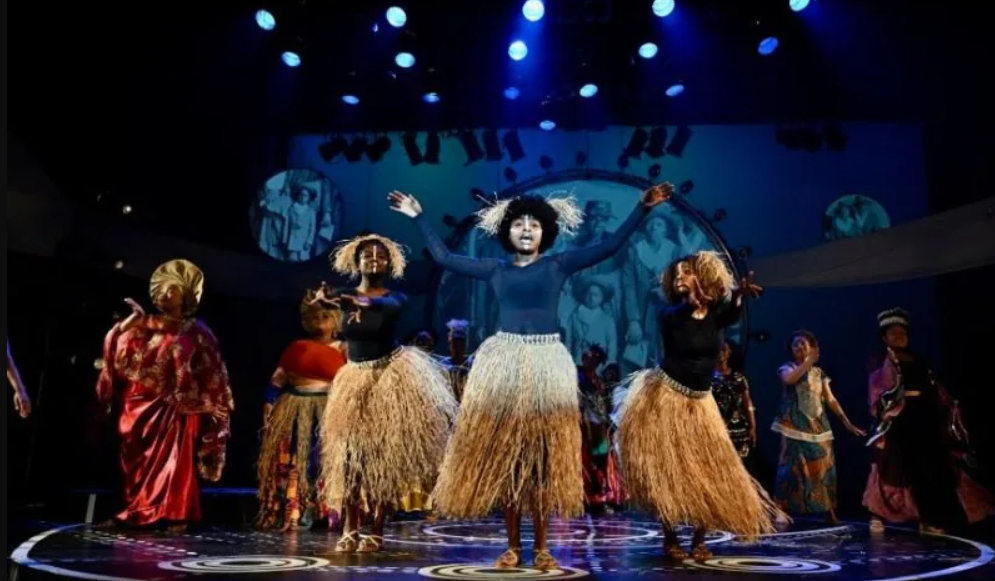
At the outset of the production of Langston Hughes’ Black Nativity at Howard University, I was immediately transported back home to the South Side of Chicago to the churches I attended in my youth. I suspect that Hughes’ goal was for this play to be experiential, a sort of journey home to the self, and the director Eric Ruffin is keenly aware of Hughes’ purpose with each scene intimately woven with Black gospel and hymns and choreography.

Black Nativity is the biblical story of how Jesus came into this world. A blessing bestowed upon Mary (Nia Potter) and Joseph (Yisrael Robinson) through God or All for humanity. Regardless of your faith, religion, or beliefs, this is a Holiday story to remind us of love and community and to explore the unique expressions of Blackness.

Howard University’s Theatre Department has a robust legacy launching the careers of such notable actors as Lynn Whitfield and Chadwick Boseman. So it’s no surprise that there are new and upcoming talents in this play who will undoubtedly leave their mark on theater, film, and television. The ensemble members of the cast gave performances worthy of gossip over Sunday dinner. Wynter Cook (senior BFA Musical Theatre major), Kendrick Jackson (sophomore Jazz Studies major, Voice concentration), and Jantanies Thomas (senior BFA Musical Theatre major) possess remarkable stage presence and have the vocals to match. Jackson is a triple threat: acting, singing, and dancing with such poise that one can tell he’s born to do this.

Black Nativity’s creative team shines through with each scene. The musical performances remind me of the best of Bobby Jones Gospel and the Stellar Awards, thanks to musical director Greg Watkins, music arranger/consultant e’Marcus Harper-Short, sound designer Michael Willis, and the band. The music flows in a call-and-response-like rhythm, drawing in the audience to clap their hands, stomp their feet, and do their dance. The choreography of Princess Mhoon (choreographer) and Daniel L. Moore (assistant choreographer) unleashes a magnetism of movement felt by the audience. The icing on the cake is the costumes transitioning from Act One biblical garments to what reads as ’90s clothes, similar to the album cover of Kirk Franklin and the Family in Act Two, all thanks to costume advisor Frankie Bethea and the costume crew.

There are a few shortcomings related to lighting, sound issues, and a slight shakiness in performances from the young actors finding their way. Yet none of these occurrences dim a light on the very entertaining and worthwhile production. Howard University continues to live up to its reputation for offering the world its best through Black Nativity!

The Power of Good Questions

By Samantha Neugebauer

This article was originally published in DCTRENDING, here.

David Brooks likes asking questions, and last week at Sixth and I, he shared some of the questions he’s been thinking about with an attentive audience. His current ponderings include: What kind of attention should we give others? How can we improve at making people feel seen, heard, and understood? And how do you serve a friend who is in despair? Among his other titles and many accomplishments, Brooks is a columnist for The New York Times, a contributing writer at The Atlantic, and the author of the new book How to Know a Person: The Art of Seeing Others Deeply and Being Deeply Seen, a guide to some of these questions and the art of truly knowing another person. 

Brooks dispensed a mixture of biography, self-deprecating humor, and practical advice for building relationships in what he calls our ‘harsh times.’ Beginning with anecdotes from his childhood, he explained how he wasn’t naturally chatty or emotional. “In our family,” he explained, “it was think Yiddish, act British.” In fact, throughout his childhood and a good portion of his adulthood, he was aloof. As a student at the University of Chicago, he joked, “I was fine living up in my head and not down in my heart. Those deep people were sad. I was shallow and doing just fine.” This trait served Brooks well as a journalist, but eventually, a noticeable conversion came, and he became more in touch with his emotions and more invested in his community and relationships. Yet, as he saw it: “As I was becoming a better human being, America was doing the opposite.”

Nowadays, he claims there are people all around us who feel invisible, unseen, and misunderstood. “There’s an epidemic of invisibility,” and “human beings need recognition,” he explained. He backed up his observations with statistics about American loneliness, such as how results from one survey show that 54% of Americans say no one knows them well. There are also significant increases in depression and suicide rates, in particular, amongst teens.“Persistent feelings of sadness and hopelessness” have risen from 26% in 2009 to 44% in 2021, Brooks states. What also worries him is how loneliness leads to sadness, which leads to meanness and dehumanization.

Brooks has a lot of thoughts on how we got here, but at this Center for the Arts, he was more focused on what each of us can do in our lives to improve circumstances. He believes many of us no longer have the social skills to foster deep intrapersonal and community relationships. Fortunately, these skills can be taught “just as easily as you can learn tennis.” For starters, Brooks says, we have to begin asking each other better questions, which is initiated by taking a hard look at how we speak with people. Brooks divides the world into ‘Diminishers’ and ‘Illuminators.’ In How to Know a Person, he explained:

“Diminishers make people feel small and unseen. They see other people as things to be used, not persons to be befriended. They stereotype and ignore. They are so involved with themselves that others are not on their radar screen. Illuminators, on the other hand, have a persistent curiosity about other people…They shine the brightness of their care on people and make them feel bigger, deeper, respected, lit up.” Brooks provided many examples of Illuminators. The novelist E.M. Forster, for instance, was said by his biographer to possess an “inverse charisma,” which gave off “a sense of being listened to with such intensity that you had to be your most honest, sharpest, and best self.” To become Illuminators, Brooks suggested some classic ideas, such as majoring in the liberal arts and reading, but for folks who may already consider themselves readers, what can we do to improve? It’s clear (to me) that reading isn’t enough, or maybe the way we read now isn’t enough. Brooks recommended that we get out of “broadcast mode.” Essentially, we’re speaking more than we’re listening and asking questions. In Brook’s mind, we must see every person as a mystery and remember that every person is smarter and more interesting than us in some way.

“Ask people about their childhoods,” Brooks advised, “People love talking about their childhood.” Or, instead of asking people why they believe something, ask them how they came to believe something. By doing this, you’re asking others to tell a story. “Being a loud listener” is also key; this means that you ask people to set the scene when sharing stories, making them not just a witness to their lives but also an author. If some of these tips seem basic, it’s because they are. But it’s also true that many people don’t ask other people good questions throughout the day. “30% of the country asks questions,” Brooks stated, “and no that’s not a statistic!” But could it be? Brooks says that most of us aren’t as good at reading people as we think. 

Near the evening’s conclusion, Brooks drew on the wisdom of educator and activist Parker J. Palmer, who observed that “the shape of our knowledge becomes the shape of our living; the relation of the knower to the known becomes the relation of the living self to the larger world.” In other words, if you look at the world with generous eyes, the world is generous, but if you look at the world with judgment or fear, the world is full of judgment and things to be feared. Brooks may be full of questions, but perhaps it’s questions themselves that offer a possible remedy for a society divided by fragmentation, injustice, and a surfeit of broadcast mode.


Samantha Neugebauer is based in Washington, D.C., where she is a 2022-2023 D.C. Arts Writing Fellow with Day Eight. She works as a research assistant for Georgetown University in Qatar and a learning support specialist. Previously, she taught at Johns Hopkins and NYU in Abu Dhabi. 

D.C. Leaders Are Improving Food Security with LGBTQ+-Friendly Spaces

By Abby Stuckrath

This article was originally published in Tagg Magazine, here.

The D.C. LGBTQ+ Community Center’s  new collaboration with regional supermarket chain Wegman’s highlights food insecurity within the LGBTQ+ community and how Washington D.C. advocates are working to fight against it. 

One in four LGBTQ+ adults experience food insecurity, according to the Williams Institute. Kimberely Bush, Executive Director of the D.C. LGBTQ+ Community Center, says that food insecurity is one of the most pressing challenges for queer people. 

“Just waking up brown, black, a woman, non-binary, trans, queer, can definitely be a barrier to equal and fair housing, equal and fair job opportunities, access to resources, which directly contributes to food insecurity,” Bush told Tagg

Bush is leading the center’s new partnership with Wegmans. The supermarket chain will not only help supply food for the pantry but also provide nutritional cooking classes and support for their annual Thanksgiving dinner. 

Bush says the pantry will be a “one-stop-shop” for those searching for a new home or a place to feel loved and accepted. 

The COVID-19 pandemic has played a significant role in perpetuating food insecurity amongst the LGBTQ+ community. In a 2021 study by the Williams Institute, 20 percent of transgender individuals experienced food insecurity, compared to eight percent of cisgender adults. Moreover, LGBTQ+ people of color experienced food insecurity three times more than their white counterparts. 

Bush notes that she sees the everyday implications of these statistics at their food pantry. 

“Our brown, black, LGBTQ+ siblings who come into the center in search of food are exactly those members of our community,” says Bush. 

LGBTQ+ individuals’ ability to access nutrition programs and food pantries can be difficult, according to Alex Ashbrook, Root Causes and Specific Populations Director for the Food Research and Access Center.  

“The paperwork necessary to apply for programs may require someone to select an option that does not match their gender identity or a food pantry may be located in a faith-based institution that does not welcome or feel welcoming to LGBTQIA+ people,” Ashbrook wrote in a statement to Tagg

Bush says their pantry is made for this exact reason.

“We need a safe and affirming space to come to receive vital life and human services,” Bush notes. “It is paramount that we have access to healthy foods at no cost to our people.” 

In Washington, D.C., individuals in Ward 7 and 8, the largest majority Black neighborhoods, face disproportionate access to grocery stores. 

“​​There is only one full-service grocery store – a Giant on Alabama Ave – for 73 thousand residents compared to Ward 3, with 16 full-service grocery stores for 77 thousand residents,” Ashbrook said, citing a study conducted by D.C. Hunger Solution. 

Bush says that the pantry will work to target residents in these Wards and help provide them access to the center’s resources. 

“We want to make sure that all of our LGBTQ+ siblings in those Wards continue to be informed about our food pantry, as well as the upcoming educational opportunities we are planning,” Bush states. 

To support food security amongst the LGBTQ+ community, Ashbrook urges individuals to support the Equality Act — a bill that protects against discrimination based on gender and sexuality — and connect LGBTQ+ people to federal nutrition programs. 

For Bush, she is confident that their new space will help create a “healthy spirit that will feed them and feed their day to be able to wake up again and have a fighting chance of not only surviving but thriving.” 

The LGBTQ+ D.C. Community Center’s pantry will be launched at its new location, 1827 Wiltberger St. NW, Washington, DC on an undetermined date.