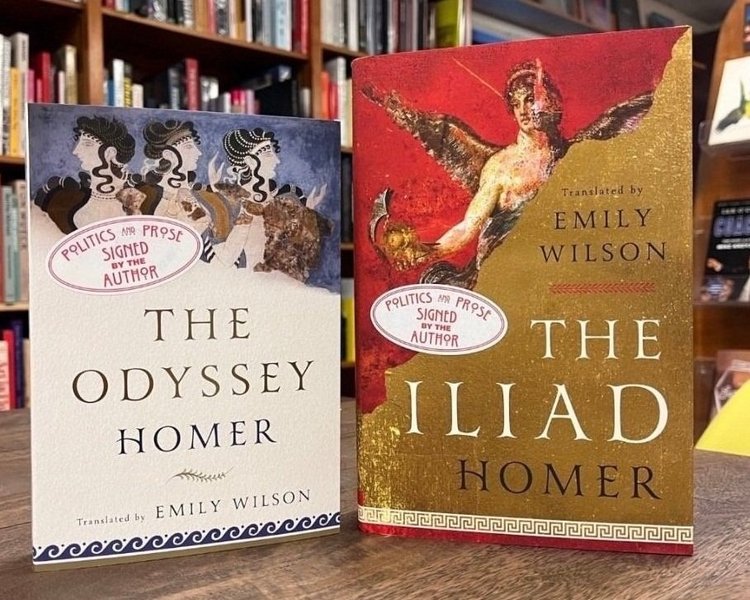
Emily Wilson and the Iliad; Beyond the Here and Now

By Samantha Neugebauer

This article was originally published in DCTrending here.

It was standing room only at Politics and Prose on Sunday for an event with Emily Wilson, acclaimed translator of Homer’s Odyssey and, most recently, The Iliad. With a deep and frightening cadence, Wilson began by reciting the ancient text in its original Greek, and a pin drop could be heard throughout the crowded aisles as attendees were transported to a time of the Trojan War. Eventually, however, after too short a time, Wilson broke the spell she set over the bookstore by switching back to English. 

For Wilson, who lives in Philadelphia and is a professor of classical studies at the University of Pennsylvania, contemporary readers of Homer need to undergo the sonic and rhythm experience of his text as much as the narrative experience. For this reason, in both her Homer translations, she uses iambic pentameter (da-DUM da-DUM da-DUM…) instead of the free verse preferred by many other renowned English translators. In her forward to the Iliad, released this October, Wilson explained that “Ancient Greek verse did not rhyme, but it always used regular rhythm” and that “sonic patterns were created by the length of syllables, rather than by patterns of stress, as in English verse.” She believes that the iambic pentameter is our closest equivalent to the original’s dactylic hexameter. Indeed, English speakers often enjoy verse in iambic pentameter; its musicality not only reminds us of Shakespeare but also of our heartbeat. As a result of Wilson’s metrical choice, her short lines are straightforward yet mighty, mimicking Homer’s lineation.

See Wilson’s opening compared to noteworthy translations by Alexander Pope and Richmond Lattimore.

Wilson

The Quarrel 

Goddess, sing of the cataclysmic wrath

of great Achilles, son of Peleus 

which caused the Greeks immeasurable pain 

and sent so many noble sons of heroes 

to Hades, and made men the spoils of dogs…


Pop

Argument

The Contention of Achilles and Agamemnon.

In the war of Troy, the Greeks having sacked some of 

the neighbouring towns, and taken from thence two beautiful

captives, Chryseis and Briseis, allotted the first to Agamemnon,

and the last to Achilles…

Lattimore

Sing, goddess, the anger of Peleus’ son Achilles

and its devastation, which put pains thousand-fold upon the 

Achaians, hurled in their multitudes to the house of Hades strong souls

of heroes, but gave their bodies to be the delicate feasting

of dogs, of all birds, and the will of Zeus was accomplished

In Wilson’s telling, her reverence for English literature and anglophone metrical poetry tends to set her apart from other classists. At the event, she detailed her academic background, describing how she and her work are the product of interdisciplinary studies. She holds a Ph.D. in Classics and Comparative Literature from Yale, and a B.A. in Classics, and an M.Phil. in Renaissance English Literature from Oxford.

“Most people trained in the classics,” she said, “are not as interested in the tradition of English literature as I am.” It’s perhaps not surprising then that Wilson appears interested in the development of the English language and doesn’t shy away from employing modern language and syntax in her translations: “He will not come home/ from the war and cruel conflict, and his children/ will never clutch his legs and call him Daddy.” In general, Wilson sought to capture the “folk-poetry feel of the original.” Simultaneously, however, Wilson doesn’t aim for overt vernacularism. She likes some artifice, she says, and avoids contradictions in her translation. 

A lot has been made about Emily Wilson being the first woman to translate the Odyssey, however, for Wilson, that fact is not as essential as the media makes it out to be. Frankly, it’s refreshing to see a creator gesture toward the merits of their creative and intellectual choices over the personal biography. At the same time, she told the audience that this does not mean she is uninterested in discussing what’s going on with gender within Homer. She very much welcomes that discussion. 

Near the program’s conclusion, an attendee asked Wilson if she considered The Iliad an anti-war poem. Wilson responded that she doesn’t think it’s a “pacific book.” Moreover, she says, that while it’s true that the text does not imagine a world without conflict, it does imagine ways that society may not have to be as deadly. Nevertheless, The Iliad is a violent book; it’s a story where life and death stakes marked page after page, where the human body is constantly being unknotted. 

While the book’s violence might seem to some relevant, the audience was looking for why to revisit this ancient text; Wilson doesn’t care about ‘relevance’ either. On Twitter, Wilson commented: “When people ask me about the “Eternal Relevance of The Iliad”, I sometimes say: read it because it’s not relevant. The human experience is so much bigger than here and now.” 
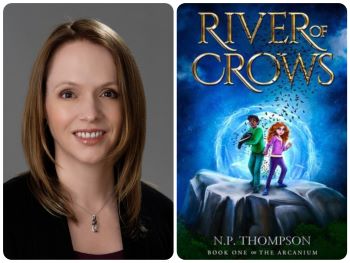
An Interview with N.P. Thompson

By Imani Nyame

This article was originally published in the Washington Independent Review of Books here.

In her debut novel, River of Crows, the first installment in the Arcanium series, Canadian author N.P. Thompson takes readers into the magical and dangerous world of Arcania, where 12-year-old Ty Baxter forges life-changing friendships as he takes on responsibilities quite frightening for such a young boy. Inspired to write the series as a way to give middle-grade readers substantive stories all their own, Thompson has nonetheless crafted a narrative that will captivate bookworms of every age.

Among other things, the Arcanium series explores the symbolism of different animals, including crows, wolves, and serpents. What do crows symbolize for you?

Where I live in Ottawa, Canada, there is a huge flock of crows that roosts near one of the hospitals throughout the fall and winter. Every morning, you can see them fly across the sky in long, waving rivers as they head out to the edges of the city to search for food. And every night, the process reverses itself, and you can watch those same rivers going the other way as they all fly back to that central roost for the night. It’s just a beautiful thing to see, and I’ve been known to drop whatever I’m doing at the time to just stand there watching that river of crows cross the sky.

In terms of the books, though, the crows are very much a symbol of pain and fear and loss. The villain in the books, Gideon Blackthorn, has a personal army of enchanted crows that are completely loyal to him. A great many of these crow-soldiers are kidnapped children that Gideon has transformed into birds and then enslaved. So, the people of Arcania have a very complicated relationship with these crows — they’re utterly terrified of them, but they’re also afraid to fight them because harming the crows could mean harming transformed children who cannot refuse Gideon’s orders because they’ve been enchanted to obey his every command.

But I went with crows because they’re so fascinating. They do have an ominous mythos around them, and a lot of old tales from all around the world present crows as harbingers of death or evil. But in reality, they’re also really smart birds. I loved that duality. It made them perfect for the story I wanted to tell.

Did any particular YA fantasy novels inspire the Arcanium series?

I think, throughout my life, the books that I’ve most enjoyed as a reader are the ones that have an ensemble cast where even the secondary characters are so well fleshed out that they feel as real as the main character does. I really loved David Eddings’ Belgariad and Mallorean books for that. I also read them because that world had a very richly defined history that occurred long before the story that was currently being told, and I think that helped to make that whole story feel so real, so compelling.

I really enjoy having more than one character to get attached to and root for, and I love exploring how everyone’s different personalities and unique talents can both cause some friction within the group and also help make the group stronger. I guess that’s probably why my books are told from multiple characters’ points of view. Ty is the main character, so you mostly get things from his perspective, but you also get to experience the world through other characters’ eyes — even the villains’, at times.

What was your favorite part about writing this book? And why do you feel drawn to YA novels?

My favorite part of writing the first book was watching the friendships growing between all the kids — they are all so different, but they’re very much a team…In my writing, I seem to be drawn to that grey area between middle grade and young adult. When my oldest was small, he was reading far above his grade level, and I had such a hard time finding books that were both age-appropriate but also geared toward a more advanced reader who wanted a more complex and nuanced story. I think maybe my love for this niche came from that time — wanting to write the kind of book I wished I could find for him. One of the most appealing things I find about writing for this age range is that we can help kids explore some of the really big things in life. We can show that the world can be dark and scary and unfair sometimes — because it absolutely can be, and hiding that fact from kids does them a disservice, I think. But, through stories, we can help kids understand how to process and deal with that and find agency in a world that sometimes makes us feel like we have none.

In what ways does the world of Arcania reflect reality?

Stories are one of the best methods we have for getting us to really think about what’s happening in our own world and how we want to shape it. The bulk of River of Crows was completed in the years immediately following America’s 2016 election and, from a non-American perspective, I think a lot of us who had never really paid much attention to politics before suddenly found ourselves taking a much closer look at what was happening in our own countries. I think a lot of the more political themes in the book were born out of that. There is also an environmental theme woven into the series that is just hinted at in the first couple of books but which becomes more prominent as the series progresses. Beyond that, there’s a very diverse cast of characters because the world is diverse. And I wanted that diversity to be the norm in Arcania.

What’s next for you?

My main focus for the foreseeable future is to finish the Arcanium saga, and then I have another series planned around a new world and new set of characters. Book three of the Arcanium, Stone of Serpents, should be out this spring. Book two [Mirror of Wolves] ends on a pretty significant cliffhanger, and Stone of Serpents picks up right where it left off. There are some major twists with this one that are going to change everything for our intrepid Team Arcania, and it’s really going to shake all of these characters up and affect their relationships with each other as they head into book four.

Increasing Queer Wellness and Mental Health With Coming Out Happy

By Abby Stuckrath

This article was originally published in Tagg Magazine here.

Growing up in a religious community in Colorado, Keely Antonio never imagined that she could lead a fully authentic life as a queer woman.

“A lot of my journey was suppressing who I was,” Antonio told Tagg. “I didn’t understand what it meant to free myself and step away from the judgment and the doubt.” 

Coming out as queer was the first time she truly listened to her body. “It really shaped my understanding of wellness and what it means to listen to your needs,” says Antonio. 

Antonio’s journey as a queer woman motivated her and her partner, Dani Max, to create Coming Out Happy. The company helps LGBTQ+ individuals become more fulfilled and empowered versions of themselves. 

Coming Out Happy originally started as an LGBTQ+ rainbow mask project during the beginning of the COVID-19 pandemic in 2020. But one viral Instagram post quickly transformed the company into something more. 

“I made a video saying that my partner is doing great things for the LGBTQ+ community and that everyone should follow her on Instagram,” says Antonio. “It got hundreds of thousands of views and hundreds of people to join the membership program.” 

In an effort to connect and support queer people during a time of such stifling isolation, Coming Out Happy evolved into a community-based membership program where Max and Antonio provided life coaching and therapy sessions. 

The pandemic taught them how important fostering and creating community is, “especially in a society that’s so individualistic,” Antonio says.

Coming Out Happy has now served 200,000 queer adults across the world. The company now offers wellness support through podcasts, workbooks, live coaching sessions, and virtual programming.

Last summer, their online network and services finally added in-person events. The San Diego Self Love retreat was their first in-person venture. Antonio says that participants flew in from all over the country for a weekend of intentional yoga, group discussions, and “the most queer joy that you could imagine.”

To foster a more diverse and inclusive space during in-person events, Coming Out Happy offers a BIPOC scholarship program. They funded four full-ride scholarships for the San Diego retreat. Earlier this month, Antonio and Max held another successful event, their Winter Queer Leadership Camp. 

Additionally, for those unable to attend their in-person events, Coming Out Happy offers a virtual program called the “Pride Amplified Six Week Course.” The website describes the course as an “​​On-demand program for queer adults designed to help you ditch insecurities, connect with the most confident version of yourself, and create a solid foundation for healthy relationships.” 

Antonio recalls one of her most memorable patients from her course, a 50-year-old woman who recently left her husband. After a decades-long heterosexual relationship, she was eager to explore her queerness. 

“She came in with a lot of shame and didn’t know how to join the community,” says Antonio, who works as the woman’s therapist. 

Years later, she has created a blooming network within the LGBTQ+ community and started her own queer-centric business. 

“It was so amazing to see her tap into her community and relationship and go and make an impact,” beams Antonio. 

Antonio shares that beginning your journey in self-empowerment can start with finding just one person to connect with. “Sometimes we don’t have all the resources; it’s just one door and one person,” she says.

The Avett Brothers bring big questions to the high seas in ‘Swept Away’ at Arena Stage

By D.R. Lewis

This article was originally published in The DC Line, here.

The distance between The Avett Brothers’ upbringing in Concord, North Carolina, and the 19th-century whaling industry of New Bedford, Massachusetts, spans hundreds of miles and several lifetimes. But in Swept Away, a new musical that asks just how far humans will go to survive, sea shanties of a bygone era are replaced with selections from the folk rock band’s sweeping repertoire. Following its world premiere at Berkeley Repertory Theatre last year, Swept Away takes audiences out to sea in Arena Stage’s Kreeger Theater through Jan. 14.

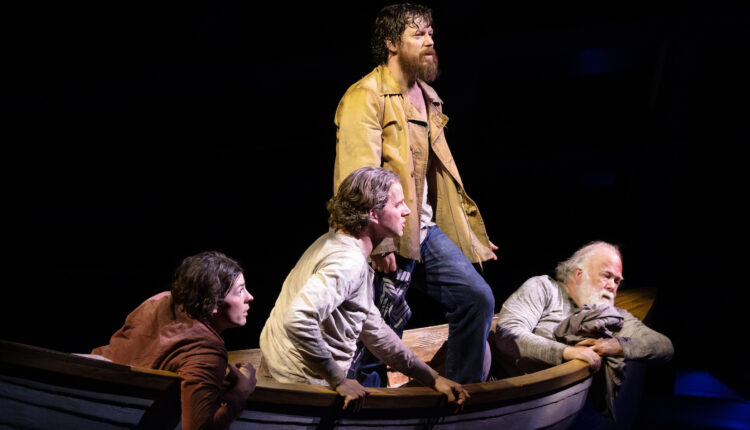
Inspired by the true story of the shipwrecked Mignonette (and The Avett Brothers album of the same name), Swept Away opens on a white metal cot where a former whaler, Mate (John Gallagher Jr.), lies dying from tuberculosis. As his body deteriorates from illness and his mind wanders to the past, he is haunted by the ghosts of three seamen who suffered alongside him in younger days: a youthful sailor, Little Brother (Adrian Blake Enscoe), Big Brother (Stark Sands) and their Captain (Wayne Duvall). They implore him to recount the story of their shared struggles as the lone survivors of a shipwreck. As the tale unfolds, we watch the men endure disaster, followed by weeks of starvation and thirst while adrift on a small lifeboat. When their situation becomes more and more fraught, they are forced to confront impossible questions of salvation, mercy and depravity in order to survive.

Comprised of hand-picked songs from The Avett Brothers’ extensive catalog of rock, roots and Americana, the musical’s folk score ranges from cheeky commentary on life at sea (“Hard Worker”) to the regrets of a career captain (“May It Last”) to a young man’s yearning for his distant lover when the fragile nature of life finally sets in (“A Gift for Melody Anne”). The arrangements by orchestrators Brian Usifer and Chris Miller vary accordingly, taking on both electric and acoustic treatments. Gallagher, Duvall, Sands and Enscoe are careful stewards of the Avett Brothers’ beloved songs, and their four voices blend remarkably well in group numbers and soar in solo turns. When combined with the (frequently offstage) ensemble, the tight harmonies work to haunt and comfort in equal measure. 

John Logan’s book provides a sturdy framework for the score while resisting the oft-indulged urge of other jukebox musicals to shoehorn existing songs into a complex, contrived plot. He chooses to go deep, rather than wide, providing enough details to bring the characters to life. He offers suitable dialogue to advance the simple story when needed and adequately tees up the songs for optimal impact. Despite by and large deferring to the score, Logan does put forth some meaty moral commentary that, while it occasionally feels trite, ultimately leaves audiences with plenty to ponder. 

As the Mate, an extremely charismatic Gallagher quickly captures the audience’s attention, never relinquishing his grasp even as ne’er-do-well charm devolves amid ravenous desperation. Duvall’s forlorn Captain lies somewhere between the Titanic’s steadfast Capt. Edward Smith and a defeated Willy Loman, struggling to accept the personal price he has paid for a career at sea. His self-professed failure to nurture his family is made all the more poignant by the devoted relationship Big Brother and Little Brother share. Despite a limited backstory, the chemistry between Sands and Enscoe is so strong that when an inevitable confrontation finally arrives and a dramatically logical but disturbing choice is made, the audience is left breathless.

Where Enscoe’s Little Brother is all heart, Sands’ Big Brother is entirely soul. His tenderness is at odds with the pompous masculinity of the ship’s crew, eliciting initial laughs from the audience. But as circumstances become increasingly dire, his enduring affection for his sibling and commitment to his faith are balm for both Little Brother and the audience. In the duet “Murder in the City,” the brothers affirm the importance of their familial love and the preciousness of their connection, despite their discordant dreams. “Always remember there was nothing worth sharing like the love that let us share our name,” they softly sing, moments before their lives, along with the ship, are upended forever.

Swept Away offers a departure from the flashy production numbers that are a hallmark of recent jukebox musicals like Jagged Little Pill (Alanis Morissette), Head Over Heels (The Go-Go’s, also directed by Michael Mayer) and Once Upon a One More Time (Britney Spears, which premiered at DC’s Shakespeare Theatre Company in 2021). With some exceptions — a mashup of “Ain’t No Man” with “Lord Lay Your Hand on My Shoulder” (a new song written for the show), and “Hard Worker” (an upbeat song that puts the ensemble front and center) — most of the musical numbers feel like a continuing series of gentle reflections. While the songs do little in the way of moving the scant plot along, Logan’s careful curation of the tight 90-minute setlist does an admirable job of deepening the audience’s understanding of, and sympathy for, the characters. Given the circumstances, it’s a good fit.

So is the show’s director. Mayer may be best known for his work on Spring Awakening, the coming-of-age rock musical that earned both him and Gallagher their first Tony Awards. But nearly 20 years after Spring Awakening first opened in New York, Swept Away feels like a matured extension of that groundbreaking musical. The social loneliness of adolescence has given way to physical isolation on the open sea; the strict expectations of parents, educators and church leaders are left onshore, while the pressures of one’s humanity, faith and sense of self push against the instinct to survive; and the immobilizing fear of a long life ahead is replaced with the regrets of one already lived. 

Beyond his handle on the show’s most compelling dramatic questions, Mayer’s handiwork as a technician comes through clearly. He succeeds in keeping the pace of the show at a steady clip, even as the sailors languish in expectant waiting. The starkness of the four stranded sailors in a tiny boat, slowly spinning in the absence of their lost crewmates, is a major shift from the lively deck that bustles with activity earlier in the show. In conjunction with his creative team, Mayer steadily ratchets up the desperation through the latter half of the show, beginning with the initial tempest that precipitates the ship’s sinking. The battering of the ship and its crew is one of the most impressive sequences in the production. At first mildly tossed by the sea, the crew soon is thrown about the stage in perfect coordination. Where David Neumann’s slick choreography of the musical’s early group numbers shows the crew united in their controlled movements about the ship, once at the mercy of the ocean they are unified only in their powerlessness. 

The strong direction is matched by excellent technical work by Mayer’s creative team. Rachel Hauck’s massive ship set fills the Kreeger stage and, in a deeply satisfying coup, transforms in an instant to underscore both the isolation of the surviving sailors and the endlessness of the open sea. Kevin Adams’ lighting ebbs and flows between the harsh, reflective brightness of a blazing sun, and the shadowy bluish green darkness that intimates memories and the ocean floor. John Shivers’ sound design fills the background quietly, regularly resurfacing with reminders of waves lapping at the boat. And Susan Hilferty’s worn costumes subtly reflect the salty residue of a life lived at sea.

Despite the similarities between musical theater and country (or country-adjacent) music, which both rely heavily on narrative-driven storytelling over abstract hooks, prior attempts to merge the genres (Shucked,Bright Star, 9 to 5, Urban Cowboy, etc.) have met with varying levels of success. But unlike those past iterations, Swept Away boldly leverages its source material to present compelling existential dilemmas to its audience. The direness of the characters’ circumstances and their resulting moral abandonment forces viewers to confront deeply difficult questions. What would I sacrifice to save the ones I love most? How far would I go to see another sunrise? And, as so poignantly asked in the song “No Hard Feelings”: “When my body won’t hold me anymore and it finally lets me free, will I be ready?” 

Not everyone will be willing to confront those difficult quandaries on a night out at the theater. Still, those theatergoers who take their seats ready to be challenged are likely to relish in this bold new musical. And, in its ultimate faithfulness to its source material, Swept Away will surely satisfy The Avett Brothers’ most devoted followers. 

In this maiden musical theater voyage, Swept Away makes a strong case that the band’s musical style lends itself naturally to dramatization and holds great potential to make a splash.. The show’s producers have been clear that their sights are on the Great White Way, and Arena Stage has already added two weeks to the show’s run — an extension announced just before Wednesday’s official opening after a week and a half of previews. While it remains unclear whether this ship can successfully pull into New York Harbor and drydock somewhere along Broadway, Swept Away appears to be calling for another sailing.

A welcoming ‘Irish Carol’ in a chummy pub at Keegan Theatre

By Haley Huchler

This article was originally published in DC Theater Arts, here.

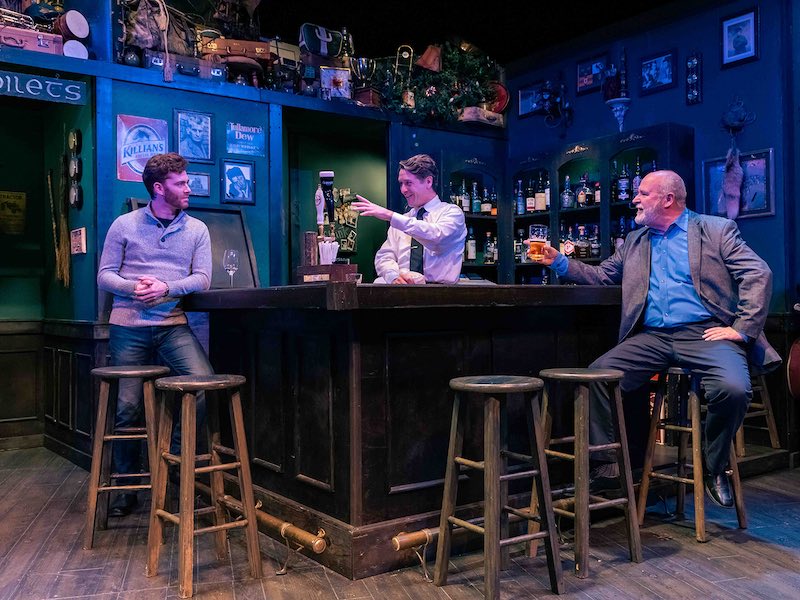
The set of An Irish Carol is an authentically warm Irish pub flush with Christmas decorations, a tap that only spouts Guinness, and a sign above it all says “Failte,” an Irish word meaning “welcome.” In this delightful Dickensian tale, Matthew J. Keenan, the playwright and set designer of An Irish Carol, creates both a set and a story that welcomes audience members into a cozy and compelling world each December at The Keegan Theatre.

The endearing background of a quaint Irish pub is at odds with the prickly star of the AnIrish Carol. Kevin Adams plays David, the main character of this tale that loosely follows Dickens’ classic A Christmas Carol, making the 21st-century Irishman a new spin on Scrooge.

An Irish Carol follows the familiar structure of Dickens’ classic novella, A Christmas Carol. We meet grumpy pub owner David, who berates his bartender and snaps at his friends, a gang of locals who are as joyful as David is prickly. Mentions of economic hardship and cell phones place this story somewhere around the Great Recession in 2008. David’s pub is losing business, partially due to his abrasive demeanor that deters customers and friends alike. Only a few old regulars remain loyal, continuing to patronize the pub and persuade their old friend to change his ill-tempered ways before it’s too late.

Unlike Dickens’ version of events, there are no ghastly ghosts that come to haunt the Scrooge-like character, just jolly, slightly foul-mouthed men who still believe they have a chance to make David see the error of his ways. Humor and lightheartedness abound in a play that could easily be much darker. The physical comedy, particularly of Timothy H. Lynch as Frank, is a delight. The gang of mildly crude men is balanced out by Sarah Chapin’s warm and cheery role as Simon’s fiancée, Anna. The performance of Taylor Witt as the bartender Bartek brings optimism and hope to the story — despite his poor treatment by David, Bartek holds fast to the idea that most people are fundamentally good at heart.

The story of An Irish Carol is simple and grounded in banter, wisecracks, and well wishes among friends. The audience gets to sit in on a chummy conversation among pals reminiscing about the good ol’ days, trying to remind David of his connection to friends and to the world. The Keegan Theatre provides a cozy and intimate place for this particular play to unfold, and I couldn’t imagine a more suitable venue. The experience felt truly akin to sitting in a beloved pub chatting with friends.

Director Mark A. Rhea never lets the story descend into the bleakness that it could, delivering a tale that doesn’t make the viewer despair about David’s final fate, unlike in some retellings of A Christmas Carol where we deeply fear for the Scrooge character’s soul. There is a deep and comforting reassurance in An Irish Carol that things, however grim they may seem, will turn out for the better.

The frequent and precise changes in lighting from warm gold to icy blue illuminate the tone of each scene, reminding us that although this play has a lighthearted feel, there is still emotional depth to the story. While the cast may excel at bringing humor and joy to the stage, they are also clearly committed to the exploration of complex relationships and emotions. I was moved by Mike Tinder’s portrayal of Richard, an old friend of David’s who, amid his own personal sorrows, delivers what may be the final nudge to inspire David’s change.

The story’s resolution falls a little flat compared to the careful and lively buildup. David’s decision to alter his life feels too internalized. His main inspiration to change was a letter whose contents we never see, and it was a bit disappointing to be left wondering what exactly was said to make David change his tune.

Nevertheless, An Irish Carol delivers in the most important ways: laughter, clever dialogue, and a beloved story with heart. The rollicking characters in this play are more memorable than those of other retellings, and for that, An Irish Carol is well worth a trip to The Keegan Theatre this holiday season.

Gay Women of Rehoboth Hosts New ‘Women’s Arts Project’—A Vibrant Celebration Offering Music, Games, and Queer Community

By Abby Stuckrath

This article was originally published in Tagg Magazine, here.

In Rehoboth Beach, Delaware, Gay Women of Rehoboth is hosting the Women’s Arts Project, a new event celebrating gay women this winter. 

As the third-largest LGBTQ+ community in the United States, Rehoboth has long been a hub for queer festivities. However, there has been a noticeable decline in LGBTQ+ businesses and spaces, particularly gay bars. “The gay bars that were here aren’t here anymore,” says Lisa Soens, co-organizer of Gay Women of Rehoboth. “There are only a few places that can be called a gay establishment.” 

The dwindling number of lesbian bars across the United States, from almost 200 in the 1980s to 31 today, underscores the need for alternative congregating spaces beyond traditional LGBTQ+ nightclubs. Soens is determined to build a queer community that extends beyond bars, emphasizing the importance of safe spaces for gay women in Rehoboth. 

Her vision includes exposure to new musicians and art while fostering connections, conversations, and learning experiences.

The Women’s Arts Project, held from January 12th to 14th, is a testament to this commitment. The event aims to uplift musical talent from the East Coast and provide inclusive entertainment during the winter months. “We thought we would welcome an event in the winter so that we could give the ladies something to do,” explains Viki Dee, a local musician and co-organizer. 

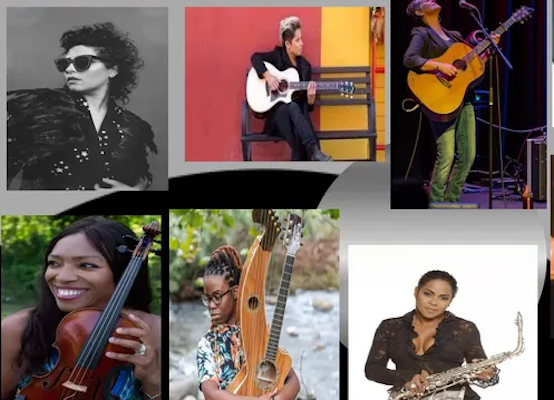
Friday kicks off with a poker tournament hosted by Las Vegas Women’s Poker Tournament runner-up DJ Brooke. The evening unfolds with musical performances by notable artists such as Dina Hall, Saxtress Pamela Williams, Gem Fatales,Nashville star Sarah Peacock,  and DJ Shadylady.

Saturday continues the festivities with a bingo championship and a keynote speech by Eboné Bell, Founder and Editor in Chief of Tagg Magazine. The musical lineup includes E’lissa Jones, Be Steadwell, Yasmin Williams, Vicci Martinez, and stand-up by comedian Jessica Kirson.

Sunday takes on a special significance as the event pays tribute to women veterans and first responders. “For women veterans, it’s always been a silent thing. We want to not make it silent anymore,” says Dee. 

Soens, inspired by her experiences volunteering with veteran women, aims to uplift their voices and give them the recognition they deserve. “I just feel like they aren’t recognized and given the honor that they deserve,” shares Sosen.  

The weekend concludes with a cornhole tournament, a fun way to end a celebratory event dedicated to ensuring all participants feel seen, heard, and welcomed. The Women’s Arts Project stands as a beacon of inclusivity, creating a space where the diverse voices of queer women can resonate and thrive. “I just want everyone to feel a part of the community,” says Soens. “We are creating a space for everybody.” 

For more information on Gay Women of Rehoboth and the Women’s Art Project, visit www.gaywomenofrehoboth.org.

Centuries: Imagining Black Women Cycling Across Time

by Oluseyi Akinyode

This article was originally published in DC Trending, here.

Walking on the trails near home, I’m filled with longing as cyclists swish by. There’s something about riding a bike — You can cover more terrain than by walking. Two weeks ago, I took the first step to fulfill that yearning by taking an adult biking class for beginners with a group of about 20 sponsored by the Washington Area Bicyclist Association (WABA). The group included ten Black people, and eight of them were women. It’s a rarely represented activity in my daily life and one that I find compelling given the perception that Black women don’t ride.

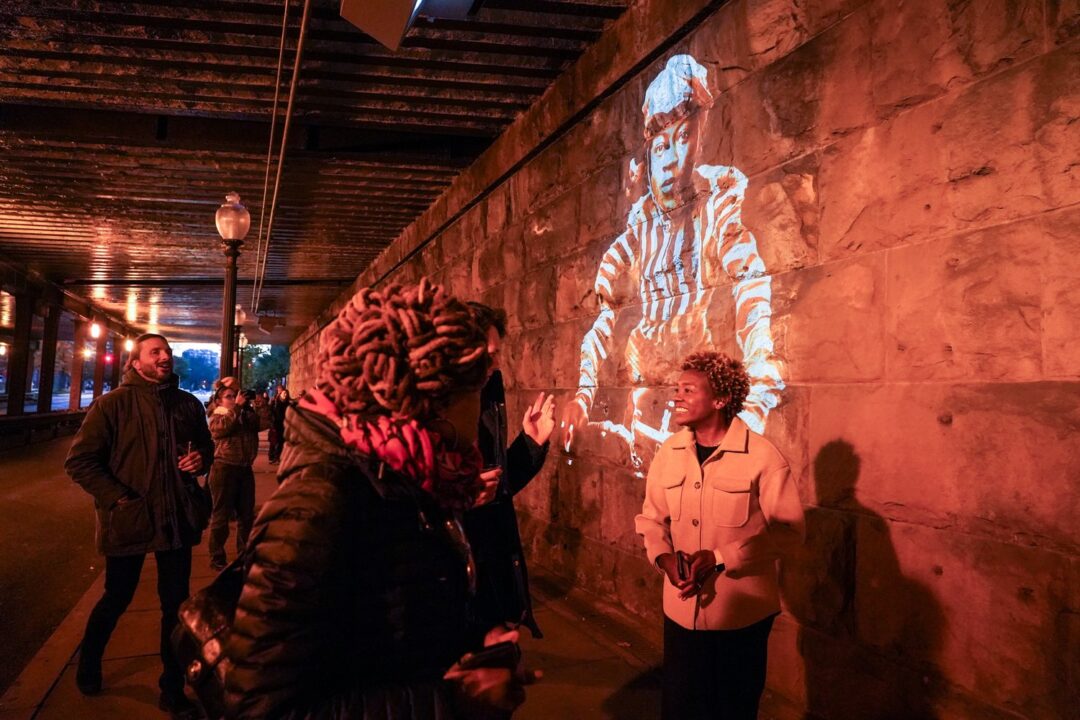
As part of my biking journey, I was intrigued to go check out Centuries, an immersive digital art installation by Nekisha Durrett at the K Street Virtual Gallery, honoring five Black women cyclists (Marylou Jackson, Velma Jackson, Ethyl Miller, Leolya Nelson, Constance White) who biked on a 250-mile journey over three days from NYC to Washington, DC in 1928.

Cycling represents not just physical mobility but also socio-economic mobility. It signifies the presence of leisure time beyond daily responsibilities and the presence of expendable income. It also lends itself to exploration and movement through space without barriers. The journey of these five Black women takes on audacious meaning considering the social and racial climate then. 

The K Street Virtual Gallery is an initiative by NoMaBid that allows artists to create digital art installations projected onto the K Street underpass that sits between First and Second Streets NE as part of a broader revitalization of the area. According to the virtual gallery creators, it was their goal to create a space where people could stop, reflect, and enjoy their day. NoMa BID President Maura Brophy explained, “The gallery brings light and color to an otherwise dark space, but the rotating exhibits allow us to use the space to bring new pieces to the gallery and tell unique stories. The exhibits will change over time, allowing people to experience something new and exciting with each piece.”

The first K Street Virgual Gallery installation was created by artist My Ly, who used abstract colors and shapes moving across the walls of the underpass to render the multiplicities of transportation modes in the underpass. 

This second installation, entitled Centuries and created by Durrett, continues the theme of movement from a different perspective by paying homage to the journeys of these five Black female cyclists. Projected onto the rough-hewn stones of the underpass are AI-generated images of ten Black women cyclists dressed in period outfits spanning the past to the future. The selection includes a cyclist from Victorian times, a nod to the possibility that Black women have ridden earlier than imagined. Texts like “WE OUTSIDE WE OUTSIDE” and “BLACK WOMEN CYCLE” amplify the theme of stories in motion. 

A challenging cycling traverse was among the inspirations for Durrett’s installation. On a ride, the artist recalls suddenly hearing shouts from a group of Black women cyclists above — “Sis, you’ve got this; you’re so close. You’re walking the path of your ancestors.” Durrett believed that only with their encouragement did she emerge from the traverse. She shared that her goal for the exhibit was to remind us that “the paths we take have been paved by those who have gone before.”

This installation is in keeping with past works by the artist, such as Go-Go Belongs Here at the National Portrait Gallery, True Grit at James Madison University, and Don’t Forget to Remember (Me) in the cloisters at Bryn Mawr College. Employing text, materials, and imagery, these narratives tell the stories of individuals who have been forgotten while also envisioning limitless possibilities for the future that incorporate their unique experiences.

Durrett used AI to overcome artistic limitations, intending only to include photographs of Black women in the installation. However, the only available photo, most likely sourced from a Newspaper microfiche, was of poor quality and not suitable for reproduction. So Durett opted to use Midjourney, an AI application that generates images from texts. This allowed her to vividly portray Black women cycling, tying into Durrett’s practice of imagined realities. While sifting through AI-generated images for the installation, the artist couldn’t find images that captured her vision. So instead, she trained the AI model by inputting specific phrases to generate the images of the ten Black women featured in the installation. This experience serves as a reminder that the experiences of Black individuals may often be overlooked or forgotten in a rapidly advancing world driven by AI technology.

Given its recent past as a homeless encampment, an underpass filled only with passersby would be inadequate. The K Street Gallery is a clever approach that reflects a myriad of the city’s perspectives all the while embacing goals for redevelopment. In the future, after learning to ride, I may be one of those cyclists riding through the K Street underpass, continuing the journey of those who came before. 

The K Street Gallery will feature a roster of installations by artists throughout the year. Artists, artist teams, and designers interested in participating in the K Street Virtual Gallery can contact events@nomabid.com. Centuries will be running for the next six months at the K Street Gallery, located close to 100 K St NE.